Quick answer: Modular construction can be a smart move for a school, but “modular” covers four different building types, each suited to a different need. Relocatable buildings work well for a temporary need with a hard deadline. Permanent modular buildings suit standard classrooms and offices where you want time and cost savings. Panelized and pre-engineered metal buildings fit large open spaces like gyms and cafeterias. The most common mistakes are forcing a complex space (a lab, kitchen, or gym) into a relocatable or standard permanent modular, and using a relocatable for a need that’s actually permanent. Even a fast relocatable still has to clear your jurisdiction’s full permitting process, so it isn’t the shortcut on timeline that it looks like at first.

Modulars often get pitched as a faster, cheaper alternative to conventional construction, especially with materials costs up. That’s sometimes true. But the reasons it isn’t always true aren’t obvious if you haven’t done this before.

When is modular the right answer, and when is it a mistake?

“Modular” actually covers four distinct building types, and matching the type to the need matters more than the decision to go modular at all.

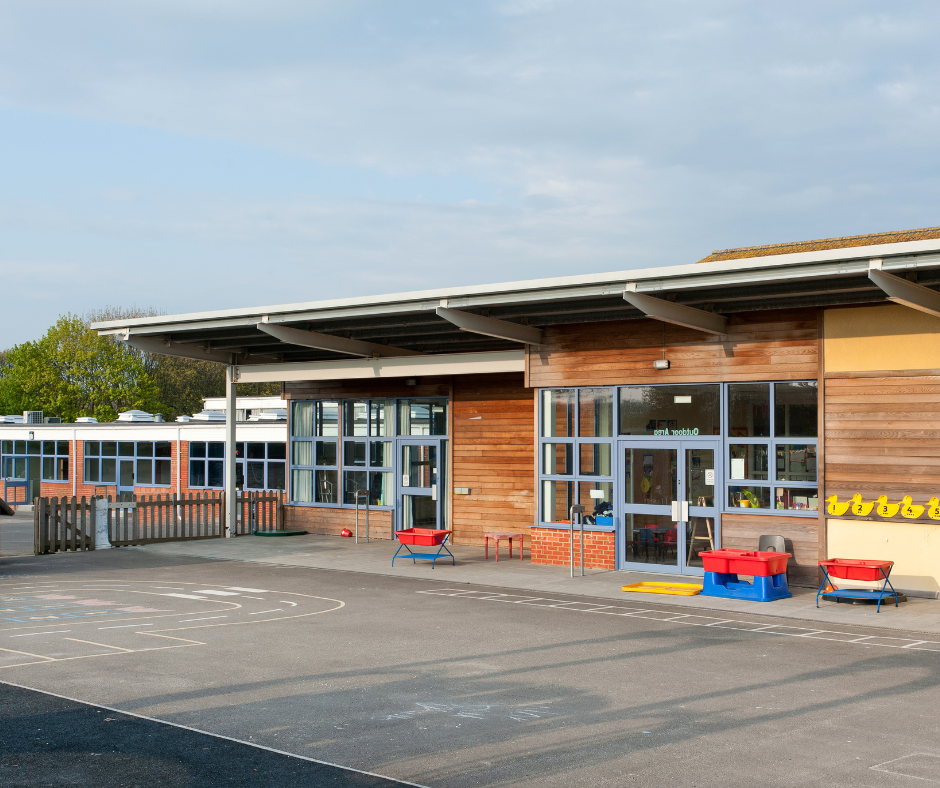
Relocatable buildings are what most people picture: the double-wide units with exterior ramps and skirting, built to be delivered, removed, and often leased. They’re the right choice when you have a hard deadline and a temporary need.

Permanent modular buildings are factory-built and volumetric, meaning the interior is largely built out before the unit arrives, then set on a real foundation. They include interior corridors and restrooms, are often two stories, and once placed, they’re indistinguishable from a site-built building from the outside. These make sense when you’re adding a standard space, like classrooms or offices, and want to save time and money. Complex programs like laboratories don’t belong here: they get more expensive and complicated fast in a pre-designed modular space.

Panelized construction ships a building in metal sections or trusses that get assembled on site, similar to a kit. It’s a good fit for large open spans, like a gym.

Pre-engineered metal buildings are structural frames engineered to your specific dimensions and needs, then fabricated and shipped. This works well for gyms, multipurpose spaces, and cafeterias that need long clear spans.

The two mistakes that come up most often: forcing a complex program (a lab, kitchen, or gym) into a relocatable or permanent modular, which are small, pre-designed spaces without much flexibility, and using a relocatable for a need that’s actually permanent. Relocatables have a shorter lifespan than permanent, panelized, or pre-engineered buildings, and that can end up costing more over time.

a student works at a table with other students.

Should a school lease or buy?

Leasing really only applies to relocatable buildings; every other type is a purchase, since they’re permanently set. For a relocatable, the decision comes down to how long you plan to keep it. Under three to five years, leasing generally makes sense. Beyond that window, the math starts to favor purchasing, since that’s roughly where the break-even point falls. Some modular companies also offer lease-to-own, which avoids a large upfront payment while still building toward ownership.

Whichever way you go, account for the sunk costs of installation: foundation work, ramps, utility connections, fire alarm, and low-voltage wiring all have to happen regardless of whether you lease or buy. There’s also a cost to remove a relocatable at the end of its term, and that needs to be built into your lease terms upfront so it isn’t a surprise later. As a reference point, Florida assumes a relocatable has a 20-year lifespan (longer with good upkeep), while a permanent modular building is typically rated for 35 years or more.

Students wearing backpacks running toward a school building

How does the cost per square foot compare to conventional construction?

Cost is highly location-specific. California and New York are among the most expensive places to build, so actual numbers will vary by region. That said, a few general ranges are worth knowing, along with one caution: an initial vendor quote often covers only the structure itself, not site work, utilities, fire alarm, or ramps, so a number that looks attractive on its own may not reflect the full project cost.

Relocatable buildings typically run $75 to $130 per square foot for the structure alone. Once transportation, cranes, foundations, ramps, permits, fire alarm, and site work are added, the realistic all-in range is closer to $150 to $300 per square foot. Permanent modular buildings, with foundations, corridors, restrooms, and full mechanical systems, tend to run $250 to $400 per square foot or more. Panelized construction for something like a gym is difficult to price generally since it depends heavily on scope and scale. Pre-engineered metal buildings tend to offer a 20 to 30 percent savings over traditional construction, plus a shorter schedule.

What do people get wrong about the timeline savings?

Every type of modular construction shortens the actual build duration, but permitting timelines usually don’t shrink to match. In most jurisdictions, a modular project still goes through a permitting process similar to a site-built building of the same type. It’s a mistake to assume a relocatable can go from decision to delivery in a month; design entitlements and local approval time still apply.

There’s an added wrinkle: building departments that don’t see many modular projects sometimes apply the wrong code, treating the structure as if it needs the same requirements as a fully site-built building. Correcting that misunderstanding after a denial adds time to the process. Relocatables are often pre-designed but may still need some customization, while permanent modular, panelized, and pre-engineered buildings go through a more traditional design process. The time savings shows up in construction, not in design and entitlements.

The big takeaway

Modular construction can be the right move for the right school in the right situation, but it isn’t automatically a shortcut or automatically cheaper over the long run. Schools that get the most out of it go in with a clear picture of building type, lease-versus-buy math, realistic per-square-foot costs, and permitting timelines before they commit.

FAQ

What’s the difference between a relocatable and a permanent modular building?

A relocatable is a temporary, typically leased unit with exterior ramps and skirting, built to be removed. A permanent modular is factory-built, volumetric, set on a real foundation, and indistinguishable from a site-built building once placed, with a lifespan of 35 years or more compared to roughly 20 for a relocatable.

Should a school lease or buy a modular building?

Leasing applies only to relocatable buildings and generally makes sense for a need under three to five years. Beyond that window, purchasing tends to be the better value, and some vendors offer lease-to-own as a middle option.

How much does a modular school building cost per square foot?

Relocatable buildings run roughly $75 to $130 per square foot for the structure alone, or $150 to $300 all-in with site work, transportation, and permits. Permanent modular buildings typically run $250 to $400 per square foot or more. Pre-engineered metal buildings tend to save 20 to 30 percent versus traditional construction.

Does a modular building still need permits?

Yes. Modular construction shortens the build phase, but the permitting timeline is usually similar to a site-built project in the same jurisdiction, and unfamiliar building departments can add delays by applying the wrong code.
On September 23, 2026, Grow Schools hosted a webinar on considering enrollment and facilities decisions together. Ashley McQuarrie hosted; Mary Dillon and Michael So covered the frameworks and timelines; Steve Casenza, CEO of Palm Beach Maritime Academy, joined live to share his school’s move from leasing to ownership.

Your Facility In A Changing Enrollment Landscape

Why does charter enrollment growth affect your facility plans?

Over the past six years:

  • Charter school enrollment grew by more than 500,000 students, a 15 percent increase.
  • Traditional district enrollment fell by nearly 2 million students, a 4.4 percent decline.

Some schools are outgrowing buildings that fit comfortably two years ago. Others are watching enrollment slip and having a very different conversation about right-sizing. Either way, the facility conversation can’t wait until the numbers force it.

How do enrollment, funding, and facility fit together?

They’re one system, not three separate problems. A facility decision changes what you can enroll, which changes your funding, which changes what facility moves you can afford. Mary’s guardrails for testing any facility decision: keep rent or lease costs at or below 20 percent of revenue, and keep net income plus facility costs at 120 percent or more of your projected payment.

The School of Arts and Enterprise in Pomona, California worked with Grow Schools across all three programs, Money to Run Your School, Money to Buy Your School, and Kids to Fill Your School, to move from a maturing loan they couldn’t refinance to owning their building outright.

How long does each facility path take?

Michael’s timelines, based on typical Grow Schools projects:

  • Build your forever home: about 13 months on average; zoning and scope can stretch this to two or three years.
  • Move, with improvements: about 9 to 11 months, converting an existing building, office, or church to fit your school.
  • Move, as-is: about 5 to 6 months for a like-for-like move into a building already approved for school use.
  • Stay, with a modified lease: about 4 to 5 months to renegotiate terms that fit your budget and growth.
  • Stay, with your lease as-is: about 4 to 5 months, when your current terms already work and you’re changing to a landlord who understands charter schools.

Modular buildings make sense for short-term capacity needs, typically leases under five years; they’re not a fit for labs or kitchens.

What should you look for in a lease renewal?

  • Term flexibility, plus early termination or contraction rights if enrollment shifts.
  • Predictable rent escalations, with relief timed to your low cash-flow periods.
  • Landlord-funded capital improvements in exchange for a longer term.
  • Expansion rights (right of first refusal on adjacent space) or contraction rights, depending on your trajectory.
  • Clear language covering all school activities, and terms for what happens if your charter isn’t renewed.

What’s driving construction costs up right now?

Construction costs are up about 6.8 percent over the past year, driven mainly by tariffs on aluminum and steel. HVAC and electrical equipment have the longest lead times, as data centers are absorbing much of the capacity for switchgear and transformers. Finishes, flooring, paint, and sitework have stayed largely flat. A reasonable planning assumption: 5 to 7 percent cost escalation per year, a 15 to 20 percent contingency, and ordering major equipment 18 to 36 months out where possible.

Palm Beach Maritime Academy’s Story

Palm Beach Maritime Academy is a 100 percent Title I school that’s won Best Public School in Palm Beach County seven years running. While the surrounding district lost thousands of students this year, Palm Beach Maritime’s enrollment grew 2 percent. Steve credited a lot of that to moving fast: a facility plan that had stalled for two to three years under a bond-funding approach came together in three months once Grow Schools became the school’s landlord. The school is now converting an adjacent retail space into a showcase for its marine science and STEM programs, adding room for 80 to 90 more students.

Missed the live webinar? You can watch it on-demand here.

Quick answer: Construction costs for schools have risen roughly 6.8 percent over the past year. The two main drivers are metals, where tariff rates as high as 50 percent on some imported products have pushed aluminum prices up around 40 percent, and HVAC and electrical equipment, where nationwide data center construction is soaking up manufacturing capacity and stretching lead times to a year or more. Schools should plan major equipment purchases 18 to 36 months out, pull roof and envelope work forward, push out cosmetic projects, and budget 15 to 20 percent contingency on both cost and schedule.

The market has shifted meaningfully in the last year or two. Here’s what’s changed and what it means for a school planning a construction or capital project.

What’s gotten more expensive, and what hasn’t?

Escalation is back. Non-residential construction costs rose about 6.8 percent over the twelve months through the first quarter of 2026, with materials up around 7 percent.

Metals are the biggest driver, and it’s tariff driven. Section 232 tariff rates went as high as 50 percent on some imported steel and aluminum products, which pushed aluminum prices up roughly 40 percent. Other metals moved less but still meaningfully: steel pipe and tube is up about 12.5 percent year over year, and cement has climbed around 7.7 percent. Any project leaning on structural steel or metal components feels this.

The other major driver has been building since the pandemic: HVAC and electrical equipment. Data centers are going up across the country in enormous numbers, and they’re pulling so much mechanical and electrical equipment out of the supply chain that it’s harder for any project, school or otherwise, to get what it needs on a normal schedule.

What hasn’t moved much is worth knowing too. Finishes, flooring, paint, casework, and most site work have stayed relatively flat, and commodity electrical items like standard circuit breakers are still readily available. The pressure is concentrated in structure and in mechanical, electrical, and plumbing (MEP) work. That means what you build matters more right now than when you build it.

exterior of a school building and red painted track

What should schools pull forward, and what should they push out?

For anything requiring significant HVAC or electrical equipment, plan 18 to 36 months out depending on size and complexity. The equipment itself can take a year or more to arrive even if the rest of the project could be delivered in eighteen months. Starting on a traditional timeline without accounting for equipment lead times is one of the most common ways a school project gets derailed.

Pull forward any roof or building envelope work. Water intrusion compounds quickly into mold and structural damage, so this is worth being proactive about. As a general rule, if you’re planning to do something in the next two years, start planning it now and build in 5 to 7 percent escalation per year from today’s costs.

Push out anything cosmetic or non-essential to the building’s function. It’s also worth pushing out speculative capacity increases, meaning new wings or added classrooms, if you’re not fully confident enrollment will support them.

Where are the lead time traps that catch schools off guard?

Electrical and HVAC equipment are the main culprits.

On the electrical side, a school-scale project is generally looking at one to two years on the long-lead items. Panelboards that used to arrive in 8 to 12 weeks are now quoting 28 to 48 weeks. Standard switchboards are running around 52 weeks, pad-mount transformers 40 to 65 weeks, and medium voltage switchgear 52 to 80 weeks against a pre-pandemic norm closer to 24. If your project involves a utility service upgrade, add to that, since substation-class transformers can push past two years.

On the HVAC side, off-the-shelf units move faster, but anything larger or custom-configured runs 16 to 28 weeks to fabricate, and longer on fully custom units. Rooftop work that needs crane access frequently lands in the three to six month range once you account for scheduling.

Make sure your general contractor is working from current lead times rather than an assumption. A lot of contractors are still scheduling as if this equipment takes 8 to 12 weeks. Ask for the quoted lead time in writing, with the equipment release date shown on the schedule, before you sign anything.

How much contingency is realistic today compared to a couple of years ago?

Plan on 15 to 20 percent contingency on top of your projected project cost at the start, especially for anything new or not yet fully scoped. As the project becomes more defined, that can come down to 5 to 10 percent once you’ve resolved most of the unknowns.

Schedule needs the same treatment. A project you expect to take two years often ends up taking two and a half to three once you factor in delays and the unexpected. Two years ago a schedule slip was usually a labor or permitting problem. Now a single piece of equipment can do it.

the exterior of a school building

If a school only has budget for one project this year, where should it go?

For maintenance-driven spending, the order is roof, then envelope, then HVAC. Roof issues come first because leaks cause mold and structural damage if left unaddressed. HVAC follows, particularly for schools in hot climates. Cosmetic work can wait, and the main cost of delaying it is material escalation, generally in that same 5 to 7 percent range.

Planning consistently beats emergency repairs. An emergency HVAC replacement can carry a 20 to 35 percent premium over a planned, proactive replacement, simply for the speed required.

What do schools commonly underfund or overlook?

Capital replacement reserves are a common gap. Without them, a major equipment failure can put a school in a difficult financial position, so it’s worth assessing building systems now and budgeting for their expected replacement timeline.

Soft costs are another blind spot on larger projects. Design, permits, commissioning, and owner’s representative fees don’t show up in a contractor’s per-square-foot construction estimate, but they typically add another 15 to 20 percent on top of the construction cost itself. Furniture, fixtures, and low-voltage technology such as cameras and internet infrastructure are also easy to leave out of a budget, since architects and contractors generally won’t include them unless a school asks explicitly.

FAQ

Why have school construction costs gone up so much recently?

Mainly two things. Tariff rates as high as 50 percent on some imported metal products pushed aluminum prices up around 40 percent, and nationwide data center construction has pulled HVAC and electrical equipment out of the supply chain, driving both costs and lead times higher.

How far in advance should a school plan for HVAC or electrical equipment?

Eighteen to 36 months, depending on size and complexity. Long-lead electrical items like switchgear and transformers run one to two years, and custom HVAC equipment takes 16 to 28 weeks or longer to fabricate.

How much contingency should a school budget for a construction project?

Fifteen to 20 percent at the start of a project, when scope is still uncertain, decreasing to 5 to 10 percent as the project becomes fully defined. Schedule contingency matters just as much as budget contingency.

What do schools most often forget to budget for?

Soft costs, meaning design, permits, commissioning, and owner’s rep fees, which typically add 15 to 20 percent on top of construction. Also capital replacement reserves, and furniture, fixtures, and low-voltage technology like cameras and internet infrastructure.

Watch the full conversation with Michael Soh on this week’s episode of Tuesday Tips, live every Tuesday at 10 a.m. Pacific and 1 p.m. Eastern. Find more resources at growschools.com.

Quick answer: A family that goes quiet after touring your school almost never means they’ve said no. It usually means life got in the way. They’re comparing schools, working through the decision as a family, or their timeline just doesn’t match your follow-up schedule. A written re-engagement sequence, run over 30 to 45 days across email, text, and phone, brings a meaningful share of these families back into the conversation.

A family fills out an inquiry form. Maybe they even tour your campus. Then nothing. No reply to your emails, no answer at the number they gave you. It’s one of the most common frustrations an admissions team runs into, and it’s worth understanding what’s actually happening on the other end before you decide the lead is dead.

Why do prospective families go quiet after touring a school?

Silence after a tour is rarely a rejection. It’s usually one of four things.

Families are comparison shopping. Most tour more than one school before deciding, so quiet doesn’t mean they’re out of the race, it means they’re still in it. Choosing a school can also trigger decision paralysis: it’s an emotional call, and often a financial one too if a private school is on the table. Sometimes the holdup isn’t between the family and your school at all. One parent is sold and the other isn’t, and the quiet you’re seeing is a conversation still happening at their kitchen table. And sometimes it’s simply timing. A family that toured in October but isn’t enrolling until next fall won’t respond to a follow-up cadence built for someone ready to decide now.

Occasionally, the fix is on your end. If nobody followed up quickly or personally enough, the family never felt seen, and that one’s fixable.

A man stands with arms crossed holding a walkie talkie and wearing a school badge.

What does a good re-engagement sequence look like?

Build a written sequence around a 30 to 45 day window, with five or six touchpoints and a clear owner on your team. Here’s a framework you can adapt:

  • Day 1: A personal follow-up from the admissions rep who gave the tour, referencing something specific from the visit. Not automated.
  • Day 7: A value-added touch, something useful rather than a check-in: a resource, an FAQ, or a story from a current family.
  • Day 14: Switch channels. If you’ve only emailed so far, try a text or a call, and vice versa.
  • Day 21: Social proof: a testimonial, a short video from a current parent, or a photo from a recent school event.
  • Day 30: A direct, low-pressure check-in: “Where are you in your process?” This gives a family permission to say “not now” instead of just going silent.
  • Day 45: A “we’re here when you’re ready” note, then move the family to a long-term nurture list, where they’ll get your newsletter and event invitations instead of active outreach.

Two things matter across all six touchpoints. Mix your channels: email, text, and phone each reach people differently, so relying on email alone means you’re betting everything on someone opening their inbox. And every touchpoint should give or ask for something small. None of them should just be a check-in.

What message actually gets a cold lead to respond?

Specific beats generic every time. “We loved having you” lands flat because it could be sent to anyone. “I remember you asked about our robotics program, here’s what that actually looks like” gets opened and gets a reply, because it proves someone was paying attention.

A third-party voice can also outperform anything coming from your admissions office. A quick video or quote from a current parent, especially one with a similarly aged kid or a similar concern, often carries more weight than a message from the school itself because it doesn’t read as a pitch.

It can also help to gently name the objection a family probably isn’t saying out loud. Most quiet families are stuck on cost or fit. Instead of asking “are you ready to enroll,” you can try, “want me to send over our tuition assistance breakdown?” or “would it help to talk with a family who transferred in last year?” Using timing as a nudge works too: an upcoming open house or a priority deadline in ten days gives a family a real reason to respond now, without pressure.

When should a school let a lead go, and how do you do it well?

Chasing forever helps no one, including the family. If there’s no response and no signal of future intent after the full sequence (five or six touchpoints over 30 to 45 days), it’s time to shift a family out of active follow-up.

There’s a graceful way to close that loop: “We don’t want to overwhelm your inbox, so we’ll pause here, but we’d love to stay in touch. Feel free to reach out anytime, and we’ll keep you posted on upcoming events.” This preserves the relationship, stops your team from spending time chasing a lead that isn’t ready, and moves the family to a passive nurture track where they’ll still see your newsletter, event invitations, and social media. Plenty of families come back a year later. You want them to still be warm when they do.

a wide hallway in a school

What’s one thing a school can put in place this week?

Build a written re-engagement sequence template, even a simple version with four or five touchpoints mapped to specific days, with someone on your team assigned to own it. Most schools aren’t losing these families because of weak messaging. They’re losing them because there’s no system, and follow-up depends on someone happening to remember.

For a faster starting point, pull your last 90 days of cold inquiries and send one well-crafted, specific re-engagement message this week to see how many respond. Cold leads aren’t lost leads. They just need a system, not a form email.

FAQ

Does a cold lead mean the family chose another school?

Not usually. It more often means they’re still deciding, comparing options, or dealing with a busy week. Treat silence as “not yet,” not “no.”

How many touchpoints should a re-engagement sequence have?

Five or six, spaced across 30 to 45 days, using a mix of email, text, and phone.

When should a school stop following up with a cold lead?

After a full sequence with no response and no signal of future interest. At that point, move the family to a long-term nurture list rather than continuing active outreach.

What’s the single most effective re-engagement message?

One that’s personal and specific to the family’s visit, rather than a broad statement like “we loved having you.”

Kerry Selfinger Headshot

About Kerry Selfinger

Kerry Selfinger is an enrollment marketing specialist who helps schools activate their most powerful marketing asset—their current families. She works with educational institutions to develop authentic referral strategies that turn word-of-mouth into scalable enrollment growth.