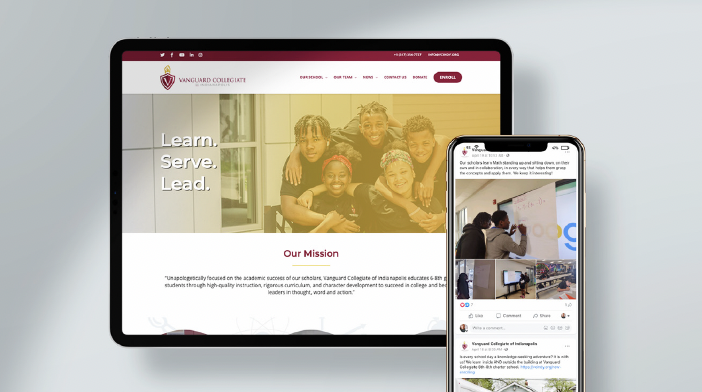
In an era where digital landscapes shape the future of education, a school’s online presence isn’t just a checkbox – it’s the gateway to a thriving school. Every school boasts a unique mission and offerings waiting to be discovered by those seeking an exceptional educational journey. Search Engine Optimization (SEO) is the key to unlocking this potential. 

SEO may sound daunting—but fear not! The path to enrollment success is paved with simple yet mighty strategies tailored explicitly to your school’s online presence. 

How SEO Can Support Enrollment

Before we delve into the how of SEO, let’s take a minute to talk about why SEO matters for schools. Improving your school’s search engine ranking is not just about climbing the digital ladder; it’s a direct route to increased visibility and a robust enrollment pipeline. In today’s digital landscape, parents are turning to online platforms to explore educational options for their children. A higher-ranking website positions your school as a prominent player in the educational arena, capturing the attention of parents actively searching for the best learning environment.

Unlocking Enrollment Success Easy SEO Tips Fo School Websites 1
Ranking on the First Page

Consider the scenario of a prospective parent embarking on the quest for “middle schools with STEM programs” in your area. A well-optimized website ensures that your school stands out on the first page of search results. This heightened visibility is a golden opportunity – the first step in connecting with parents seeking specific educational offerings.

Relevant Content on the Site

As parents explore your website, they discover a wealth of information about your school’s mission, values, programs, and overall learning experience. An optimized website with relevant keywords and compelling content attracts initial attention and sustains engagement. Parents can easily navigate your offerings, understanding what makes your school unique and why it fits their child’s educational journey perfectly.

Clickclick To Enroll Redesign Your Schools Website For Growth (1)

For more on website content, check out the free webinar Click to Enroll: Redesign Your School’s Website for Growth.

The Power of Reviews

Positive online reviews and engaging multimedia content play pivotal roles in shaping the perception of your charter school. Reviews from satisfied parents act as testimonials, building trust and confidence in the quality of education and the overall school experience. Meanwhile, multimedia content, such as videos showcasing student achievements and school events, adds a personal touch, creating a connection beyond words.

Building Trust and Confidence

The ripple effect of effective SEO extends beyond the digital realm. As your charter school’s online reputation grows, so does parents’ confidence in choosing your school. A positive online presence becomes a powerful ally in the decision-making process, influencing parents to envision their child thriving within your school’s unique educational environment.

8 Simple SEO Tips for Schools

Let’s dive into eight simple SEO tips that will revolutionize how your school is perceived digitally, paving the way for increased visibility, connecting with new audiences, and—if paired with other strong marketing efforts—a surge in enthusiastic enrollments.

1. Optimize Your Website Content
  1. Ensure your website content is relevant, informative, and tailored to your target audience.
  2. Incorporate keywords related to your school’s mission, values, and programs within the content.
  3. Create compelling meta titles and descriptions for each page to improve click-through rates from search engine results.
2. Mobile-Friendly Design
  1. A mobile-friendly website is crucial for SEO in today’s mobile-centric world.
  2. Optimize your website design to ensure a seamless and engaging user experience on various devices. 50% or more of a school’s web traffic can come from mobile devices.
  3. Google prioritizes mobile-friendly sites in its rankings, making this an essential aspect of SEO for schools.

Website Article Image
3. Local SEO Focus
  1. Capitalize on local SEO by claiming and optimizing your Google My Business listing.
  2. Include accurate information about your school, such as location, contact details, and business hours.
  3. Encourage satisfied parents to leave positive reviews on school review sites, enhancing your school’s credibility.
4. Utilize Engaging Multimedia
  1. Enhance your website with engaging multimedia content, such as high-quality images and videos showcasing school activities and achievements.
  2. Optimize multimedia elements for faster loading times to improve user experience and SEO rankings.
5. Develop a Blog Section
  1. Create a blog section on your website to regularly publish relevant and insightful content.
  2. Share stories about student achievements, upcoming events, and educational insights.
  3. Blogging keeps your website fresh and provides valuable content that can attract organic traffic.
6. Social Media Integration
  1. Leverage the power of social media by integrating social sharing buttons on your website.
  2. Regularly share updates, achievements, and events on social platforms to increase your school’s online visibility.
  3. Social signals can positively impact search engine rankings.
7. Optimize Images for SEO
  1. Use descriptive file names for images and include alt text to provide context for search engines.
  2. Properly sized and optimized images contribute to faster page loading, a factor considered by search algorithms.
8. Monitor and Analyze Performance
  1. Regularly monitor your website’s performance using tools like Google Analytics.
  2. Analyze key metrics such as website traffic, user engagement, and keyword performance to refine your SEO strategy.

The journey through Search Engine Optimization (SEO) may seem daunting, but it unveils a path to enrollment success for school leaders. By implementing these tailored SEO strategies, schools can capture the attention of parents actively seeking the best educational environment for their kids.

About the Author

Lynn Ellis is a Project Manager and Content Strategist for Grow Schools Enrollment Marketing. Before marketing, Lynn’s diverse career background included conference planning, office management, and math teaching. Lynn is an avid knitter, an aspiring guitar player, and a nascent sailor. She is the proud parent of a 22-year-old son.


Search data show that families start looking for schools between January and April. This marks a critical time for you to showcase your school—and ensure your content and ads are getting in front of families. This foresight avoids last-minute scrambling as the enrollment season approaches in June, July, and August.

Here are some data-driven strategies you can use to ensure you meet next year’s enrollment goals:

Tip 1: Use social media strategically.

Maintaining an active presence on your social channels is essential, whether your audience engages with you on Facebook, Instagram, or X (Twitter). Leveraging these platforms helps in community building and plays a vital role in your targeted online campaigns. Tailor your posts to current events, sports, and other school events. Aligning your content with the community’s interests fosters a sense of stability and positivity.

3 Tips Data Driven Enrollment Marketing (2)

Tip 2: Watch key metrics so you know what to improve.

Social media engagement, website traffic sources, top-performing posts, and conversion rates are great metrics to watch. As for what to watch, you’ll want to consider your goals. For example, if your goal is to build and maintain an online community, post engagement, and blog traffic are great metrics to track. For enrollment increases, you’ll want to keep an eye on lead conversions—or how many people are filling out a form on your site after viewing a piece of content.

Tip 3: Use Google Analytics.

By setting up and monitoring Google Analytics, you’ll gain a comprehensive understanding of website traffic, user behavior, and the effectiveness of your marketing channels. Metrics such as page views and new user browsing can help you understand who is spending time on your website; you can utilize these insights to refine your strategies.

By using these strategies, you’ll set your school up for success in the competitive landscape of enrollment marketing. For support, browse the free resources below or reach out about an enrollment marketing partnership.

3 Tips Data Driven Enrollment Marketing (1)

Frequently Asked Questions

When do families actually start looking for a school?

Search data shows most families begin their search between January and April — months before the typical enrollment season of June, July, and August. If your outreach starts in the summer, you’re already behind.

Which social platforms should a school focus on?

Whichever ones your community actually uses — commonly Facebook, Instagram, or X. The platform matters less than tailoring your posts to real school and community events instead of generic content.

What metrics should I track if my goal is building an online community?

Post engagement and blog traffic are the clearest signals — they show whether people are actually interacting with what you post, not just seeing it.

What metrics should I track if my goal is enrollment growth specifically?

Lead conversions — how many people fill out a form on your site after viewing a piece of content. That’s a stronger enrollment signal than views or engagement alone.

What does Google Analytics add beyond social media metrics?

A fuller picture of website traffic sources, user behavior, and which marketing channels are actually driving visits — including page views and new-user activity, which help you see who’s spending time on your site and why.

What’s the risk of waiting until summer to start enrollment marketing?

Since families are already searching by January–April, waiting until June–August means competing for attention after many families have already made a decision — leaving you scrambling instead of ahead of the curve.

According to the National School Choice Awareness Foundation’s most recent survey, 75 percent of U.S. parents, about 46 million families, considered, searched for, or enrolled a child in a different school in 2025, and 62 percent expect to search again this year (National School Choice Awareness Foundation). Most of that search starts online, so your school’s website and online presence carry real weight. Here are five ways to show up and make a strong impression once families and caregivers find you.

How Do You Improve Search Visibility for Your School?

Google still handles the bulk of that search traffic, so paid search through Google Ads remains a solid way to reach families actively looking. Build ad content around the terms people search, like “schools near me,” “schools with enrichment programs,” or “top schools in [your city],” and Google’s free analytics will show you which terms convert so you can adjust your spend. Schools set their own budget and pay only when someone clicks, which keeps it low-risk to test.

But search has changed since keyword ads were the whole story. AI Overviews now show up on more than 20 percent of Google searches, and when they do, click-through to any website drops by nearly 60 percent, according to Similarweb clickstream data reported by Search Engine Land. ChatGPT alone reaches 900 million weekly users, and Google’s own AI Overviews reach 2.5 billion people a month, per CXL. A growing share of families never click a link at all; they get their answer straight from an AI Overview or a chatbot.

Answer engine optimization (AEO) and generative engine optimization (GEO) are about writing content so an AI system can lift a clear, direct answer and cite your school as the source when it responds to a family’s question directly, inside ChatGPT, an AI Overview, or a voice assistant. In practice, that means answering the exact questions families ask, in plain language, near the top of the page: What’s tuition? What’s the student-to-teacher ratio? When does enrollment open? The clearer and more specific your answer, the more likely an AI Overview or chatbot quotes it back with your school’s name attached.

Tuesday Tips Cybersecurity

How Do You Design a Website That Works for Families?

Your website is often a family’s first real look at your school, so keep the branding consistent and use authentic photos instead of generic stock images. Design it for two audiences at once, current families and prospective ones, and put enrollment information where nobody has to hunt for it: in the main navigation and as a button on your homepage. A pop-up as deadlines approach helps too.

Build your content around the questions prospective families have. Videos, photos, and testimonials from students, teachers, and families and caregivers show what your school is like day to day, and footage shot by students and teachers often reads as more genuine than a polished production. Keep your calendar, visit days, and enrollment deadlines current, and list school events that are open to the public.

Grow Schools’ free webinar, Click to Enroll: Redesign Your School’s Website for Growth, covers this in more depth if you want to rework your site.

Which Social Platforms Are Worth Your Time?

You don’t need a presence everywhere. Ask current families where they spend time online, and build your strategy around those one or two platforms instead of spreading yourself across all of them. What works on Facebook won’t necessarily work on Instagram or TikTok, so look at what other schools are posting on each platform before you commit.

Running several accounts is a lot for one person, so bring others in. A school representative approves everything before it posts, but families and caregivers, teachers, and students can supply the stories and footage. A student-run media club, with a faculty advisor keeping an eye on it, can handle a surprising amount of the day-to-day content.

How Do You Keep Your School’s Online Listings Accurate?

Sites like GreatSchools, Niche, Private School Review, and Public School Review are often a family’s first stop, and they’re increasingly a source AI Overviews and chatbots pull from directly when someone asks about schools in your area. Give someone on your team access to update enrollment numbers, course offerings, and demographics on each one, and correct errors as soon as you spot them.

These sites vet every review, so staff can’t post one on a family’s behalf, current families and students can. A little school swag as a thank-you goes a long way toward getting people to write one.

Screenshot 2024 01 19 At 12 13 03 PM

Not every review will be glowing, and a negative one will sit there for a while. Treat it the way you’d treat a phone complaint: ignoring it is the online version of hanging up, except everyone else is watching. Respond promptly, address what’s real in the complaint, and use it to show families how your school handles a problem. Updates to these profiles are moderated, so give it 2 to 3 business days to show up after you submit a change.

How Do You Showcase What’s Happening at Your School?

Blog posts are a straightforward way to show your community what your students are doing, and sharing them on LinkedIn and other social channels extends their reach past your own site. Clear, specific posts that answer a real question with real numbers are also more likely to get picked up by an AI Overview or chatbot, which is one more reason to write them well.

Your teachers have plenty worth sharing too. Beyond a guest post on your own site, outlets like Edutopia, The Educators Room, and We Are Teachers accept articles from teachers directly, and member publications of Parent Media often run how-to pieces written by educators. When someone on staff gets published, share it widely and give them credit.

A few ideas beyond blog posts: a teacher-led webinar on classroom management, a counselor’s video on helping students get organized, an administrator speaking on a topic like managing budget cuts, or a student walking through a class project on TikTok.

The more places your school shows up, online and in person, the easier it is for the families already searching to find you.