charter school sustainabilityDo You Know the Four Pillars of Charter School Sustainability?

Editor’s Note: For this CHARTER EDtalk, our own Charter School Capital Advisor, Ryan Eldrige, was honored to be joined by Jeff Rice, Founder and Director of APLUS+, The Association of Personalized Learning Schools & Services, to discuss the Four Pillars of Charter School Sustainability. Jeff is passionate about the charter school movement and because of his dedication, APLUS+ has been a leading voice to raise awareness and understanding of the critical need for parent and student choice in public education, and specifically for a personalized learning option in education for the growing number of students for whom a rigid, classroom-only model is not a good match for success.
To learn more about the Four Pillars of Charter School Sustainability, please watch the video or read the transcript below for the full story.


Ryan Eldridge: Hello and thank you for joining this episode of CHARTER EDtalks. I’m Ryan Eldridge, Charter School Capital Advisor, and I’m honored to be joined today by Jeff Rice, director and founder of the APlus+ Personalized Learning Network Association, and we’re going to be talking about building strong community engagement. So, welcome Jeff. Thank you for joining us.
Jeff Rice: Well, thank you. It’s an honor to be here as well.
Eldridge: Why don’t we just kick it off. I’ll ask you a couple of questions, and we’ll just dive right into it. So, can you tell us a little bit about APlus+ and the APlus+ network and your theme for this year?

About APLUS+ and Personalized Learning

Rice: APlus+ is the first and currently the only association whose mission and vision is to advance personalized learning and to support all schools, but particularly charter schools whose mission and vision is to personalize learning.
When we talk about personalized learning, because that tends to be a phrase that can be used to represent a wide variety of things, we’re talking about a model of education that provides choice and flexibility in how, what, when, where and with whom each student learns. So, it is incumbent upon every school, who supports that mission and vision, to provide a wide variety of choices. Sort of a buffet menu that can be matched to the needs of each and every student.
We were founded 17 years ago in 2002, so this is our 17th year in operation, and we have built a strong reputation as the pioneers in education for personalizing learning in the 21st century. Our theme for this year is Strengthen That Which We Can Control, and the reason we chose that theme is obviously because of the consequences of the 2018 elections and the choice (of some within the status quo education system) to use charter schools as scapegoats for all of the financial troubles, the academic issues that the district schools are experiencing, and they’re using charter schools as the reason for their fiscal mismanagement and academic failures, of course, all of which is false.
But what we can control is to strengthen our schools in four particular areas, which we call the Four Pillars of Sustainability. If you’d like me to-

The Four Pillars of Charter School Sustainability

Eldridge: That was my next question. Now, I was just going to ask you can you go into the Four Pillars of Sustainability?
Rice: I jumped right into it.
Eldridge: That’s great. Please do.
Rice: Okay. So, the Four Pillars of Sustainability, which are the four primary areas in which we have direct control over are as follows.

PILLAR 1: Accountability and Transparency

Rice: Obviously with the recent signing into law of SB 126 by [California] Governor Newsom, requiring charter schools now formally even though most charter schools were already complying with these requirements, but formally, legally, to comply with the Brown Act requirements, the Public Records Act requirements, the Political Reform Act requirements, and sections of Government Code 1090. It has intensified the requirements for charter schools to be very transparent in those areas. So, with regard to governance, charter schools now really have to step it up to make sure that they are following all the requirements now that are being required of them.
In addition to, of course, what they’ve been required to do all along, and that is make sure that they follow their charter school petition in their administration that they meet their LCAP goals and do their reporting mechanisms as they are required to do to make sure that their finances are in order and that they are fiscally responsible and prudent that they have the required reserves set aside as well as legal compliance to make sure that they are very familiar with charter school law, very familiar with all the areas in which they are required and being scrutinized to follow. As we know, the scrutiny has intensified in the last couple of years. And as a result of the 2018 elections, has intensified even more. That is the first pillar, accountability and transparency.

PILLAR 2: Student Data, Growth, and Achievement

Rice: The second pillar has to do with student data, growth, and academic achievement. Of course, student data is an area in which we can significantly improve, particularly around student intake data. In my nearly 20 years of experience, I hear countless stories about how students who have been struggling in district-operated public schools are coming to charter schools, and their first or second year state testing results, of course, are far below proficient, the reason being because they are inheriting the failures of those district schools with those particular students who upon enrollment with the charter school are several grade levels behind, are credit deficient, are having all kinds of challenges that are not the fault of the charter school at all.

The Importance of Data to Demonstrate Growth

Rice: But the charter schools can do a much better job of documenting that information and translating it into a reportable document that shows that they didn’t start on an even ground when they enroll that student. Well, to use this starting gate analogy, they weren’t at the starting gate. They were hundreds of furlongs behind the starting gate and had to play several years of catch-up in order to bring those students to proficiency in all of the core subject areas. But yet the California Assessment of Student Performance and Progress (CAASPP) results don’t show that. CAASPP results do not reflect that at least until year three or year four.
If the student stays that long with the charter school, the students’ testing results start to reflect the great work that the charter school is doing. So, we need to do a much better job of documenting data and then recording data and reporting it. In addition to that, we need to do a better job not only on the CAASPP results and the dashboard indicators but also using internal assessment data to show internal growth. There are a number of effective tools out there that every charter school should be using regardless of the type of model the charter school is to be able to document internal growth where a one-year snapshot test by the state does not provide all of the story.
Then in addition to that, we want to make sure to use other types of indicators that demonstrate success, college and career indicators and so forth, some of which the state is finally after all these years adopting formally, but to the degree to which the charter school can show those additional indicators. Even post-secondary placement indicators will help in the mix of demonstrating success.
That is the second pillar. Those are more internal pillars by the way. The other two pillars are more external. I believe that charter schools across the board need to recognize that they assume the role of dual educators.
They are equally responsible for showing positive successful results with their students as they are in educating their greater communities and the public.

PILLAR 3: Brand Identity and Sharing Your Success Stories

Rice: We know that still after 26 years of being a movement in California, that the majority of the public still doesn’t know what a charter school is. When most of you say, “We are from a charter school,” the first question out of their mouth most of the time is, “How much does it cost?” That is a mirror that reflects back to you their lack of knowledge in what a charter school is.
In fact, it tells you that the majority of the public still after 26 years believes that charter schools are private schools because how many people in the public think that there is a tuition fee for a public school?
Unless they’ve been living in a cave, they know that public schools are tuition free. So, for them to say, “How much does it cost?” tells you that they believe that charter schools are private schools.

Unless they’ve been living in a cave, they know that public schools are tuition free. So, for them to say, “How much does it cost?” tells you that they believe that charter schools are private schools.

That is a huge public relations disaster for the charter school movement where the majority of the public still doesn’t recognize that charter schools are part, an integral part, of the public school system. Now, our opposition is taking advantage of that by going out and using false propaganda and talking points to say that charter schools are stealing public school students. Charter schools are stealing public school dollars from the public education system.

Rebranding Charter Schools

Rice: So, they’re using that lack of knowledge in the public to their advantage to use charter schools as a scapegoat and to demonize charter schools and to sway the public against charter schools even though charter schools are an integral part of the public education system. In order to turn that around, not only do we need to educate the public about charter schools being an integral part of the public education system, but charter schools need to adopt a strong brand identity. A brand identity is a way to, in layman’s terms, describe who you are, what you do, and how you do what you do.
What is the end result? The end goal is to create value and distinction in the mind of the public, so they recognize that you are an essential part of a vibrant and healthy public school system in their community that you are serving students whose needs are not being effectively met by other types of public schools. Now, that’s not to say that we should get rid of all district schools and go all charter. This is not about charter schools versus district schools. This is about having a healthy and vibrant and diversified public education system that provides equal access and equal opportunity to all students, to find the school and the program that is best matched to them to ensure their best chance at succeeding and going on to a productive life through career and college pathways.

This is about having a healthy and vibrant and diversified public education system that provides equal access and equal opportunity to all students, to find the school and the program that is best matched to them to ensure their best chance at succeeding and going on to a productive life through career and college pathways.

To establish a brand identity is to succinctly describe who you are, what you do, and how you do what you do in a way that the public understands and recognizes the tremendous value to society and to the public education system that they’re currently not seeing by not even knowing that what a charter school is. So, it’s incumbent upon every charter school to establish a strong brand identity, and from that foundation to then tell your success stories and tell your success stories through a wide variety of avenues, from social media, to traditional media, to developing relationships in the community, which gets, then, to our fourth pillar of sustainability, and that is to develop strong relationships and allies out in the community.

PILLAR 4: Building Community Relationships and Allies

Eldridge: Please elaborate on this one. This is important, I think, for a lot of charter schools.
Rice: That’s right. Because charter school leaders wear so many different hats, they tend to really have little or no time to reach out to their greater communities, and yet that is equally as critical as serving the needs of their students, especially in today’s very contentious climate where we’re really facing some of the most anti-charter legislation and anti-charter perspectives and sentiment and downright attacks that we have experienced in 26 years of existence.
So, the heat has been intensified. It is incumbent upon charter school leaders to reach out, not operate in isolation, not operate as separate islands, but to reach out and develop strong relationships with community leaders and community organizations that make a difference.
And in so doing to build allies so that when we are challenged by the status quo system that believes in a monopoly ahead of the best interests of students and ahead of parent and students’ school choice, which should be the foundation that everybody agrees on.
But yet that is not what we’re currently facing. We need to have those local allies to influence decision-makers and elected officials are responsible for making policy at the state level, to remind them that the most important focus is what is in the best interest of students, and how can we together create a vibrant and healthy education system that offers diverse choice and opportunity for all students to ensure that all students succeed? That should be the goal for everybody, but yet it’s not.
So, developing those community relationships by reaching out to individuals, engaging with them, educating them, inviting them to be a part of your school community, of your greater concentric circles of influence, makes all the difference in the world, and that needs to be integrated into the culture of every school as vitally as important as is integrated into the school, the goal of academic excellence.
Eldridge: Yeah, can you provide some specific tips on how they can actually engage the community and create those allies? Is that inviting authorizers out to board meetings? Is it holding community events? How do you suggest they do some of those things?
Rice: Well, I think first and foremost, it’s to invite them to be part of your interview informational distribution network. Get them on your email distribution list. Develop an email newsletter or other ways of distributing and disseminating information on a regular basis, some of which may include invitations to all school events whether those events are open house events; they’re events that honor and recognize community leaders for their support, which are very important. Community leaders love to come and receive awards, and to find excuses and reasons to honor and recognize their leadership and their support in your school and in what you’re doing is vitally important.


RELATED: How to Host a Successful Legislative Visit to Your Charter School


Rice: That also includes events that may showcase student talents and student achievements and student results, everything from theater to spelling bees, to robotics team results and those kinds of things. Use those opportunities to reach out to your community and invite folks to join you. Also, use organizations such as Chambers of Commerce and rotary clubs and Elks lodges and other organizations that are parent-driven, that work with troubled youth and teens, that work with families such as real estate agencies, such as church groups and so on. I have a whole list here. I’m trying to remember off the top of my head what a lot of them are.
Eldridge: You’re doing great.
Rice: But certainly, elected officials. Go out and meet with elected officials, staff at the regional offices. Go visit them in Sacramento. Bring students along to tell their success stories. In addition to the newsletter, use social media outlets. Use traditional media outlets to talk about your student success stories, to talk about your academic results and how you’re making a difference for students who otherwise would not have been successfully served had you not been in existence.
That is what ultimately creates value and distinction. You are providing a school model and results that other types of public schools and even private schools are not able to offer, which means you are an essential ingredient and component to a, to contributing to a healthy and vibrant public school system.
Eldridge: Great. Jeff, always passionate. Really appreciate it, it’s great information. Appreciate you coming again today.
Rice: Thank you so much for having me.
Eldridge: And hopefully everybody else out there enjoyed it, and that wraps up this episode of CHARTER EDtalks. Thank you.

Charter School Capital logoSince the company’s inception in 2007, Charter School Capital has been committed to the success of charter schools. We provide growth capital and facilities financing to charter schools nationwide. Our depth of experience working with charter school leaders and our knowledge of how to address charter school financial and operational needs have allowed us to provide over $1.8 billion in support of 600 charter schools that have educated over 1,027,000 students across the country. For more information on how we can support your charter school, contact us. We’d love to work with you!
LEARN MORE


Charter School Authorizer

Top Ten Insights into the National Charter School Authorizer Pipeline

Editor’s Note: This information was originally published here, by NACSA. For those interested in getting a charter school up-and-running, these charter school authorizer insights might just mean the difference in getting a charter approved … or not.
NACSA’s first-ever analysis of the national charter school pipeline reveals a sector with a tremendous variety of applicants and educational models—a more diverse sector than the common narrative would suggest. It also reveals the significant impact authorizers have in shaping the public education landscape across the country. Ultimately, communities get the schools that authorizers approve.

Top 10 Charter School Authorizer Insights

School Models

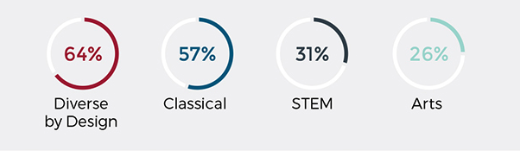
1. A wide variety of educational models are being proposed and approved.
2. Authorizers are more likely to approve some types of educational models than others:

3. The “No Excuses” model is becoming much less prevalent, with the approval rate of 40% in the last five years.

Operator Types

4. The proportion of proposals from freestanding operators is at a five-year high.

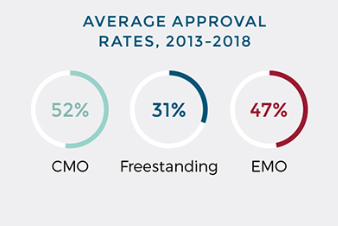
5. Historically, authorizers are much more likely to approve schools affiliated with CMO or EMO networks.

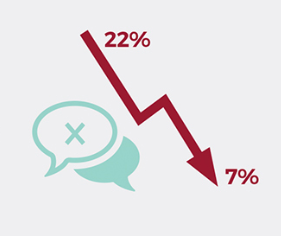
6. Proposals from for-profit operators have declined sharply, dropping 50% since 2013.

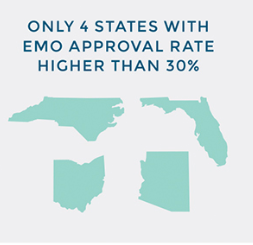
7. Operator types vary between states, with EMO-affiliated schools representing a significant number of approved schools in only four of the states studied. Only 4 states with EMO approval rate higher than 30%.

External Support

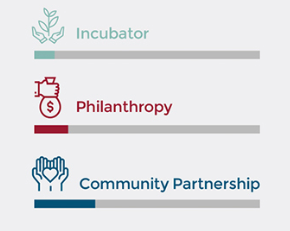
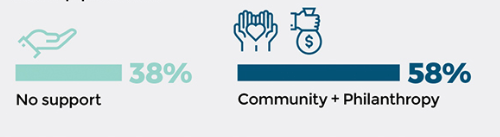
8. The vast majority of proposals did not identify support from an incubator, philanthropy or community partnership.

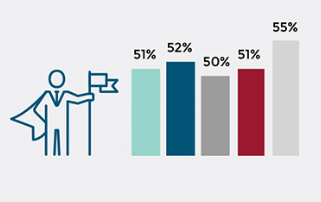
9. Applicants with more than one form of external support are much more likely to be approved.

Local Context Matters

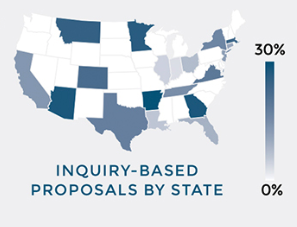
10. Widespread variation exists from state to state, and as a result, there is not a “typical” charter school proposal or state.

For the full infographic, click here.


Charter School Capital logoSince the company’s inception in 2007, Charter School Capital has been committed to the success of charter schools. We provide growth capital and facilities financing to charter schools nationwide. Our depth of experience working with charter school leaders and our knowledge of how to address charter school financial and operational needs have allowed us to provide over $1.8 billion in support of 600 charter schools that have educated over 1,027,000 students across the country. For more information on how we can support your charter school, contact us. We’d love to work with you!
LEARN MORE


Charter School Honor Roll WinnersAnnouncing the 2019 Charter School Honor Roll Winners!

Charter schools help create educational choice. That’s why Charter School Capital only works with charter schools – we believe in the power of charter schools and their leaders to deliver quality education. We created the Charter School Honor Roll in 2018 to celebrate the achievements of exceptional charter schools across the country.
We were humbled and inspired by the hundreds of worthy submissions we received for this, our second annual, Charter School Honor Roll. Our team was so moved by the passion and pride that ALL of our submissions shared about the hard work their students and school leaders have been doing. And, because the caliber of schools who shared their stories with us was so exceptional, selecting the winners was no easy task for our panel of judges.
The stories charter parents shared about their children blossoming; feeling included; feeling at home; being supported; being recognized for their achievements; being part of a larger family, were all so deeply moving.
School leaders shared their immense pride in student accomplishments; state and local recognition; the dramatic academic improvement due to the hard work and dedication of students and teachers; supporting the professional development of their staff; school service and outreach and how it has impacted their communities; beating the odds … just to name a few.
We carefully read each submission and selected schools that we felt best exemplified exceptional accomplishments in any of the following categories:

  • School growth
  • Student achievement
  • Community service
  • School leadership
  • Positive school climate

Thank you to everyone who sent in amazing stories and photos for consideration. Your hard work and dedication are truly awe-inspiring. Reading each and every one of these stories has reinvigorated our belief in what we do here at Charter School Capital—helping charter schools access, leverage, and sustain the resources they need to thrive, allowing them to focus on what matters most—educating students.
To see the list of 30 outstanding schools (from 17 different states) that made the grade for this year’s honor roll, click here!


Charter School Capital logoSince the company’s inception in 2007, Charter School Capital has been committed to the success of charter schools. We provide growth capital and facilities financing to charter schools nationwide. Our depth of experience working with charter school leaders and our knowledge of how to address charter school financial and operational needs have allowed us to provide over $1.8 billion in support of 600 charter schools that have educated over 1,027,000 students across the country. For more information on how we can support your charter school, contact us. We’d love to work with you!
LEARN MORE


Charter School Growth

Four Charter School Growth Tips from Experienced Charter School Leaders

We hope the four key strategies here provide useful tips for you and your team to develop a strong charter school culture, empower your staff, individualize instruction, and create operational efficiency—all in support of your growth.

1. Nurture your school’s culture as much as you nurture your students

Ultimately, culture is always a product of the people involved with your school. It can be tough to retain quality leaders and teachers, especially because many charter schools have longer days and academic years than public schools. Teachers have to truly believe in the mission from the outset in order to put in those extra days and hours for years to come. To nurture a rich school culture, it’s essential that the people you hire are aligned with your mission.

2. Prioritize continuous professional development and leadership training

In order to have motivated staff committed to continuous improvement, professional development has to be front and center. This is also an investment in continuity. When people feel like they are getting better at their jobs and have room for growth, they are more likely to stay.

3. Focus on providing individualized instruction to your students and on data analysis

These aren’t contradictory! Every educator knows that one of the best ways to improve the data is to meet each student where they are and provide them with the support necessary to improve and succeed—regardless of your school’s curriculum and goals. Of course, school-wide metrics are the best evidence that individualized instruction is working. Review the metrics frequently, share them widely, and make them everyone’s responsibility.

4. Develop systems to maintain operational consistency and efficiency

Researching, investing in, and mastering new systems is time consuming and expensive. The efficiencies you’ll realize down the road will more than make up for the pain of adoption. If you think you don’t have time to figure out a new software to manage your finances, you really don’t have time to wrangle all the Excel spreadsheets you have been using.
Download the PDF of these four tips here.


The Charter School Growth Manual
Whether you’re just beginning the process of starting up a charter school, looking to expand, or trying to prioritize your next steps, download this guide to get expert tips and pitfalls to avoid as you grow.
For this charter school resource guide, we turned to our wide network of charter school experts for best practices and strategies for success at every stage of maturity. All of the advice in this book comes from experienced charter school leaders who have been where you are now—they understand what you’re facing and the pitfalls to avoid.

DOWNLOAD NOW


Charter School Natural Disasters

Toolkit: How To Prepare Your Charter School For Natural Disasters

Editor’s Note: This post was originally featured here from the National Charter Resource Center at Safal Partners. This comprehensive toolkit and list of resources can help prepare your charter school for natural disasters.
In 2018, the nation saw multiple, unprecedented natural disasters including deadly and devastating hurricanes, tornadoes, floods, winter storms, and wildfires. Preparing your charter school for natural disasters involves assessing risks, readying shelters, setting up effective warning and communication systems, and developing recovery plans — all to get your charter school back to teaching kids as soon as possible after a natural disaster.
We hope you find this—and any other article we curate—both interesting and valuable.


Natural Disaster Preparation and Response: A Toolkit for Charter Schools

More than 25 million Americans—almost eight percent of the population—were affected by natural disasters in 2017. The Federal Emergency Management Agency (FEMA), which is an agency of the U.S. Department of Homeland Security, supported 59 major disaster declarations, 16 emergency declarations and 62 Fire Management Assistance Grant declarations across more than 35 states, tribes, and territories. Given the catastrophic events of 2017, these natural disasters remind families and communities of the importance of preparing for, responding to, and recovering from natural disasters.
The National Charter School Resource Center (NCSRC) presents this toolkit that provides resources and examples to help charter school leaders and administrators (hereafter referred to as “leaders”) prepare for and respond to the effects of natural disasters such as earthquakes, floods, hurricanes, tornadoes, and wildfires.
DOWNLOAD THE TOOLKIT HERE
You can download the Excel spreadsheet referenced in the toolkit here.


Charter School Capital logoSince the company’s inception in 2007, Charter School Capital has been committed to the success of charter schools. We provide growth capital and facilities financing to charter schools nationwide. Our depth of experience working with charter school leaders and our knowledge of how to address charter school financial and operational needs have allowed us to provide over $1.8 billion in support of 600 charter schools that have educated over 1,027,000 students across the country. For more information on how we can support your charter school, contact us. We’d love to work with you!
LEARN MORE

Charter School Enrollment Marketing
Enrollment marketing is talking with just the right person at just the right time, via mobile, online, or in person, in a meaningful way. It’s time to up your charter school enrollment marketing game to help your charter school raise community awareness, increase fundraising, and grow your enrollment numbers—while gaining and nurturing support from your community.
We just held our webinar “Charter School Enrollment Marketing 101” and in case you missed it, we wanted to let you know that the on-demand recording is now available! We had a few folks send along some questions after the webinar and thought you may have the same questions, so we’re posting those Q&As here as well. If you have additional questions, please add them in the comments below and we’ll be sure to get them answered for you as well.

Q&As

Q: Do you think they look at the reviews or the school rating? Or both?
A: This is a terrific question!  Parents are certainly first looking at ratings, which can be challenging for many schools because a few bad ratings can quickly bring down a score, but the parents seriously considering your school will go beyond ratings and look at individual reviews.  Unfortunately, the response of many schools when seeing bad ratings is to avoid ratings altogether or hope they go away. That is not a good response. Much better is to cultivate relationships with your parents and ask them to review your school, regardless of whether the rating is good or bad.  Unhappy parents are going to leave a review whether or not you ask them, but your happy parents will be much less aware. If you educate your parents about the importance of ratings and let them know you are trying to create an accurate portrayal of your school on sites that offer ratings, they will be much more likely to share their perspective on these websites.
Q: When does Niche update their school ratings? Is it once a year?
A: Niche should be updating the ratings and reviews as the ratings and reviews come in and have been reviewed by the Niche team.  That being said, at times we have seen response times from Niche being much slower than we would like.
Q: If you serve the whole state, how do we write blogs without just listing every county in the state. Or, do we have to somehow list them all?
A: This is a common scenario we encounter and can be very challenging. I would definitely recommend investing some time mapping out a comprehensive content strategy to address this situation.
I wouldn’t recommend listing every county in each blog post.
The first tactic I would consider is thinking beyond the blog in terms of content and developing content that is more resource-oriented, like a page for each county that serves as a guide for those looking to enroll in a charter school by creating specific content that answers common questions parents may have.
For instance content on your website that answers the following questions:

  • Is there a tuition-free public charter school available in [County Name]?
  • What are the requirements for students in [County Name] to be able to enroll in a charter school?
  • What documentation is required for students in [County Name] to enroll in a charter school?

We have created similar guides for a number of schools and they are now generating thousands of impressions for critical search terms.
Hopefully, this answered some of your questions, but again, feel free to send along any others in the comments below.


If you haven’t already, watch this information-packed webinar to learn which strategies and tactics can help you boost your enrollment numbers and positively impact your charter school’s viability. We hope you find the webinar helpful!


WATCH NOW

Charter School Funding

Charter School Funding: Why Do Charters Get Less Per Pupil?

Editor’s Note: This article was originally published here by The 74 on January 8, 2019. It was written by Patrick J. Wolf, a distinguished professor of education policy at the University of Arkansas. Corey A. DeAngelis is an education policy analyst at the CATO Institute. Larry D. Maloney is president of Aspire Consulting. Jay F. May is founder of and senior consultant to EduAnalytics.
We think it’s vital to keep tabs on the pulse of all things related to charter schools, including informational resources, and how to support charter school growth and the advancement of the charter school movement as a whole. We hope you find this—and any other article we curate—both interesting and valuable.


The Shortchanging of Public Charter School Students: Why Do They Get So Much Less Per Pupil Than Students at Traditional Schools?

In December, we released our study Charter School Funding: (More) Inequity in the City. We meticulously tracked all public school revenue — including federal, state, local, and nonpublic dollars — during the 2015-16 school year in 14 cities with high concentrations of public charter schools.
Charter schools in those cities received on average 27 percent less total revenue per pupil than traditional public schools, a gap of $5,828 per student. The cities with the largest gaps were Camden, N.J., at $14,671 per student, and Washington, D.C., at $10,258 per student. Charter school students in Atlanta, Georgia, received an average of 49 percent less per pupil in revenue than students in traditional public schools. In Little Rock, Arkansas, charter students received 39 percent less.
One critical feature of our public school funding studies is that we focus on revenue. We think it’s important to know how much money is being provided to the public charter and traditional public school sectors. It represents the resources committed to educating students. (School expenditures, while interesting, are a different topic.)
Second, we count everything. Public schools receive funds from federal, state, and local governments as well as philanthropies, parents, and valuable in-kind services such as student transportation and access to school buildings. We identify and record every dollar, and the dollar value of in-kind benefits, directed to the public charter or traditional public schools in each jurisdiction, regardless of its source. When traditional public school districts pass through money to charter schools or receive funds to provide services to charter students, we count that as charter school revenue.
Money passed through traditional public school districts to charters also is counted on the charter side of the ledger. We then divide the total revenue received by the public charter sector by its total per-pupil enrollment and do the same for traditional public schools. Our method generates a complete measure of per-pupil revenue in each sector.
Some analysts say our method is flawed because it is too complete. Certain revenues, they argue, should be excluded from school funding totals because they come from special sources or are intended for specific purposes. Only the school revenue that runs through the official funding formula in a given state should be counted as “per pupil” revenue, they claim. By excluding large categories of school funding, researchers adopting this approach generate smaller per-pupil funding amounts, especially in the traditional public school sector where much of the revenue comes in the form of categorical grants, not formula funding.
By excluding school revenue categories, our critics suggest that only some K-12 school funding is intended to support students. Our challenge to them is this: If large categories of school funding are not intended for students, then whom are they for? If the reason for providing any and all revenue to schools is to support students, in direct and indirect ways, then why exclude any school funding from per-pupil calculations? Our critics have difficulty answering those questions.

RELATED: The Charter School Funding Gap: Why Are District Schools Getting More?

A great example is facilities funding. Traditional public schools receive facilities funding mainly through local property taxes or bond issuances, sometimes supplemented by state categorical grants. Whatever the source, traditional public school systems handle facilities funding through a capital budget that is separate from their operational budget.
A separate set of books reports capital revenue and capital spending. Public charter schools receive facilities funding from a great variety of sources, including (sometimes) a fair share of local property taxes, the in-kind benefit of co-location in a traditional public school building, state categorical grants, or state per-pupil allotments.
We track all of these revenue amounts in our study. Many public charter schools have no access to any revenue sources dedicated to facilities. They have to fund their facilities out of operational monies, by paying rent.
Some critics of our comprehensive approach argue that all capital funding should be excluded. After all, it pays for buildings, not educating kids. But don’t school children benefit from having a facility built and maintained for their education? If so, capital revenue should be counted in any true measure of total per-pupil revenue.
Charter school students need buildings, too. Since one sector finances buildings as a capital expense and the other funds it as an operational expense, any comparison that excludes capital revenue will be biased, reporting a deceptively low funding total for traditional schools. We refuse to introduce that bias into our calculations. We count all revenue received by all schools in both sectors, whether intended to support school buildings or school operations.
A final possible objection to our inclusion of capital revenue is that it distorts funding totals in the year in which funding is received and counted. Facilities are funded and built in a specific year but benefit students across decades. A better approach, some argue, would be to depreciate the value of school buildings across their useful life. Certainly, that would be true if we were studying individual schools in isolation. We are not.
We are studying large school sectors — charter and traditional — with capital needs that are smoothed across time simply because not every school in the sector needs a new building every year. When one charter or traditional school receives funding for a new building, that revenue influx is averaged across the group of schools in the sector for that year, because some day they all will get theirs. Moreover, depreciating the value of each school building requires making a host of economic assumptions. We prefer our method, which relies on actual dollars in specific years, over approaches that speculate about the future.
In sum, our comprehensive school revenue reports raise hackles with some people because we count everything. We think completeness is a virtue, especially when the education of students — all students— is at stake.

 Charter School Facilities

Learn the Five Essential Steps to Charter School Facilities Planning

Charter school facilities planning can be daunting. We’ve created this handy checklist as a starting point to help you move towards realizing your facility expansion or relocation goals. We understand that the planning and financing of any facility project are complex, time-consuming, and have the potential to distract your team from its core mission: serving your students. Download this manual to get concrete, actionable steps for success!

The 5 Essential Steps to Charter School Facilities Planning

If you think that finding the perfect facility for your charter school seems like a huge, complicated undertaking, you’re in good company. This handy, information-packed guide, will help as you move towards realizing your facility expansion or relocation goals.
In it, we cover these five essential charter school facility planning steps—in detail:
Charter School Facilities Planning

  1. Plan – Begin planning at least one year in advance
  2. Fund – Understand your options to make savvy decisions
  3. Acquire – You know what you can afford and how you’ll pay for it … now go get it
  4. Design – Partner with experts to design your new space
  5. Execute – Let the construction begin and get ready to move in
DOWNLOAD NOW


California Legislative Update and Senate Bill 126

In this CHARTER EDtalk, we are honored to be joined by Branché Jones from Branché Jones Lobbying Firm, an expert in California charter school legislation and supporter of the charter school movement. Branché shares his insights into the most recent California legislative updates and how the new SB126 is going to affect charter schools across the state of California. To learn more, please watch the video or read the transcript below for the full story.


TRANSCRIPT

Ryan Eldridge: Hello, and welcome to this episode of CHARTER EDtalks. I’m Ryan Eldridge, Charter School Advisor for Charter School Capital, and I’m honored to be joined by Branché Jones from Branché Jones Lobbying Firm. And we’re here to discuss the California Legislature and Senate Bill 126. So Branché, I know that you’ve got your pulse on things, and we just wanted to find out a little bit more about how 126 is going to impact the charter schools in California.

About Senate Bill 126

Branché Jones: Sure. SB-126 is a culmination of about 15 years of efforts to apply conflict of interest provisions to charter schools in the state. It has the Brown Act in it, the Political Forum Act, the Public Records Act, and you’ll have to comply with government code 1090, which is the governing body of law for elected officials and board members. What it’s going to do is you’re actually going to have to change your provisions, how you operate your Board. Your governing structure may have to change, who you can hire, what terms they’ll be working for you under, things of that nature.
Additionally, for non-classroom-based schools, they have some teleconferencing provisions. So when you’re having a board meeting, there’ll have to be some type of device at every location where people can testify and hear what’s going on in the board meeting.
As I said in the beginning, it was about 15 years in the making. Charter schools have been able to fight it off and different descriptions of it, different bills, Assembly bills, Senate bills. The previous governor, Mr. Brown, was very supportive of charter schools, everybody knows, and he would not sign this piece of legislation.
This governor, Mr. Newsom, said in his campaign that he was going to enact some charter school transparency laws around conflict of interest and things of that nature. So, this bill actually passed in warp speed. It took one week to get through the State Assembly. State Senate first, one week to get through the State Assembly, then it was on the governor’s desk, and he signed it. It’ll go into effect on January 1st, 2020.
In my personal opinion, this was coming in some form or another. We had lived free of those laws since the inception of the Charter School Act, so this was kind of like government creep. It was coming.
Eldridge: Inevitable. Right?
Jones: One way or the other—it was. Correct. It was inevitable. Many schools already live under these provisions and adhere to these provisions. The one thing to add is the bill also applies those same provisions to charter school management corporations (CMOs), so anybody managing or running a charter school has to comply with all those laws as well. That’ll be something that I think people really have to make sure they have a tight grip on because you don’t want to be out of compliance with the statute. That would be reasons for revocation, and that could be the case in some places.
We know there are some interesting governance models out there, but that’s the one twist they put on the bill. So it applies to the entire charter school structure. There was little to no opposition because it was inevitable. The governor wanted this on his desk. He wanted it to be the first thing he signed, and he made sure everybody knew that. We all had our meeting in the Horseshoe with the staff. That’s the governor’s office. They explained the realities of the situation to us all. So this was going to happen, and it basically … It almost went through unanimously, with a couple Republicans in the State Senate and State Assembly voting against it.

What does this mean for the rest of 2019?

Jones: What this means moving forward for 2019, this is the first bill of many that will apply to charter schools. There’s 1505 that would take away your rights to appeal and do a number of wacky things. I know there are some amendments out there to it, but everyone will be in opposition to that. 1506 has not been amended yet at this date, but it will have a cap of some kind in it for charter schools. 1507 closes a loophole that says you can put your site … if you can’t find a location for your school in the district you’re authorized in, you can put it in the district next door. And 1508 will deal with districts … It hasn’t fully been amended, kind of like 1506. They’re working on the language, but it will deal with the financial impact charters have on districts and probably allow a district to deny a charter for fiscal reasons.
Now, the last point I’ll add is the governor has not … the administration hasn’t taken a position. We know people will be fighting these measures as they go through the State Assembly. I don’t know where the State Senate will be. I don’t know that they all reached the governor’s desk, but he did not want to put a cap or a moratorium in his piece of legislation. So that might hint as to where he is on it, but we’re not clear at this point. The only other thing to add is there’s a charter school commission that’s been created to look at the fiscal impact charters have on districts and should have a report out the end of June.
Eldridge: Okay
Jones: That’s the legislative makeup.
Eldridge: So some more information may be coming in the June timeframe, so you can maybe do another one of these with us?
Jones: Yes, we’ll do another one.
Eldridge: And get some updates?
Jones: Yes. And then after June, we’ll know. The governor’s May revision will be out, so we’ll know where the budget numbers are as well.
Eldridge: We appreciate it. This wraps up this version of Charter Ed Talks. We appreciate your time, and thanks for joining us.


Charter School Capital logoSince the company’s inception in 2007, Charter School Capital has been committed to the success of charter schools. We provide growth capital and facilities financing to charter schools nationwide. Our depth of experience working with charter school leaders and our knowledge of how to address charter school financial and operational needs have allowed us to provide over $1.8 billion in support of 600 charter schools that have educated over 1,027,000 students across the country. For more information on how we can support your charter school, contact us. We’d love to work with you!
LEARN MORE

School Choice

What Are the Barriers to School Choice?

Editor’s Note: This post was originally published here, on December 13, 2018 by Education Dive and written by Amelia Harper. It shares the results from a study on school choice, pinpointing some of the key barriers to providing school choice options for students and their families. Transportation and enrollment issues are among the top barriers.
We think it’s vital to keep tabs on the pulse of all things related to charter schools, including informational resources, and how to support school choice, charter school growth, and the advancement of the charter school movement as a whole. We hope you find this—and any other article we curate—both interesting and valuable.


Transportation, enrollment issues create barriers to school choice, study says

Dive Brief:

  • Roughly 145,400 students in Colorado — or 16% of all students in the state — used their school choice option to attend traditional public schools other than the one normally assigned, while 13% of students in the state attend charter schools, according to a new report, “Open Doors, Open Districts,” which examines the use of school choice and open enrollment in Colorado, Chalkbeat reports.
  • Families who use school choice options in the state are more likely to be white and in the middle or upper socioeconomic class, as transportation is one barrier for school choice options for lower-income families who can’t afford the time and cost of transporting students. Another major obstacle is lack of information and confusion over enrollment as deadlines for paperwork to schools varies greatly within the state.
  • The report recommends that the state and school districts create more enrollment consistency between districts, provide better information to parents (especially non-English-speaking families) about schools and the enrollment process, and remove barriers to transportation. However, some Democratic lawmakers and school districts are concerned that addressing the transportation issues would create a scenario where larger, wealthier districts would seek to “poach students.”

Dive Insight:
Wealthier families have always had more options when it comes to school attendance. Wealthier people can afford private schools with good reputations, can transport their children to school themselves, and can afford to move to school districts with better schools, if they choose to enroll their children in public schools. The growth of school choice was an attempt to level the playing field for less financially fortunate families and, to some degree, it has helped. Vouchers, though controversial, are another way some states are seeking to make school options more accessible to all families. However, there are still obstacles that need to be addressed, as this new report notes.
One of the issues noted in the article is the confusion over the enrollment process. Some larger cities, including Denver and New Orleans, have been experimenting with a common enrollment process that has eased the pain for some families. The process is designed to help families explore many options in one place and to match students with schools that are appropriate for their needs. Transportation is another barrier for families, especially in rural communities without a mass transit system. Most states don’t require that charter and private schools offer transportation, though some do offer limited transportation options as a way to attract students. Online public schools are another way to address the issue, but this method of instruction does not work for all students.
As families gain more school choice options, many public schools are left with new challenges. Since many private and charter schools don’t offer extensive services for special needs students, traditional public schools are often left with a larger proportion of special needs students in their schools. They also tend to have greater numbers of English learners for the same reason. States need to find ways to help address these issues as well, not only through additional funding, but also by considering how the increased percentage of students with additional needs affects school performance scores as parents compare them with other school choices.


Charter School Capital logoIf you are trying to meet operational expenses, expand, acquire or renovate your school building, add an athletic department, enhance school safety/security, or buy new technology, complete the online application below and we’ll contact you to set up a meeting. Our team works with you to determine funding and facilities options based on your school’s unique needs.


GET STARTED