Richard Dewey and the Dewey Awards

The Dewey Awards are a tradition at Charter School Capital. This annual essay contest about one’s favorite teacher was created in 2017 by Stuart Ellis, our Founder and CEO.

Who Was Richard Dewey?

Stuart met his favorite teacher at eight years old. By eight, Stuart had already caught on that people would scold him whenever he did anything differently — whenever he “painted outside the lines.” Math — always a passion for Stuart — was an example. Apparently, there was ONE way to solve a math problem, and if eight-yr-old Stuart solved the problem, arriving at the correct answer, using unconventional processes, that was to be discouraged. Mr. Richard Dewey was different.

Mr. Dewey celebrated Stuart’s ability to do the arithmetic in his head — while also coaching him on the processes, for the time when the process would become more complicated.

“This is a treasure that you should hold forever!” wrote Mr. Dewey on Stuart’s first research paper (on California’s gray whales). 

Richard Dewey made his students feel they had limitless potential. He took qualities Stuart had internalized as ‘bad’ and suggested they were great. Mr. Dewey made each kid feel ‘more than’ without making anyone feel ‘less than.’ He made them all feel they had limitless potential. 

Fundamentally, Mr. Dewey made his students feel loved.

In a class of thirty-plus children, every child was seen. Mr. Dewey was a talented musician, and had managed to install a grand piano in his class. He would compose little rhyming songs about each kid – songs that Stuart remembers to this day.

Learn more about the Dewey Awards here.

A Class Reunion

In 2004, more than 30 members of Mr. Dewey’s class showed up for a thirty-year reunion. Sadly, Stuart arrived fifteen minutes after his former teacher had left, and the opportunity for a reconnection was missed. This prompted Stuart to write a Holiday card along with a letter, with details about his adult life and his family. In a heartwarming surprise, Mr. Dewey’s response included vivid recollections of Stuart as an eight-year-old, and all the things the teacher had noticed as potential in the student — things that had come to fruition in Stuart’s adult life. 

Mr. Dewey’s letter was so uplifting it made Stuart cry. He was surprised how, at forty years of age, he could be so moved by this man’s words as he was as a child.

A Long-Awaited Reconnection

In 2017 Stuart got his chance to reconnect with his favorite teacher — who now asked Stuart to call him Rich. They met for three-and-a-half hours, and even that felt too short. Stuart tried to convey the deep impact his teacher had had in his life. They both cried.

Afterwards, Rich wrote Stuart expressing his own thoughts — how he had been reflecting, asking himself if he had had a significant positive impact on others throughout his life. 

As the frequency of notes and calls grew, Rich and Stuart became good friends. The calls became a daily routine, and they were a joy for both men. 

Mt. Dewey’s superpower was his vulnerability. He shared openly about his fears and challenges. He was courageous; he always put others ahead of himself.

Lessons in Life & Death

As Rich grew ill and faced his own mortality, his lesson to Stuart took on a deeper meaning — covering matters spiritual and philosophical.

In June 2019 Richard Dewey passed away. Stuart feels his presence still, and he is happy to see the Dewey Awards honor Rich’s memory.

A Passion to Help Educators

It was the influence of Mr. Dewey — along with other mentors – that led Stuart to devote his energies to the founding of Charter School Capital, with a mission to bolster and empower maverick educators, leaders in education. The whole purpose of our company is to support charter schools, help their growth and guarantee their survival.

Our Favorite Teachers

Most of us have had mentors, teachers in our lives who have inspired us to greatness. Teachers who saw in us potential we may not have even seen in ourselves. Teachers who push us to be the best we can be, to achieve all we can achieve.

The Dewey Awards are meant to celebrate such teachers.

We invite all charter school students to write in to our contest and tell us about your favorite teacher. We will select three winners, and each of these will receive a $1,000 charter school grant in the name of the school of your choice.

Learn more about the Dewey Awards here.

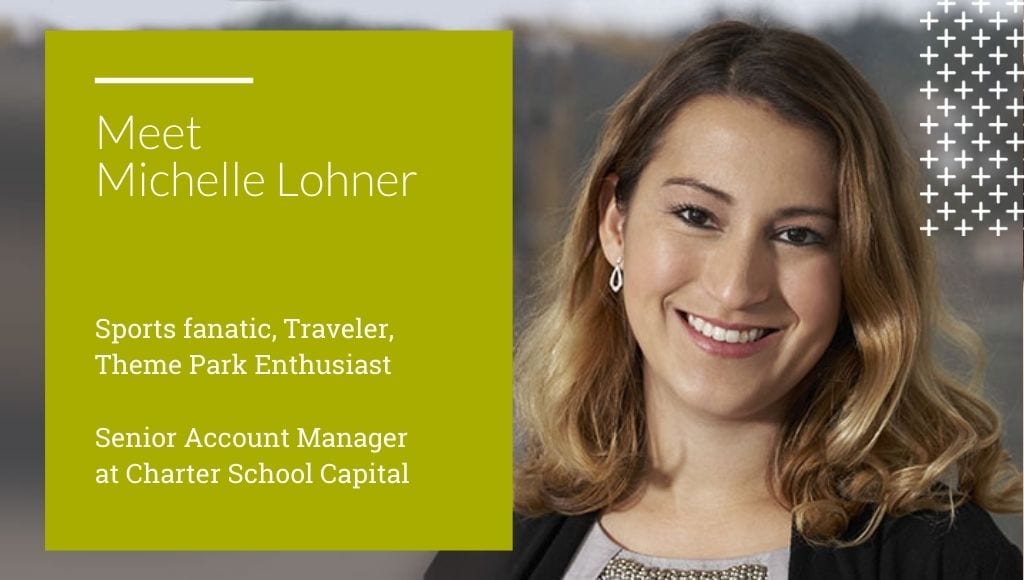
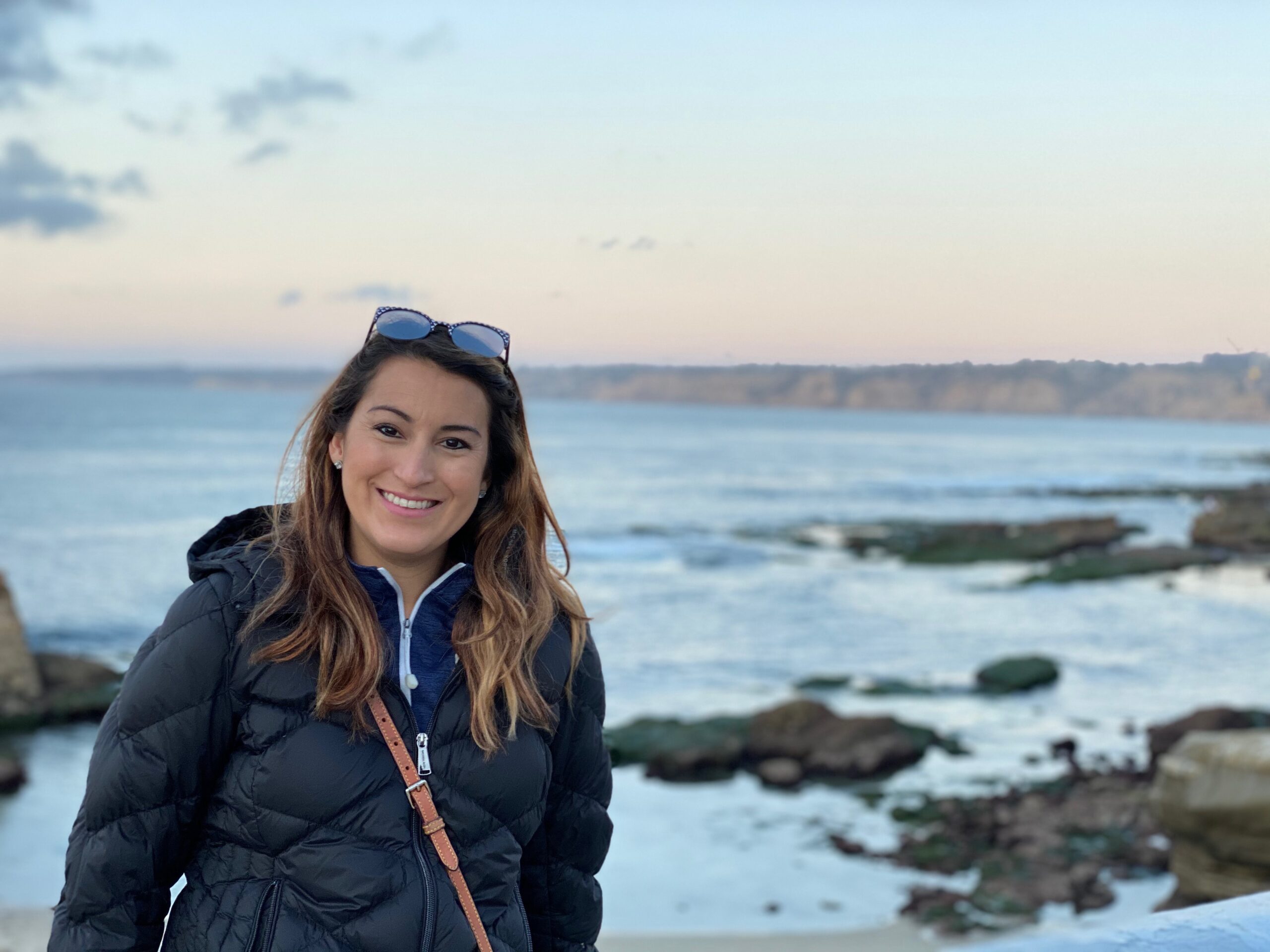
Michelle Lohner - Senior Account Manager
Michelle is a California native who loves all things surrounding community, family, and the diversity that makes us unique. Born and raised in San Diego, she brings the sunshine anywhere she goes. Throughout her career timeline, she has managed to combine creativity and finance.
After almost seven years in banking, she wanted to develop a new skill set. Then, she discovered Charter School Capital, where she was able to work with communities and financial planning. Growing up with teachers in her family, she knew she wanted to give back to the educators that raised her someday. Now, after working with dozens of school leaders, community members, educators, and students, she has fulfilled that promise and continues to shine a light on accessible education.


How did you meet Charter School Capital?

After college, I made a huge change and decided to move from San Diego to Portland. In college, I started a small fashion business where I had my personal banker help me tremendously. I grew to admire them and pursued banking for six and a half years. In banking, I loved developing relationships with clients, connecting folks to resources, and the problem solving aspect of it.

After some time, I knew I wanted to create a larger impact through banking, so I started job hunting. On LinkedIn, I found Charter School Capital and scored an interview. For me, it was the perfect mix of finance, supporting education, and creating long lasting relationships.

How would you describe CSC and your position?

Charter School Capital is a national company that works with charter schools to meet their goals, problem solve through rough patches, and provide financial support.

As a senior account manager, I’ve been able to travel and work with charters and communities all across the United States for the past four years. Meeting numerous school leaders, educators, and students has allowed me to bridge connections, opportunities, and ultimately work firsthand with folks.

What brings you joy?

I love it when people are connected. Having people united in a grander scheme, whether for the magic of Disneyland, getting together to watch a Padres game, or connecting people to build community. The power of human connection is incredible to me.

When did you learn about this line of work? What called you to it?

Growing up, I had many teachers in my family, so I thought I was going to be a teacher for a long time. When I fell into business and finance, I knew the two had to come together at some point. Luckily, I fell into a job that had the perfect mix of both education and finance.

What has kept me here is making and building relationships with our clients and schools. I can meet these visionary leaders who work hard for their communities; whether it’s a school leader or back-office providers, there are so many people who are working to make a difference in the world. It’s their passion and stories that tend to drive me.

What did you want to be when you grew up?

Initially, I wanted to be a teacher, but then I discovered my love for fashion. My maiden name is Parsons, so I thought, “Hey, I should go to Parson’s School of Design in New York and have a fashion empire, this is going to be great!” Then I thought I should go to business school if I want to own my own business. So I pursued a degree in finance at the University of San Diego, where I found there was a lot of creativity in finance.

Over the years, what wisdom have you learned?

Life will take you in all types of directions. By staying true to yourself, you will grow and shape into the person you were meant to become.

From your position, how do you impact charter schools?

As Senior Account Manager, I’ve had the chance to travel, explore, and meet numerous clients, schools, and students firsthand. We provide schools with financial resources, but we often make the most significant impact by being a source for knowledge, expertise, or another perspective in the room. When I meet with schools, I tend to be a soundboard and on-site problem solver to work through any difficulty they face.

One of my favorite parts is when I go to my schools that I work with and see the students. I think, “This is what we’re doing. This is why it all matters.” Those students get to experience a quality education surrounded by leaders who are motivated and inspiring.

What gets you out of bed in the morning?

I’m grateful for the aspects of life, my husband, my family, the sunshine, the ability to go for a walk, living back home in California, and having a life that genuinely brings me joy.

What’s something about you that might be surprising?

I know three languages! Spanish, French, and English. I’m very passionate about being tri-lingual, traveling, and learning about different cultures. I had the chance to live and study in Paris for a short time; that experience helped shape who I am today.

If you could create a new class subject, what would it be?

“The Practical Basics of Life” where we would take a hands-on approach to the basics of personal finance, credit, and investing. Especially for those who are not pursuing a finance career, these necessary skills could help you throughout your life.

What piece of advice would you give to recent graduates?

Don’t give up! Sometimes your career path will take a turn, but do not let that discourage you. With hard work, authenticity, and kindness, people will be there to help you accomplish your goals.

In your view, what does the world need more of? Less of?

More compassion and understanding.

Less divisiveness.

 What do you hope to see for the Future of Charter Schools?

I hope charter schools become less politicized and seen as models for accessible education. We get to a place where public and charter schools can learn from each other and potentially support another, highlighting each other’s strengths.

What do you hope to see for the Future of CSC?

Expanding, both in proximity and relationships. Having a school partner in every state within the US would be a dream. Ensuring charter schools all across the US were being supported. We would be able to interact with a more extensive array of community members. That would drive our mission home, for me.

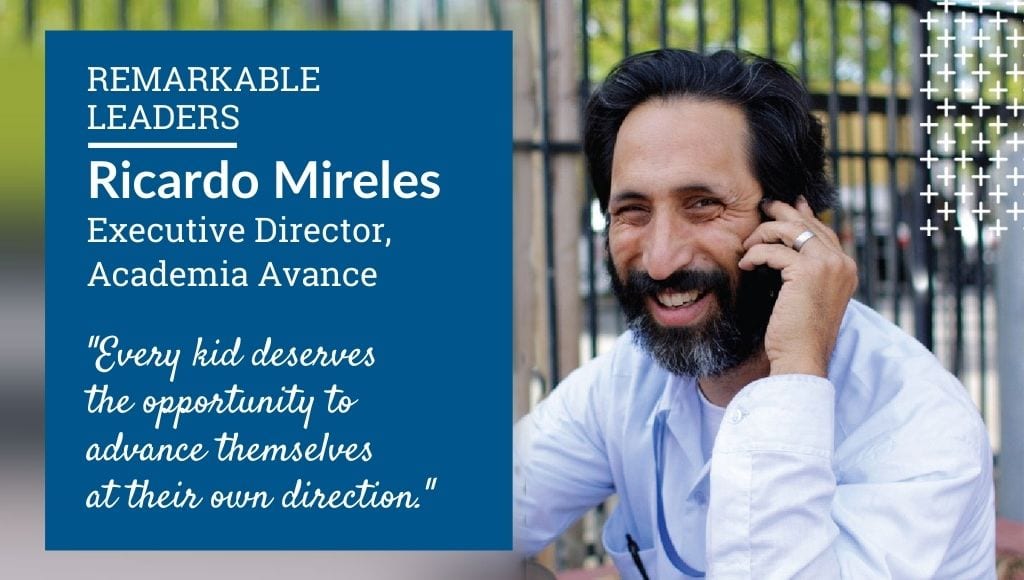
Ricardo Mireles

Academia Avance has a remarkable history, marked by remarkable achievements. In its sixteen years of educating young minds, Academia Avance has had its charter renewed three times. The school lived through the perils and funding gaps of the Great Recession, has endured through many hardships and has now proven it can succeed even during a pandemic.

Most remarkably, over 74% of graduates at Academia Avance are admitted into universities.

At the heart of this remarkable school, is a remarkable leader: Ricardo Mireles.

Ricardo jokes that his path to education happened through osmosis — both of Ricardo’s parents were educators.

After many years of working at the Los Angeles Unified School District, Ricardo began to look into alternative approaches to education in order to better meet the needs of his community. But there was a moment – an “on the road to Damascus” moment – where Ricardo’s path crystallized.

Video – Watch Ricardo describe his remarkable journey

On The Road To Los Angeles

In April of 2004 Ricardo was driving back from his first Charter Conference. Having heard charter leaders speak, he felt energized, inspired, and ready for action. The message he heard echoed throughout the conference was that charter schools are not just an education movement – they’re a community-organizing movement, a community-improvement movement. That a school has an impact, not just on the students and families but on the whole community.

Ricardo thought of calling his high-school classmate Guillermo Gutierrez – now the President of that school – to pitch the idea of starting a charter school together. As fate would have it, it was Guillermo who called him that night, as Ricardo was driving down from Sacramento. That night, on that phone call, a school was born. Soon they put together a package, they found support in their community, a board came together, and they soon filed with the L.A. Unified School District.

The Three-Legged Stool

Ricardo attributes the remarkable success of Academia Avance to a philosophy he describes as the three-legged stool. The metaphor is that a three-legged stool falls without all three legs being solidly in place. For Academia Avance, the three legs are the students, the parents, and then the teachers and staff. The relationships between parents, students and educators are what makes a school thrive.

College-Bound

Nearly three quarters of the students at Academia Avance go onto higher education. Ricardo gets passionate when asked about this. He says it jars him to hear someone say ‘college isn’t for everybody.’ In Ricardo’s view, every kid deserves the opportunity to advance themselves at their own direction. In high school, adults are telling kids what to do. But in college, it’s the students who are choosing a career, picking their courses, and making decisions. Every kid deserves that opportunity. With over 3000 colleges and universities in this country, and all of them so different, there’s a school that is the right fit for any student. It’s our task as educators, says Ricardo, to help students find the college that’s right for them – the one where they’re going to succeed.

According to Ricardo, it is that dedication to help each student find their perfect fit, that makes all the difference.

“We’re fortunate that we’re in the best state of this country. We have the best universities. We have the Cal State system, we have the UC system, we have excellent private schools, and we’re able to then provide those different options for our kids to discover and find the one that fits them. And you know what? Everyone can find a school that is their perfect match.”

The state of California recently published their college-going rates per school, and Academia Avance placed at the top 10% of schools within the L.A. Unified District – that’s almost 200 public high schools.

Returning Alumni

Nothing brings Ricardo more joy than watching his alumni come back and celebrate their success with the teachers. These alumni often volunteer to go talk to the Seniors – to motivate them with proof of what’s possible.

The school’s history is now extensive enough that alumni are now reaching graduate levels, and are coming back with advanced degrees in education – eager to work as counselors and teachers.

An example of this is an alumna who got her undergraduate degree at Mount Saint Mary’s and is now pursuing a degree in Social Work at USC. She’s returned to Academia Avance to work as a counselor, and her experience in the school, combined with her life experience as a Latina from Highland Park, allows her to build strong connections with the students. The kids immediately trust her, they relate to her, they see themselves in her.

Another example Ricardo eagerly shares is a student who struggled in his academics at Academia Avance, and then got accepted at San Jose State and found that a challenge as well, especially in his first year. He did graduate, and he now shares his story in his work as a workplace education experience counselor, securing internships for the students. This young man can tell the students, “look, you can do this.”

A Charter Renewed Many Times

Academia Avance started in 2005. The school’s charter has been renewed three times.

The school started as a very small, niche, community-based, Latinx-focused effort. The process got harder in subsequent years – the charter renewal took three years, and only got approved on appeal through the county. That led to the biggest growth spurt for the school, with enrollment reaching nearly 500 students.

The goal for Academia Avance has remained consistent: to lead their students to higher education.. This became their biggest focal point during the second charter.

Interestingly, it was the school’s growth that became its strongest defense against the hard economic times of the Great Recession – with state deferrals and other financial pressures impinging upon the school, Academia Avance continued to thrive. The partnership with Charter School Capital was instrumental to the school’s survival through those difficult years.

The third charter came through an appeal to the state. In 2015, the school faced declining enrollment as a result of gentrification – which forced many Latinx families to relocate.

Currently, the school faces the pressures of the pandemic, the pivot to a virtual environment, and the necessity to act as an island of safety and comfort for the community.

Video – Watch Ricardo describe his remarkable journey

The Role of Relationships

The long term relationship Academia Avance has built with Charter School Capital has allowed the school to weather some of the toughest storms and continue to thrive. Ricardo praises Charter School Capital for looking beyond the immediate fiscal issues to see what’s really happening with the school, visiting with parents and making efforts to fully understand their issues.

Another aspect of the support Charter School Capital provides, Ricardo remarks, is the innovation. With the help of a technology partner, CSC has recently brought major improvements to air quality in the school – a critical issue during a pandemic caused by an airborne virus. Ricardo again speaks about trust – having good air quality improves the trust parents and staff have in the school.

The Importance of Trust

A moment that Ricardo still remembers from the Great Recession is a Thanksgiving memory. November is an especially hard time in the fiscal cycle of a school, Ricardo explains. Funds come in during July and August, but funds run lean by November. This particular Thanksgiving, Ricardo had to gather all the staff and have a very somber discussion – because the school did not have the funds to meet payroll for November.

The importance of building trust, and having honest and transparent communication, really hit home – while obviously no one was happy about the news, the teachers and staff were understanding and supportive as they received it. As the meeting ended and people were heading for the parking lot, one of the operating officers for the school was able to log in and see that new funding had arrived into the school’s account – a receivables sale from Charter School Capital. And they ran outside to tell the staff that payroll would be covered – and the teachers and staff were able to have a happy Thanksgiving.

“Avance Is Like Family”

The secret sauce, says Ricardo, is always trust. He hears teachers and parents say over and over, “Avance is like family.”

The community has trust in the school. In Ricardo’s view, you can’t just hold trust – you can’t put it in a bank. You have to use it to make things better. There is an accountability that comes with trust. One of the ways this has translated into action has been in fighting stigma. For those who have gone through COVID-19 and recovered, to be able to talk about it. For those infected, to know that they’re not going to be shunned. Mothers who felt they couldn’t tell anyone about their struggles, have a safe space to speak. Removing that sense of shame or secrecy has led to better morale, has increased engagement in medical testing, and has led to a deeper sense of community.

“This Isn’t About Reopening”

In regards to operating a school in the face of COVID-19, Ricardo makes an important distinction about phrasing. “This isn’t about reopening,” he says. “Our school has been open all summer. We’ve been providing food all summer, and working with staff all summer. This is about re-starting, and providing the resources for restarting.”

When it comes to re-starting classes, Ricardo references Maslow’s Hierarchy of Needs. What mattered the most, to him, was working with the families and ensuring everyone had access to medical testing. He worked with a local clinic to ensure his staff was tested, and he continues to make that a priority in his communications with the students’ families.

The agility of communication is an important factor as well. Academia Avance is continuously gaining new information about the health crisis, and the speed to which this can be disseminated to the students and their families is an essential part of keeping everyone safe.

Thriving Through Crisis

Reminiscing about the fiscal crisis his school faced during the Great Recession, Ricardo is quick to emphasize that while the crisis, nationwide, played out in 2008-2009, it hit schools hardest in the subsequent years.

We haven’t even gotten to that stage yet, this time. According to Ricardo, the real financial impact of the pandemic will be felt in the years to come. He wants charter leaders to understand, this is not like a storm. This is not about hunkering down and waiting for the storm to pass over. He earnestly believes this pandemic is forcing every school to adapt and change. In order to succeed in the new normal, school leaders need to adapt and prepare for the fiscal challenges yet to come.

Video – Watch Ricardo describe his remarkable journey

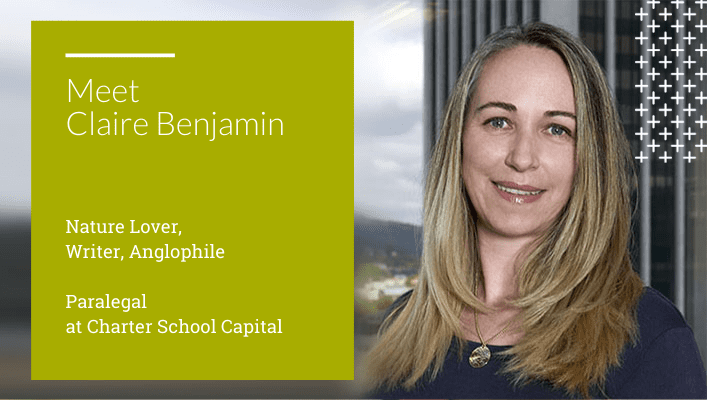
Claire Benjamin - Paralegal at Charter School Capital
Claire is a California native with a love for nature, yoga, and the UK Royal Family.
Previously practicing corporate law, she found herself wanting to move to a field that was not only intrinsically motivating but focused on education. Over a decade ago, what started as a spontaneous weekend trip to Portland turned into a love affair with the city, and she stayed.
With her two cats, husband, and a novel in the works, she reflects on continually learning and fighting the good fight.


How did you Meet Charter School Capital?

After several years of working professionally in the corporate law field, I wanted to diverge from the pathway many of my peers took. A path of law school, sleepless nights, and working more than full-time at giant law firms. I really found myself feeling burned out and was looking for a fresh start.

After a quick visit to Portland, I decided to stay, soul search, and go back for my Masters. A few years later, after “beefing up” my resume and talking to recruiters, Ryann Johnson (Sr. Director of Underwriting) contacted me through LinkedIn. The Charter School Capital interview process was wonderful. I was delightfully surprised by my team’s thoughtfulness, consideration, and drive, which ultimately led to me rejecting multiple other offers as I went through the CSC interview process. I’ve now been part of the CSC Underwriting team for just over a year.

What keeps me going is our mission – that we care deeply about creating better educational opportunities. The way CSC is continually positively impacting the world of education makes me excited to go to work every morning.

How would you describe CSC and your position?

I’m a gatekeeper for the schools we want to support. CSC seriously wants good education models to survive and thrive because we care about the students. My team has the responsibility of vetting the schools that come to us for support. It is also my job to support and guide educators as they navigate the nuts and bolts of their corporate tasks and responsibilities, thus freeing them up to focus on educating their students. I love that we take such a holistic approach to the way we support our schools.

What’s something about you that might be surprising?

I love mythology and seeking the authentic self. Michael Mead states, “Each of us are born with this unique gift inside of ourselves.” He calls it “our genius,” and it’s the idea that each of us has this unique gift inside ourselves. The elders and the parents of a community have a responsibility to find that unique gift in each child and nurture it. That relates to creating a world of education where kids have all these great tools and can express their individual, authentic self under the elders’ guidance in their communities.

What brings you joy?

When I see the incredible power of the human spirit in action. Like when I see moms on the front-line of protests, defending children, or folks standing together in solidarity for a just cause. CSC is a place that encourages the power of the spirit and that their employees embrace our passions. I have the privilege of working somewhere that is at the forefront of the work to be compassionate in business and be emotionally tuned to the actions that we take.
I love being a part of an organization that cares and is actively supporting the charter movement for future generations. It makes me hopeful and passionate, especially during times of hardship.

When did you learn about this line of work? What called you to it?

My parents were educators and activists. I don’t remember a time when my parents weren’t having conversations about our education system. A big reason my parents picked my hometown of Sebastopol was that (at the time), the public schools in the town were consistently ranked number one in the State of California. I always knew our public-school system wasn’t perfect and that I was privileged to have the opportunities I got. As I grew older, I knew I didn’t want to be a teacher, but I did want to impact schools in some way. As I learned more about charter schools, I began to see a potential solution to some of the problems in the public school system, my parents would talk about.

What did you want to be when you grew up?

A writer – I’ve written and journaled my whole life. Right now, I have a fantasy novel in the works, based on mythology.

From your position, how do you impact charter schools?

As an underwriter, it is my job to look for the problems in schools when we take them under our wing. My team helps set up a plan for the school so we can set up resources for the schools in the best way.

If you could create a new class subject, What would it be?

Albert Einstein said, “The intuitive mind is the sacred gift, and the rational mind is the faithful servant. We have created a society that honors the servant and has forgotten the gift.” I would like to see coursework that encourages students to cultivate their intuition and inner wisdom – to listen to that little voice inside that always knows the truth.

In your view, what does the world need more of? Less of?

More women running things. Across all countries, cultures, and groups, you consistently see evidence that the more women you have running things, the more you have a diversity of thought, community-centric thinking, and equal representation.

Less patriarchy will lead to more balance.

What do you hope to see for the Future of Charter Schools?
I hope that Charter Schools continue to evolve as places where educational models can be reinvented and reimagined, where people are experimenting with new teaching methods, and making resources more available to larger populations.

What do you hope to see for the Future of CSC?

I hope to see the mission to expand and continue to grow. The idea that our company could even become large enough to impact schools and education globally is exciting.

By branching out, we can express diversity, encourage authentic self-expression, and look at our children as part of a global community. I get excited when we get to help schools with unique and diverse missions. For example, one school I work with is a Hindi and English language immersion school. Schools like that encourage rich conversations around community and education because they are involved in the global conversation.

Charter schools are examples of successful reopening in the face of the COVID-19 pandemic.

This year’s school reopening has been – and continues to be – an unprecedented challenge for all schools. Reimagining school facilities to create safe spaces for presence learning, setting up cleaning stations, barriers and markers, temperature measuring protocols has added heavy burdens to already-overextended administration bodies. In setting up remote learning, so many schools had to consider, perhaps for the first time, the hardware and connectivity limitations of their students. Social inequalities bubbled up to the surface. And on top of all that, there’s been the challenge of organically preparing the students themselves to conduct themselves within social-distancing protocols.

It’s no wonder so many schools fell short.

Charter schools have performed well, and in many cases have been ahead of the curve – according to two new studies. These studies, one from the National Alliance of Public Charter Schools and the other one from Fordham Institute, found that many charter schools achieved remarkable success – pivoting quickly and efficiently to remote learning.

The schools in the Fordham report distributed tens of thousands of Chromebooks, set up internet hotspots, and were quick to offer a robust mix of live and recorded instruction, causing student engagement and morale to stay high in the face of this transition and the health crisis facing all of us.

The common denominators all center around caring for the student as a full human being.

The Five Keys To School Reopening Success

These five factors rose to the top as contributors to school success:

  1. Meeting students’ nutritional, social and emotional needs;
  2. Proactively distributing the needed technology to the students;
  3. Quickly creating structure that approximates their old normal routines and maintaining grading practices;
  4. Reaching out to families, and listening to families, on a frequent and ongoing basis;
  5. Being team-oriented in all aspects of instruction, grounded on a common curriculum.

The studies also highlight areas for improvement – such as increased communication with families and parents of students with disabilities to discuss and clarify how the school can best fit their child’s needs. In some schools, the effort to integrate students with disabilities was well-executed, but parents and families were just not aware enough to fully take advantage of this.

It’s also worth mentioning that these studies are limited in their scope.

That said, both studies show that charter schools across the nation are rising to the challenge, and have been nimble and effective in creating a new paradigm where the students continue to blossom.

We are proud to serve charter schools and help them grow.

If your school is growing, or is facing funding challenges, we urge you to reach out to our team of advisors. We’re here to help.

Preparing school for reopening during the COVID-19 pandemic

As schools reopen and students once again fill the nation’s classrooms (physically and remotely), charter schools in all states are facing the challenging task of keeping kids safe.

We’ve assembled a list of resources – from the NEA, the National Alliance of Public Charter Schools and from other authoritative sources – all designed to empower charter school leaders to make sound decisions and put effective measures in place to create safe environments.

As we pore through these materials, several key pieces of guidance emerge:

  • Prepare the school campus for physically-distanced learning
    • Smaller groups per classroom,
    • Barriers and distance markers in place,
    • Plenty of sanitizer and cleaning tools available,
    • Improvements to air circulation and indoor air quality
  • Set up protocols for contingencies
    • What to do if a teacher or staff shows symptoms,
    • What to do if a student shows symptoms or tests positive,
    • What to do if the school needs to close again.
  • Empower teachers and students with the right tools
    • Ensure there’s PPE, sanitizer, cleaning stations
  • Set up protocols and educate students to follow these
    • Teach students to avoid physical contact,
    • Teach students not to share phones, toys, books, etc.,
    • Teach students to properly keep physical distance

Additionally, guidance includes aspects of social equity and inclusiveness.

  • Ensure all remote students have access to the proper equipment and connectivity,
  • Ensure special-needs students have needed accommodations,
  • Ensure masks don’t impede hearing-impaired students from understanding teachers

This is not an inclusive list. Please refer to this previous post for links to comprehensive sources. What we aimed to accomplish in this post is to give you a contextual view of the areas to address, and key things to keep in mind.
Also, depending on how badly-affected the area and city around the school might be, measures would of course become more stringent. The goal is to facilitate learning while doing our utmost to protect the health of our students.

We hope this has been helpful. Make sure to click here for more.

Most charter schools need an upgrade to their HVAC to avoid COVID-19 airborn particles to cause spread of infection

Schools all over the United States are abuzz with discussions about reopening. How to reopen safely, how to implement physical barriers, how to allocate space for proper social distancing, how to stagger classes, how to accommodate for virtual learning.

In this commotion a key component for student health and safety is the issue of air ventilation.

America’s school buildings are old (on average 42 years old). And while an aging school building can cause hazards in several areas, nothing compares to the threat posed by Coronavirus in buildings with poor air ventilation.

A report by the U.S. Government Accountability Office states that a full 41 percent of school districts need to update or replace their heating, ventilation and air conditioning systems (HVAC) in at least half of their schools.

We urge school leaders to be proactive in addressing the quality of air ventilation in their school building/s.

A great place to start is a consultation with an HVAC expect.

Charter School Capital has teamed up with BioStar Renewables to help school leaders improve the air quality in their schools.

Learn more at our upcoming Webinar on August 26!

California may cap charter school growth

As described in a recent article from the Charter School Development Center (CSDC), the proposed California budget bill AB-77 (supported by both Governor Newsom and the Legislature) would base 2020-21 school-year funding based on 2019-20 attendance.

Because the State of California funds charter schools and school districts based on their average daily attendance (ADA) , this would significantly affect growing schools – many of which have already hired additional staff, and purchased books, material and equipment, and in some cases expanded their facilities to accommodate for a larger student body.

According to CSDC, “Given the general lack of support for non-classroom-based charter schools in the Legislature, prospects for a broader fix are troubling. Even the proposed Newsom Administration “fix” is far from a done deal. We anticipate the Legislature is likely to support it, but it will likely take up the issue next week and would need to enact any legislation on point before the August 31 constitutional deadline to pass bills for this year. The last-minute nature of the growth cap, tight deadlines, and the Legislature’s lack of public engagement during the pandemic all make advocacy especially challenging.

Notwithstanding these challenges, CSDC suggests that all charter school leaders, parents, and stakeholders, including those from classroom-based ones that may support the proposed “fix,” contact their legislators to advocate for expanding the proposed growth funding cap to address all charter school students/families, including those served by non-classroom-based schools and do the same with Governor Newsom.”

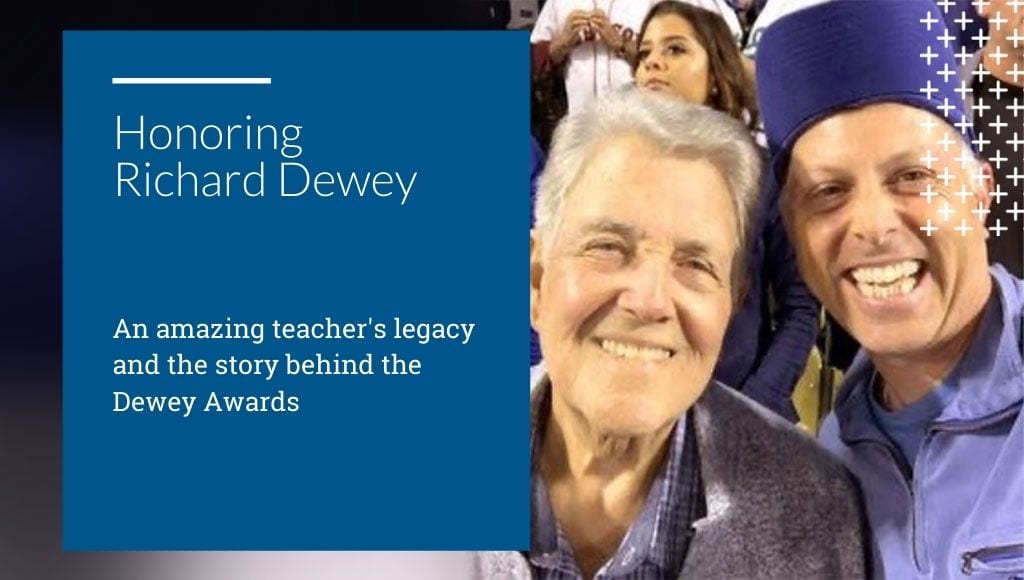
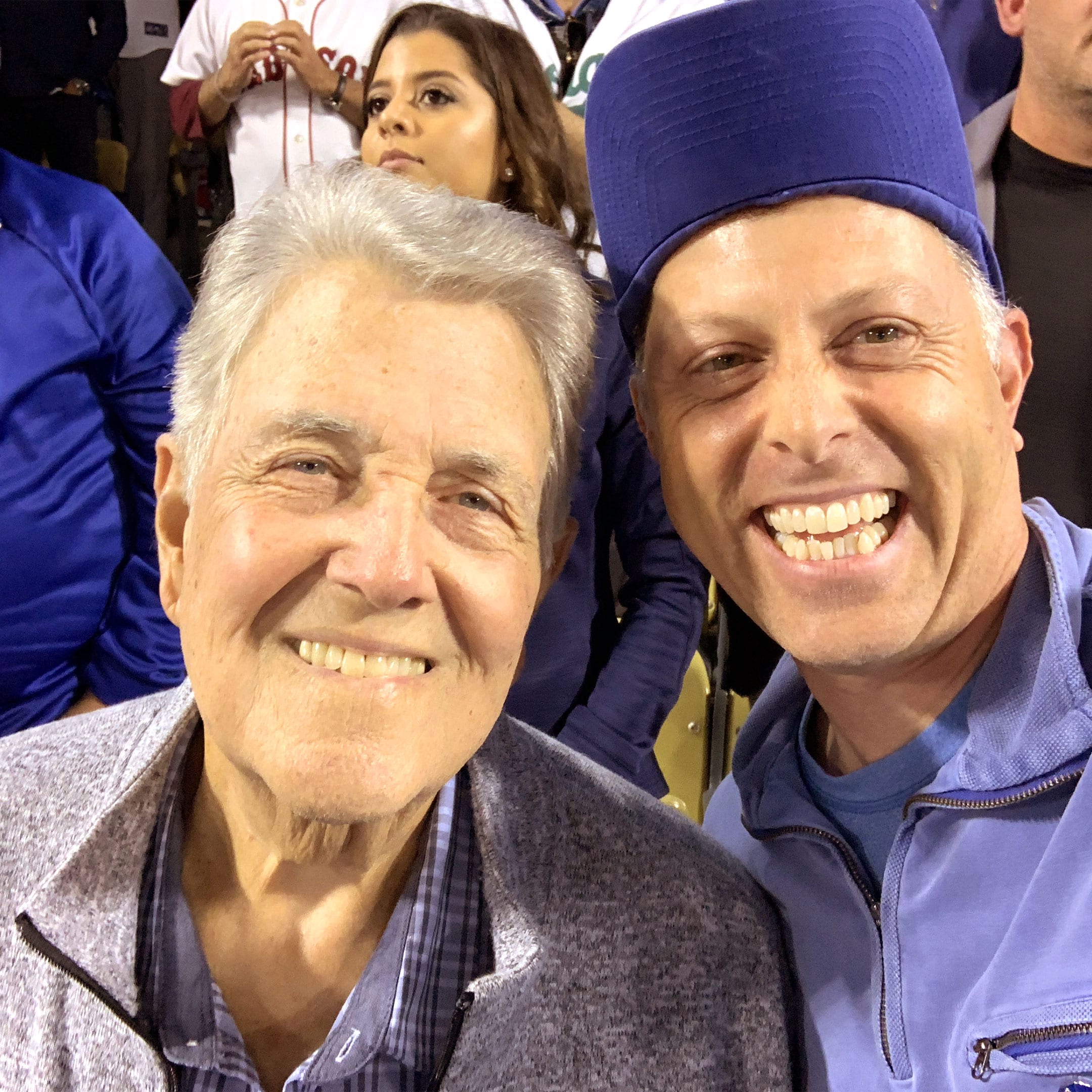
Today we celebrate Mr. Dewey’s Birthday.
Richard Dewey was the third-grade teacher of our Founder and President Stuart Ellis.

Richard Dewey with Stuart Ellis, Founder of Charter School CapitalIn his 37 years of teaching, Mr. Dewey was a mentor to many teachers and countless students, and a special mentor to Stuart. It was this outstanding educator’s legacy and commitment to teaching excellence that inspired our Dewey Awards –  an annual Grant that honors accomplished teachers, and rewards charter schools with three $1,000 gifts per year.“
Mr. Dewey fundamentally changed the way I thought about myself – and really made me believe I could accomplish anything in life” – said Stuart as he described the origins of the Dewey Awards at Charter School Capital.

Mr. Dewey’s extensive career included classroom experience with gifted students, contributions as a K-12 administrator, work in teacher mentorship and certification and in curriculum development, teaching at University level and working with teacher task groups. He was also a gifted musician who composed, arranged music and conducted choirs.

We join Richard’s loving wife of 53 years, his three sons and 11 grandchildren in remembering him with great fondness.“Every adult I talked to, they could think back and they could see that one inspirational teacher who really changed everything for them,” says Stuart. “He still inspires me.”

Did you have a teacher like that? Comment below with your favorite teacher and a note about how they impacted your life.

As the Fall approaches, charter schools around the nation are scrambling to meet the recommendations set forth by the CDC and other bodies for a safe reopening. As we heard at NCSCv on July 23rd, some schools are deep in the middle of this effort, some schools are finding the process overwhelming.

While many entities have assembled resources to provide guidance to public schools in general and public charter schools specifically, we found the documentation provided by the National Alliance of Charter Schools and the California Department of Education to be most immediately helpful in navigating the many aspects of a safe reopening of our schools.

Over the course of the next few weeks, you will notice in our Instagram, Facebook and Twitter channels a series of infographics providing helpful tips. While these are not meant to be comprehensive, we hope you’ll find them useful in dispelling some of the confusion and overwhelm that such a massive undertaking can generate. These helpful tips for school reopening all stem from the following documents:

We strongly encourage charter school leaders to review the above two documents in detail

Below we list additional resources we’ve found helpful in defining steps to take in ensuring readiness for students to returns to class – either as in-class learners or remote learners – are listed below. (We expect this to be an expanding list. Bookmark this page and come back to it regularly – we’ll be adding resources as we review them.)

Stakeholder Concerns

Gathering input from stakeholders accomplishes two important goals: It gives school leaders valuable data which will empower them to do better, AND it communicates to stakeholders that their concerns are being considered. While the first goal is widely understood, the importance of this second one cannot be overstated.

The compendium of resources gathered by the National Alliance for Public Charter Schools – skillfully assembled by Lisa S. Grover, PhD and Peri Lynn Turnbull, APR – lists surveys that have been conducted by national organizations.  TNTP has a bank of survey questions, as well as a COVID-19 School Response Toolkit that may help charter school leaders collect ongoing feedback. Learning Heroes assembled a poll. EdChoice and the American Federation for Children have published survey results as well. Charter school leaders can dive into all of these resources to get steering data as they engage in the daunting task of reopening their schools.

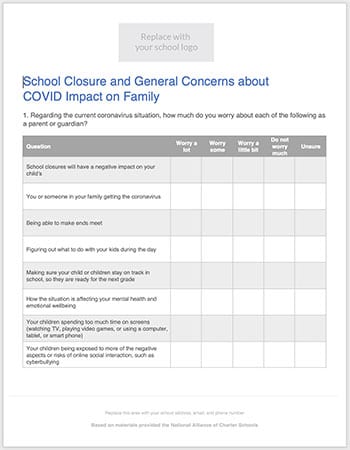
Survey Template

Following the Charter Alliance’s lead, we’re making a set of survey questions available here for download. These stem from the National Parent Poll which Echelon Insights carried out for the National Parents Union (NPU). (You can see their survey results here)

We’re providing this survey template in MS Word. This enables charter school leadership to add their logos and contact info prior to sending these out. Simply download the MS Word template, replace with your own logo, branding and contact info and distribute to your stakeholders.

COVID-19 Response survey for charter school stakeholders


Financial Readiness

While the process of making schools safe for our students is of paramount importance, the survival and growth of your school in these uncertain times is just as vital for the uninterrupted educational experience of young minds.

With that in mind, we urge you to develop a strong strategic plan to weather state deferrals, as well as the added financial burden of providing a COVID-safe campus for your student body, teachers and support staff. Reach out to our financial experts if you need assistance with this. We’ve been through the Great Recession and have helped many charter schools survive and thrive in difficult financial climates. We’re here for you now. Call us at 503-227-2910.