Charter School Capital Dewey Awards

EDITOR’S NOTE 10/11/18: THIS BLOG POST WAS CREATED ON 9/4/18 TO ANNOUNCE THE OPENING OF THE SUBMISSION WINDOW FOR THE  2018 DEWEY AWARDS. SUBMISSIONS ARE NOW CLOSED. THANK YOU TO ALL YOU WHO SENT IN YOUR STORIES! TO READ THIS YEAR’S AMAZING SUBMISSIONS, CLICK HERE.

The 2018 Richard Dewey Awards: Submissions Now Open

Did you have a teacher who made a meaningful impact on your life? The Dewey Awards were created to celebrate those teachers who make a difference in the lives of their students.
If you have – or have had – a life-changing teacher, we want to hear about it!
Submissions are now open for the 2018 Richard Dewey Awards. Send us your story of the teacher that changed your life for the chance to receive one of three $1,000 charter school grants, given in your name to the school of your choice.
Submission Guidelines:

  • Written submissions should be 300 words or more
  • Video submissions should be 1-10 minutes in length
  • Submissions will be received September 3rd – October 5th
  • Grant winners will be announced November 8th

Our distinctive panel of judges includes:
Richard DeweyRichard Dewey – The original inspiration for the Dewey Awards! Richard Dewey was Stuart Ellis’ 3rd-grade teacher, inspiring this whole program. Thank you for joining us this year, Mr. Dewey! He is a retired 37-year educator with Los Angeles Unified School District. Classroom experience centered on teaching Highly Gifted students and Gifted/High Ability Students. As a K-12 administrator serving on the support team for a local district superintendent, the responsibilities included professional development for new teachers, teacher certification, Mentor Teacher Program (MTP), National Board Certified Teachers (NBCT), Beginning Teacher Support and Assessment (BTSA) and curriculum development. At the university level, Richard served as the Elementary Field Experience Coordinator, taught math/science methods courses and worked on Teachers for a New Era (TNE) Task Groups C-4/F/G. In the music world, Richard performed, taught, mentored, composed and arranged music and has conducted choral groups and choirs. On a personal note, Richard has been married for 53 years. His three sons and their spouses collectively have added 11 grandchildren to the Dewey clan.

Darlene ChambersDarlene Chambers – A national leader in education reform, Dr. Darlene Chambers is the Senior Vice President for Programs & Services at the National Charter Schools Institute, and a review alum from last year. Thank you for joining us again!

John CairnsJohn Cairns – Often referred to as a grandfather of Charter law, John Cairns was the nation’s first Charter School attorney. Today, he remains passionately involved in charter school policy and is a review alum from last year. Thank you for joining us again!

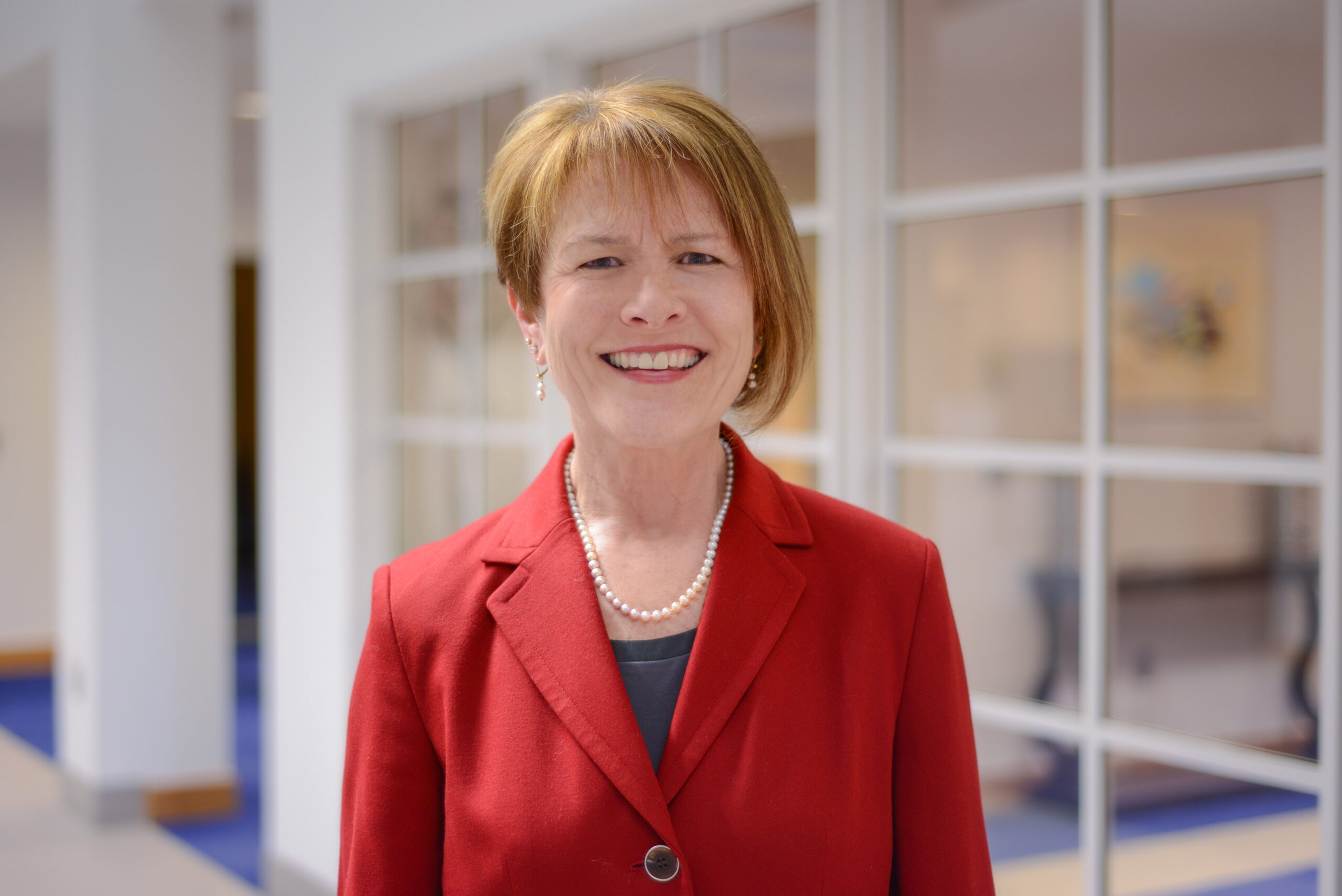
Janet Johnson – Chief Marketing Officer at Charter School Capital and internal teacher/ inspiration officer herself (though she’s too humble to admit it), Janet is a review alum from last year. Thank you for joining us again!

We are so thrilled that this esteemed team will help us choose the story that best fits the theme “Teachers Making a Difference”.
Need a little extra inspiration? Take a look at some of the submissions from the 2017 Stories of Inspiration (now named the Dewey Awards)!
We can’t wait to hear your stories! Ready, set, go!
[PLEASE NOTE: 2018 SUBMISSIONS ARE NOW CLOSED]
GO TO SUBMISSION PAGE


Since the company’s inception in 2007, Charter School Capital has been committed to the success of charter schools. We provide growth capital and facilities financing to charter schools nationwide. Our depth of experience working with charter school leaders and our knowledge of how to address charter school financial and operational needs have allowed us to provide over $1.6 billion in support of 600 charter schools that educate 800,000 students across the country. For more information on how we can support your charter school, contact us. We’d love to work with you!

LEARN MORE


charter school safety

Security for Charter Schools: The Five Layers of School Safety

Our schools should be safe havens for teaching and learning, free of crime and violence. School safety is linked to improved student and school outcomes. In particular, emotional and physical safety in school have been shown to be related to academic performance. Any instance of crime or violence at school not only affects the individuals involved, but also may disrupt the educational process and affect bystanders, the school itself, and the surrounding community, as stated in the 2017 Indicators of School Crime and Safety.
For this important and timely webinar on school safety, we are fortunate and honored to be joined by nationally known expert on emergency preparedness, the President and CEO fo Safeguard Risk Solutions, Gary Sigrist.
On Thursday, September 13 at 9:00 a.m. PT/12:00 p.m. ET we’ll be discussing important topics around safety and security for schools, specifically looking at security challenges in charter schools. Join us and learn the five key layers of safety for your school and students. We’ll cover safety measures, emergency planning, threat assessment, and more!
We hope you’ll join us.


SAVE MY SPOT


charter school honor

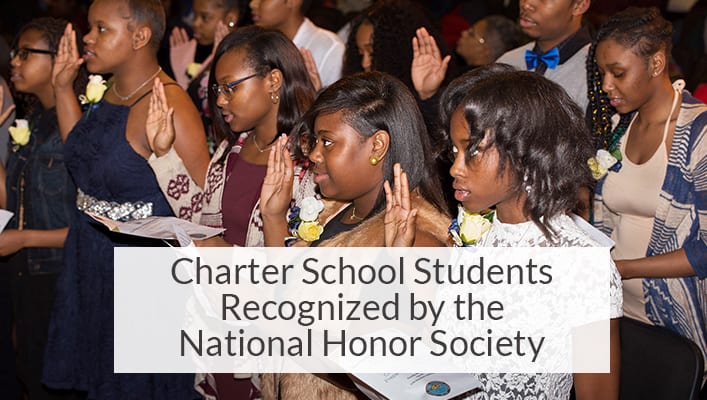
Charter School Students Get Recognized by the National Honor Society

At Charter School Capital, a big part of our mission is to further the charter school movement and celebrating the achievements of charter school students, so we are thrilled to be sharing this incredibly inspirational story of success!
We recently had the honor of speaking with Debra Sellers, from Cincinnati College Preparatory Academy (CCPA), and learned how she persevered to get CCPA’s deserving charter school students acknowledged by the National Honor Society (NHS).
More than just an honor roll, NHS serves to recognize students who have demonstrated excellence in the areas of scholarship, service, leadership, and character. Sellers knew that CCPA’s hard-working and dedicated public charter school scholars deserved recognition the same way their traditional public-school counterparts have since 1921. But it wasn’t going to be easy.

About Debra Sellers

Debra came to CCPA in 2014 as an online instructor, facilitating online courses. For the past two years, she has been serving in the capacity of the guidance counselor. She’s been a guidance counselor and career access coordinator for schools ever since 2002. Prior to her work at CCPA, she was working for Cincinnati Public Schools. Her broad and impressive background includes an undergraduate degree in Human Resources (HR) Training and Development, a Master’s Degree in Social Work with an emphasis in mental health, and a long-running professional career in education.
Sellers is currently CCPA’s Guidance and Career Counselor, but I wanted to better understand how her diverse background and training led to this particular role and why getting NHS recognition for her students would be so important to her.
“I thought, how am I helping? … With HR, I trained in development. You train, and you develop students to transition into the workforce or college. That allowed me to be able to use my experience in that area helping them with resumes, interviewing, assessing what the needs were over the years, and just being able to give them some guidance in that area.
Then, when I thought about grad school, I would have gone for guidance counselor. But, I also have this double life. I work in a residential treatment facility. So, I’ve work in chemical dependency treatment prevention for the past seventeen years. So, I ended up getting a master’s in social work because it was a broad degree that could land me kind of anywhere. Because with social work you are a counselor, you are helping people. You are meeting their needs and trying to get them connected to community-based organizations, helping them to think about basic things like food, clothing, and shelter.
I kind of put those two together, but my resources together, which has been very beneficial to me as I am working with high school students making their transition to the larger picture called life.”

In hot pursuit of National Honor Society Recognition
charter school studentsComing from her experience with previous schools, she knew that student performance recognition was very important for motivating students towards academic success. Recognition, however, was only one piece of the puzzle. Practically speaking, and from her HR background perspective, she knew that recognition from an organization such as the National Honor Society looks really good on a college resume.
She made the first request to the NHS for CCPA in 2014, but at that time, they were not accepting charter schools—only traditional public schools. The frustrating result was that she wasn’t able to get CCPA students recognized. For the past nearly four years, Sellers was unapologetically tenacious, refusing to give up.

“I knew it would be a really nice motivational piece to encourage students to excel academically because I know it looks good on a resume, and it looks good on a college application. It just, it helps to boost morale, self-esteem, and just encouraging the students to continue what they had already been doing—achieving academically.”

“Every year I would call and then they kept saying, ‘You have to go online.’ And I did, and it just wouldn’t go through. I started in 2014. I just kept trying.
In 2017, I called the National Honor Society (again) and told them what I was trying to do and what had been my issue over the last several years. They were like, ‘Well, just go ahead and re-submit your application again this year.’ Then, when it was approved they simply said, ‘Okay, now you just have to pay your charter membership.’ I was like, ‘Oh my God. Oh my God. We’re going have a National Honor Society!’”
With a chuckle, she goes on to share that she was equally excited when that they said, “You’re going to be billed.” And, from her enthusiastic recounting of that moment, I can safely say I don’t think anyone has ever been more excited to get a bill … ever.
“When they finally opened to us, I was like, ‘Oh yes! We have to do this!’”
I asked her what she thought changed – finally in 2017 – to make the NHS want to recognize charter school students. “Well, I don’t think they recognized charter schools, period. You had to go to a more traditional high school. I think that they looked at the fact that they are accredited, each state recognizes them, and that there’s a growing number of public charter schools nationwide.”

This was a big deal
Cincinnati College Preparatory AcademyBecoming a member of the National Honor Society is – as the name perhaps already implies – a tremendous honor for students. One that’s been experienced by high school scholars at traditional public schools around the country for decades. For this, CCPA’s first year having their charter school students recognized, Sellers wanted to make sure it had all the pomp and circumstance that the CCPA honorees, their proud families, and school community deserved.
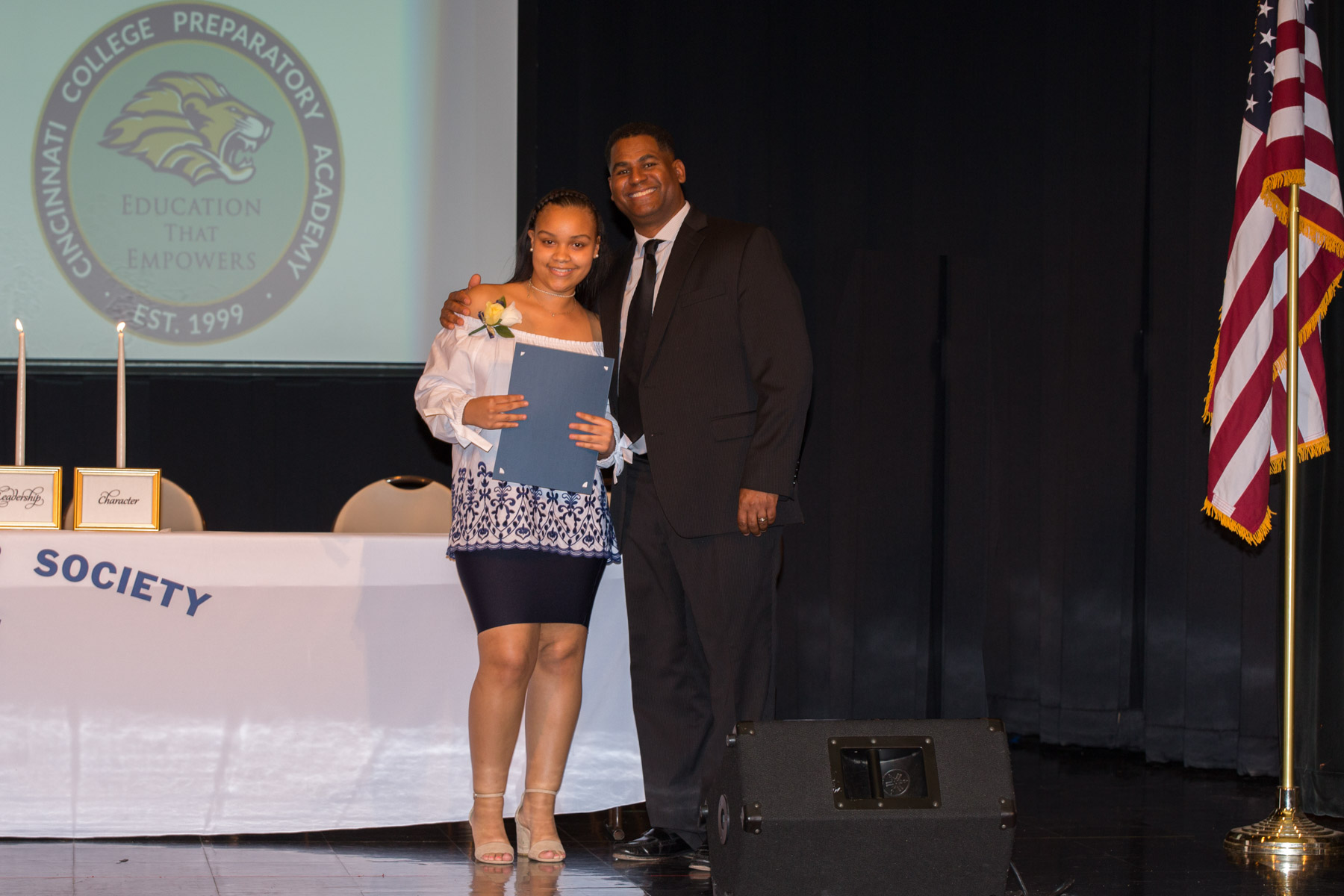
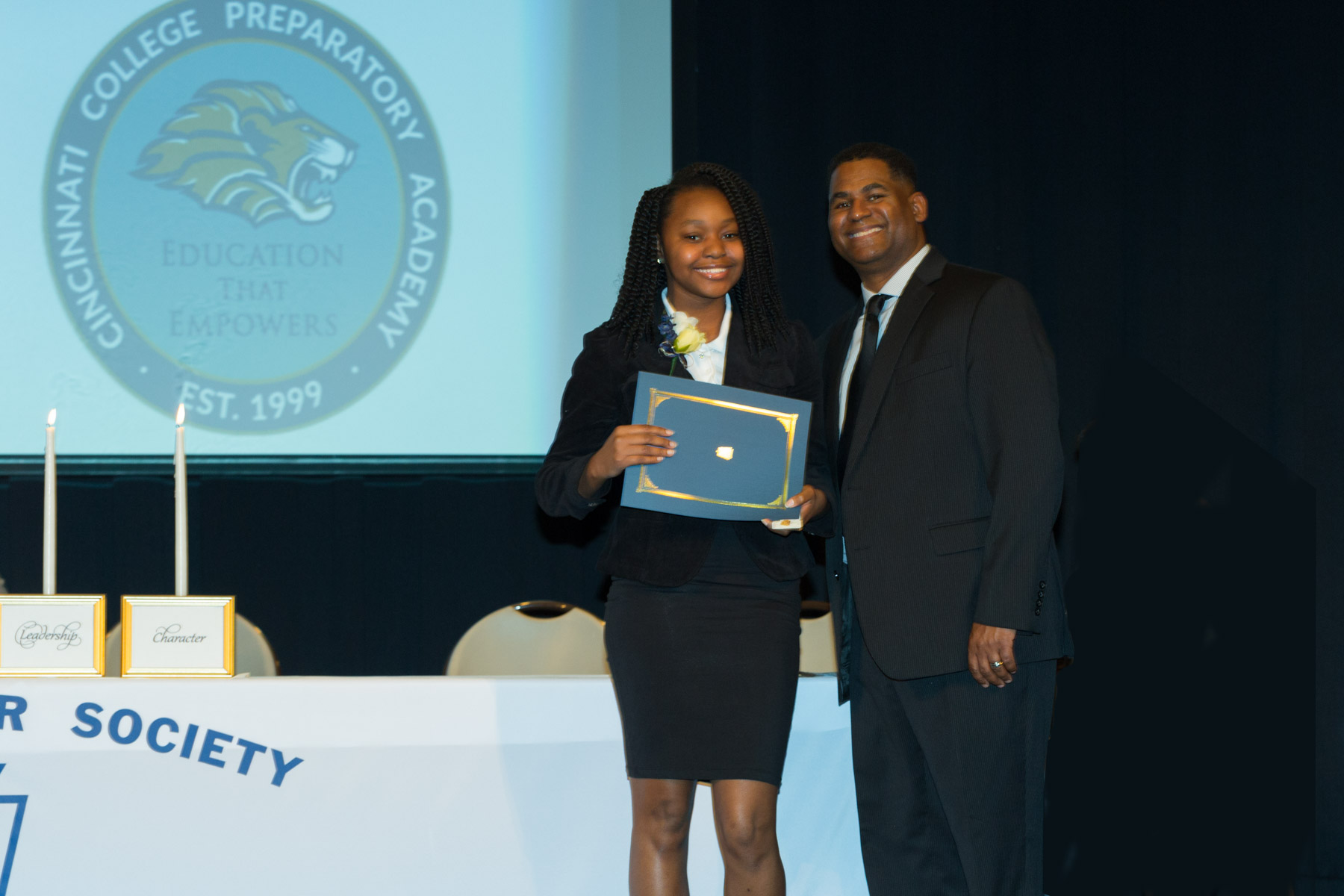
”We just really wanted it to be something that the students knew this was a big deal. We put together a formal ceremony. We had all the candles, the pinning, we did the oath, we had a guest speaker (a TV personality from the local station), we held the ceremony in the evening, we had 33 students, and they all signed a book. It was really a nice ceremony.”
But, for even more impact on the students, Sellers kept the induction into the NHS as well as all of the planning for this huge event a secret from the honorees.
“I didn’t tell them. I kept wandering around the school and asking them random things. I gave certain kids cards and asked them for their addresses. I never told them what it was, and they had no idea until they received the letter at home. I wanted it to be a surprise for them to know that they were being recognized. After receiving their letters, they excitedly came back and asked, ‘What is this? What is this?’ So, I gave them a little background of what it was. The following Monday their names were on the school marquee in the atrium so the whole student body could see who the National Honor Society inductees were.”

Just the beginning
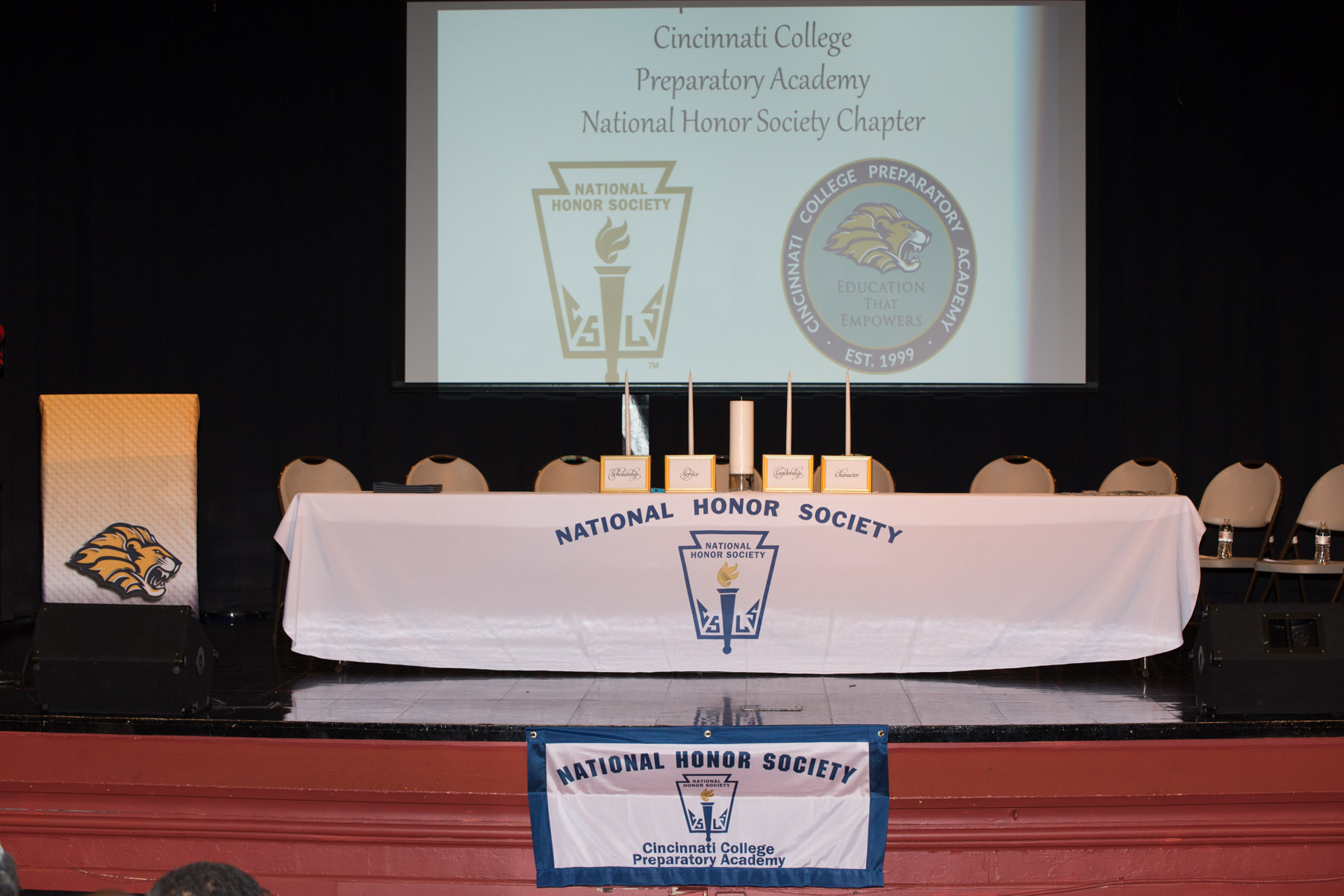
Cincinnati College Preparatory AcademyAn impressive 33 tenth, eleventh, and twelfth graders out of CCPAs 182 students were recognized this March. The graduating seniors were specially recognized with stoles that included their new National Honor Society patch.
Sellers shares,“I wanted them to know that this is an honor and it says something about you … you and the work that you have done during your high school years, and this is a way of being recognized—and it’s by a reputable organization, the National Honor Society.”
Sellers is not stopping here and is dedicated to continuing her progress ¬– and not just for the CCPA students. Although students cannot become members of NHS until high school, she’s getting a jumpstart on middle-school-aged students in her area to begin thinking about the National Junior Honor Society (NJHS). “If I have my wish, we’re going down to junior high. They have one that’s for sixth, seventh, eighth graders. I’m trying to get them on board. That’s my goal this year. If you get them to really be thinking about the bigger picture, if you say, ‘I want to become an engineer,’ you don’t start that in your senior year. You start that back there. It’s a process.”
We are always honored to share the amazing work that charter school leaders are doing across the country to make a difference and help forward charter school movement. Debra Sellers is a prime example of the commitment, dedication, and outstanding work charter leaders are doing—and that deserves our recognition. We thank her for taking the time to speak with us and for paving the way for other charter schools to motivate and honor their students’ achievements in the same way.


Since the company’s inception in 2007, Charter School Capital has been committed to the success of charter schools. We provide growth capital and facilities financing to charter schools nationwide. Our depth of experience working with charter school leaders and our knowledge of how to address charter school financial and operational needs have allowed us to provide over $1.6 billion in support of 600 charter schools that educate 800,000 students across the country. For more information on how we can support your charter school, contact us. We’d love to work with you!


LEARN MORE


charter school solutions

Editor’s Note: This post was written by Philissa Cramer and Monica Disare. It was originally published here on April 19, 2018 by Chalkbeat.  As the election season is upon us, there is no better time to think about how some charter school solutions could potentially make students more civically minded. I think we’d all agree that our young people – our future voters – should understand that their voices and their votes both matter and count. This interesting article asks (and answers) the question, “Can schools encourage students to be more involved citizens?”

We think it’s vital to keep tabs on the pulse of all things related to charter schools, including informational resources, and how to support charter school growth and the advancement of the charter school movement as a whole. We hope you find this—and any other article we curate—both interesting and valuable. Please read on to learn more.


Can schools encourage students to be more involved citizens? A new study suggests yes they can.

In a city of roughly 1,800 schools, many have names that have little to do with what students experience.
Not so for Democracy Prep, a network of charter schools that a new study concludes makes students far more likely to vote once they turn 18.
The study, conducted by independent researchers commissioned by Democracy Prep, took advantage of New York City’s charter school admissions rules to examine the impact of applying to, getting accepted to, and enrolling in the network’s schools on later civic participation.
Looking at more than a thousand students who applied between 2007 and 2015 who were old enough to vote in 2016, the researchers found that just being selected in the admissions lottery was correlated with a slight increase in voting rates. Students who were chosen voted 6 percentage points more often than students who were not.
The impact was much greater on students who were chosen and actually enrolled: They voted 24 percentage points more often than students who applied but never got a chance to attend.
The findings suggest that Democracy Prep is achieving its explicit goal of promoting civic participation. They also offer one answer to the question of whether charter schools, which are publicly funded but privately managed, undermine democracy.
“Democracy Prep provides a test case of whether charter schools can successfully serve the foundational purpose of public education—preparation for citizenship—even while operating outside the direct control of elected officials,” the researchers write. “With respect to the critical civic participation measures of registration and voting, the answer is yes.”Seth Andrew, who started the network with a single middle school in Harlem in 2006, said he was pleased by the findings — and unsurprised because the network has baked civic participation into its culture and academic program. Students must take on a personal “Change the World” project and pass the U.S. citizenship exam to graduate.
“This idea of ‘change the world’ was very central to what we were trying to get our kids prepared and excited to do,” he said.
Creating more engaged citizens takes more than just adding a civics class, said Katie Duffy, the CEO of Democracy Prep. Schools have to make democracy a part of the daily culture, she said.
“The more you talk about the importance of voting, the importance of elections, the importance of advocacy,” she said, “the more it becomes ingrained in our kids.”
The network has also long used Election Day — when district-run schools are often closed so their buildings can be used as polling stations — as a teachable moment.
In 2008, Democracy Prep students spent the day working to get out the vote in their neighborhoods. Four years later, Democracy Prep schools were among the few housed in city space that got special permission to stay open — and the network sent students out to advance the “Vote for Somebody” campaign it had kicked off in a catchy viral video. The next year, students promoted a different message — “I can’t vote but you can” — in an effort to boost the city’s 11 percent primary election voter participation rate.
The network’s influence extends far beyond its students. In 2012, six years into the network’s existence, officials estimated that students had helped 5,000 New Yorkers register to vote. Now, the network runs 22 schools in five states.
Andrew said the study’s findings about the impact of the network — which he left in 2012 to work on other civic engagement initiatives, including at the White House — offer only a start at a time when the United States lags behind other developed countries in voter turnout.
“I was thrilled with the outcome,” said Andrew. “But then as the guy that founded Democracy Prep I feel like there’s a whole lot of room to grow.”
Correction: A previous version of this story described the increase in voting caused by Democracy Prep as a percent figure, rather than in percentage points.


Since the company’s inception in 2007, Charter School Capital has been committed to the success of charter schools. We provide growth capital and facilities financing to charter schools nationwide. Our depth of experience working with charter school leaders and our knowledge of how to address charter school financial and operational needs have allowed us to provide over $1.6 billion in support of 600 charter schools that educate 800,000 students across the country. For more information on how we can support your charter school, contact us. We’d love to work with you!

LEARN MORE


Charter School Capital Dewey AwardsCharter School Capital’s Dewey Awards: Teachers Making a Difference

It’s time for the Charter School Capital Dewey Awards! We’re in our second year of honoring teachers who make a difference in the lives of their students.
Many of us have had teachers who helped changed the trajectory of our lives; who were able to get us to believe in our abilities and our promise; who said, “You can do this!” and never let us forget it. For our President and CEO, Stuart Ellis, that teacher was Mr. Dewey. For the second year, in honor of Richard Dewey, we want to give recognition and thanks to the teachers who’ve impacted our lives. Submit your story of the teacher that changed your life for the chance to receive one of three $1,000 charter school grants, given in your name to the school of your choice.
Watch the video below to hear, in Stuart Ellis’ own words, why we’re so proud to continue this tradition.

You can learn more about our Dewey Awards, read some selected stories from 2017, and submit your story to honor a teacher by visiting our official 2018 Richard Dewey Awards page. We can’t wait to read your inspiring stories!
GO TO PAGE

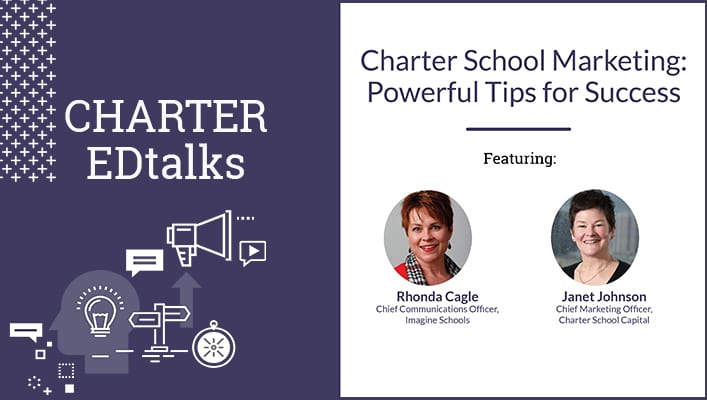
Charter School MarketingCharter School Marketing: Powerful Tips for Success

Editor’s Note: In the ever-changing world of marketing – and more particularly digital marketing – we understand the importance of keeping up-to-date on the best ways to reach prospective students, their families, and communities. That’s why we wanted to sit down with Imagine Schools‘ Chief Communications Officer, Rhonda Cagle, to get her insights and tips on charter school marketing. Rhonda generously shares her perspective on quick wins and strategies for marketing success!
We think it’s vital to keep tabs on the pulse of all things related to charter schools, including informational resources,  and how to support charter school growth. We hope you find this—and any other blog post we write—both interesting and valuable. Below you will find the video and the transcript. Please read on to learn more.


Janet Johnson (JJ): Hi there, welcome to Charter Ed Talks. I’m honored to be here with Rhonda Cagle who is the chief communications officer for Imagine Schools, which is a network of non-profit public schools and welcome.
Rhonda Cagle (RC): Thank you so much for having me.
JJ: And we’re going to be talking about marketing today. I’m pretty excited about this subject because we’re both marketers and we’ve both been relatively new to the charter space. How long have you been in the charter space now?
RC: Full time, I’ve been in the charter space five years.
JJ: Oh well, you’re a lot more senior than I then. Rhonda, we’re doing kind of a fun campaign called “We Love Charter Schools” and so can you tell our listeners whatever you’d like to say about what you like about charter schools. Why do you love charter schools?
RC: I love charter schools because charter schools change the lives of children. We see that when children have the opportunity to learn in an environment that best meets their unique individual needs, their lives change, their ability to learn and to become successful changes. We also see that the communities become successful. The schools become literally beacons of hope in the neighborhoods in which we serve. I love charters because they change lives.
JJ: That’s fabulous. Not much better than that. From a marketing perspective and a lot of our audience I hope will be charter school marketers on these videos, are there any surefire wins that we should be employing today for enrollment or other charter school marketing?
RC: I think there are several surefire wins. The first is to recognize that marketing is really about relationships and it’s really about maintaining those relationships. We don’t do that in our personal lives once or twice a year, we don’t have a relationship push, we have ongoing relationships and that’s really what marketing needs to be about for charter schools. We need to be in our communities and sharing our news and what we’re doing in the lives that we’re changing, we need to share that all year long, day in and day out. The other surefire wins is the little things. We talk a lot about how do we attract families but I also like to ask the question how do we retain our families? Because I think retention is a lot like dating our spouses. We have to remind our spouse why they fell in love with us in the first place and we have to make sure that we are continually reminding them of why we are their best choice.
JJ: Those are very important points. Can you tell us a little bit about the role digital marketing plays in the charter school landscape from your perspective?
RC: Absolutely. Digital marketing has become something that we as a network are relying more and more on. It used to be that if you built it they would come and the truth is that was true for a while and then the charter’s base grew and we did build and they did come. And so now we have to find a way to differentiate ourselves in the market. And digital marketing helps cut through the noise that’s out there and it helps reach parents and families where they’re at.
We started our digital marketing campaigns back in late 2015, 16. We had our first full year of results in the 16-17 school year. What we found is that we generated roughly 6200 qualified leads. And that was through either online inquiries, somebody saying yes I would like to know more or a phone call that we could track. And out of that, we were able to convert 751 new enrolled students.
JJ: That’s a nice conversion rate, actually, in my experience.
RC: Thank you. We believe it can be better but that was our pilot and so now what we’re working on is how do we get those numbers tighter and better and those returns greater. Not just because it’s obviously good for running charter schools effectively and efficiently but more importantly because it maximizes resources coming into the schools that best support students. When a school is fully enrolled that school has the maximum resources that students need in order to learn and be successful. So we’re really working on closing those gaps to make sure that we’re being as effective as possible.
JJ: The fact that you’re maximizing the resources for the students through marketing I think is a really interesting point. Most of us feel as if we just need to get the students in the door, right? So that we can grow but I like the positioning of maximizing the resources for the children, the scholars, the students themselves and the families and the communities you serve. I love that. Are there any, especially in the digital world there are a lot of memes that come and go, right? Have you experienced any kind of, oh don’t go there because or are there myths that you would like to kind of bust right now for our viewers?
RC: Sure, so I think there’s a lot of myths that are out there. A lot of people are slow to think about digital, a lot of people want to hold on to what worked well in the past and the truth is what worked well in the past did work well but now it’s incomplete. And just like we keep learning how students best learn we also keep learning how our audience, our potential audience best engages with the message that we have to deliver. And so we have to be willing to learn and grow and change.
JJ: I think that’s important. And so, isn’t it exciting to be in a field where not only are you serving a wonderful mission but you are learning every single day about what works and what doesn’t work?
RC: Absolutely. I think the other piece of that is often we want to tout what we know as educators is important for a student. We want to talk about a curricular approach, we want to talk about those kinds of quote-unquote “selling points” and in many cases, we need to put ourselves in the shoes of our audience and what’s important to a parent may not be what we as educators consider to be important. For instance, we have many parents who come into our schools because they know their children are safe.
JJ: Really?
RC: They know their children are well known as an individual and they know that they’re going to be valued as an individual, and for the parent that’s their selling point.
JJ: Those are the messages that they want to hear.
RC: That’s right, and so we have to continually think about how are we adapting our messaging? How are we putting ourselves in the shoes of our audience so that we’re connecting with them in ways that are meaningful?
JJ: Are there any kind of surprises that have come up in your recent research or studies as you’ve learned more about the marketing to parents and students? Are they any different? Are there other things, other little pearls of wisdom you might share?
RC: Well I think it’s interesting to know that there is still so much misinformation about what charter schools are. So for instance, I just became aware of some polling that was recently done and when you put the word “public” in front of charter schools it increases favorability and understanding by two to three points. So there’s still fundamental misunderstandings about what charter schools are. The fact that they are public schools, the fact that they cannot discriminate in terms of how we enroll. We have to continue to be vigilant in delivering that message because there’s a lot of the public that still does not understand what a charter school is and the value that charter schools bring to the community.
JJ: Well, I must thank you again for the pearls of charter school marketing wisdom you’ve shared with us today. And, in terms of continuing education, I think this is going to be a little gem that others will be able to appreciate as a result of your willingness to share with us.
RC: Thank you so much for having me.
JJ: Thanks, Rhonda.


Digital Marketing for Charter SchoolsDigital Marketing for Charter Schools: An Actionable Workbook to Help You Achieve Your School’s Goals!
Scratching your head as to how to go about implementing digital marketing programs for your charter school? You’re not alone! This free manual will be your go-to guide for all of your school’s digital marketing needs! Download this actionable workbook to help get your marketing plans started, guide you as you define your audience and key differentiators, choose your tactics and start to build your campaigns.

DOWNLOAD NOW


Charter school solutionThe Charter School Solution: A Better Education for All

Editor’s Note: This article was originally published here on May 12, 2018, and authored by Nina Rees, the president and CEO of the National Alliance for Public Charter Schools.
Studies have shown that the existence of public charters has often improved traditional public school performance in those communities. And, according to the National Assessment of Educational Progress (NAEP), also called the Nation’s Report Card, public charter schools are showing that they are often outperforming their traditional public school counterparts. The NAEP also shows that charter schools are more effective at helping students from lower-income backgrounds make up ground on their peers. It’s important to bring these studies to light to help support the charter school movement and continue to create the opportunities for unique and diverse educational access for all students.
We think it’s vital to keep tabs on the pulse of all things related to charter schools, including informational resources, and how to support charter school growth. We hope you find this—and any other article we curate—both interesting and valuable. Please read on to learn more.


Charter Schools Point toward a Better Education for All

Published May 12, 2018

As National Charter Schools Week wraps up, new data show their potential to improve students’ scores.
One thing nearly every expert in the field will tell you is that we have a long way to go before every student in America is getting a good education.
The recent results of the National Assessment of Educational Progress (NAEP), also called the Nation’s Report Card, confirmed as much. The NAEP is administered to a sample of students in a variety of subjects from across the country every two years. Its latest math and reading scores for fourth- and eighth-graders showed a general stagnation.
But there were bright spots, too. Students in the nation’s largest cities, who on average score lower than students elsewhere, are at least narrowing the gap. It’s hard to pinpoint a specific reason for this improvement. But education reformers have focused most of their energy on urban areas for years, precisely because these students have trailed their suburban counterparts, and the results of the NAEP suggest that their efforts may be bearing fruit.
One of the most important and ambitious parts of those efforts has been the introduction of public charter schools to America’s metropoles. Across 43 states and Washington, D.C., many parents in large cities can choose which public school their child will attend. By embracing various teaching methods and academic focuses, charter schools give more students access to a school that brings out the best in them.
The NAEP data show that charter schools contributed to the growth in urban test scores. In 2017, charter schools outperformed district schools across all four grade and subject levels in large cities (although the difference was not statistically significant for fourth-grade math). Across the four grade and subject levels, big-city charter-school students improved by an average of eleven points over the past ten years, while traditional public-school students improved by an average of five points.
This is good news as we celebrate National Charter Schools Week and bring attention to the way charter schools are changing the educational dynamic for nearly 3.2 million students across America. But rather than crow about improving scores, we should understand these test results for what they are — a tool to help parents, teachers, school leaders, advocates, and policymakers find out what’s working in American classrooms, and spread those best practices to more schools.
For instance, both the NAEP data and other research indicate that charter schools are especially effective at helping students from lower-income backgrounds make up ground on their peers. Educational leaders in the states and cities where charter schools delivered strong NAEP results for these students — Arizona, D.C., Texas, Colorado, Florida — have put a premium on incorporating charter schools into the public-school mix. Both D.C. and Denver public schools have been lauded for the strong cooperation between their charter-school movements and school districts. Texas has also promoted closer consultation between district and charter leaders, and Arizona, Texas, and D.C. have made it a priority to ensure that charter-school authorizers — the entities that award and revoke charter contracts and monitor performance — put a strong focus on quality. In Colorado and Florida, legislators have made funding fairness a priority, closing the gap between what district and charter schools receive for instruction and facilities.
The quality of charter schools varies across the country, and even within states and cities — just as it does with district schools. But one of the hallmarks of the charter-school movement is to confront low-quality head-on (as has been happening with virtual charter schools, which suffer from a lot of poor performers) and close schools when they aren’t serving students well.

Comments

What NAEP and other tests can do is point us toward high-performing schools, cities, and states that can serve as models for others. Tests shouldn’t supersede the judgment of parents and policymakers, but they can inform that judgment, by helping us to calibrate our educational compass toward success. The more we can replicate success, the more students will benefit.
As the nation celebrates the charter schools bringing new options to students and parents, the NAEP results are further evidence that policymakers who want to get closer to the goal of giving every student access to a great education should support the growth of the charter movement.


Charter School Capital is committed to the success of charter schools and has solely focused on funding charter schools since the company’s inception in 2007. Our depth of experience working with charter school leaders and our knowledge of how to address charter school financial and operational needs have allowed us to provide over $1.6 billion in support of 600 charter schools that educate 800,000 students across the country. For more information on how we can support your charter school, contact us!

LEARN MORE


california charter school funding New Five-Day California Charter School Funding Option

We heard from a number of charter schools that they needed a faster funding option for tight-turn budget needs. We’re very excited to now be able to answer that request with our new five-day funding option, currently exclusively for California charter schools.
Since our founding, we’ve been able to provide over $1.6 billion in charter school funding to more than 600 schools across our nation and most importantly, to serve over 800,000 charter school students. We’re proud to provide the reliability and stability charter leaders require as they embark on their journey to educate more students today—and in the future.
If your school needs funds fast, we can provide charter school funding in as few as five business days so you can keep your focus on what really matters – educating your students. And, as an ongoing Charter School Capital client, you may qualify for a lower-cost option on fundings, as well as additional benefits and services as we partner with you to ensure your school’s continued success and growth.
We help charter schools access working capital so they can:

  • Expand or grow programs
  • Open a new charter school
  • Enhance facilities – with labs, gyms, etc.
  • Provide new technology in the classroom
  • Hire and/or develop staff
  • Address budget shortfalls and delays (deferrals, holdbacks, etc.) gracefully
  • Improve transportation options
  • Enrich educational programs
  • Buy new equipment

Our team works with you to determine funding and facilities options based on your school’s needs. If you are trying to meet operational expenses, expand, acquire or renovate your school building, add an athletic department, or buy new technology, complete the online application below and we’ll contact you to set up a meeting.
To learn more about this new funding option, set up time with our California Funding Specialist, or get your funding request started by filling out the form here:
GET STARTED


charter school enrollmentCharter School Enrollment: Are you making it easy to attend your school?

Editor’s Note: This article was originally posted here by Bright Minds Marketing and written by Nick LeRoy, MBA, the president of Bright Minds Marketing and former Executive Director of the Indiana Charter School Board.


Increasing charter school enrollment is vital to the health of your school—your business. But if you aren’t able to effectively connect and communicate with your prospective and current parents,  boosting those all-important enrollment numbers for your school and retaining your existing students will be a challenge. In this article, you’ll learn the best way to leverage digital channels and how to boost communication between parents and teachers.
We think it’s vital to keep tabs on the pulse of all things related to charter schools, including informational resources,  and how to support charter school growth. We hope you find this—and any other article we curate—both interesting and valuable. Please read on to learn more.


Are you making it easy to attend your school?

I don’t mean “are your academics not challenging or difficult?”, but have you made it easy for parents to be up to date on all the things that are happening at your school? I have conducted dozens of focus groups of parents across the country, and the number one complaint I hear from them is about the lack of communication from the school. Of course, when I say this to administrators, they sometimes have a hard time believing the data because they think they are over-communicating. “If parents would just read the communication, everything would be fine.”
We have a perception gap. As a marketer, the onus is always on you to make sure that your message is being heard, not on the customer to hear it. I hate to say this to school leaders because I know how challenging their job already is, but the parent is right. With today’s shorter attention spans and media coming at us from every direction, we have to adapt, and do more to communicate to our parents effectively.
Here is a list of things that I would challenge you to ask yourself if you are doing and if not, think about implementing some changes to try to make your school “an easy one to go to.”

Are you truly leveraging digital channels?

Is your website mobile-optimized?
 The majority of internet traffic is from mobile devices. A mobile-optimized site is customized for the screen size of a tablet or phone. If a parent is trying to read a site on a phone that is not mobile- optimized, it is going to be a frustrating experience – negating any work that you have done to make your website useful.
Is your website up to date?
I know it takes time to do this, but your website needs to be scrubbed at least yearly to ensure that it is up to date. Next time you do it, create a written site map so you know what to update each year.
Does your website contain answers to the most frequent parent’s questions?
Millennials, your primary target customer, don’t want to call you. They would rather go to your website. Compile the list of all the questions that your admin team fields day in and day out and make sure that those questions are answered on your website in an easy-to-find fashion.
Can a parent fill out forms electronically on your website? Paper forms are a pain. They get lost, and someone in the office must input the information into the computer anyway. Brush up on your Google Forms and try to make things as electronic as possible. If I can sign bank forms or contracts electronically, is there a reason why I can’t do it for school forms?
Can a parent pay for his/her children’s fees electronically and at a low cost?
Are there additional fees involved in paying electronically? My boys’ school just went to a new lunch program billing system. It is fine, but each time you put money into the account, there is a $2.95 service fee. That is fine for me, but for some people on a budget who may need to pay weekly, that may be an additional financial burden.
Are you using a custom school App for smartphones?
This is a great new technology that a lot of schools are using. It is not very expensive ~$250 / month and it is a huge benefit for parents. This allows you to push content, set appointments and reminders and constantly make sure that updated information is in the hands of the parent.
Does your school calendar easily allow parents to import important events into their own calendar?
This requires a little bit more technical tweaking, but most parents live or die by our electronic calendars. Having a single consolidated calendar that can be integrated into a smartphone, tablet or existing online family calendar program is a worthwhile investment.
Are you communicating about important events in multiple channels?
Some of your parents will go to your website daily, others use Twitter and still others only check their Facebook page. It is critical that you are providing information in every channel that your parents use. I covered the benefits of multi-platform tools in this blog posting. But, if you don’t want to use those tools and just want one social media platform, you need to use the one that most Millennials and Generation X parents use: Facebook.

How is the communication between parents and teachers?

Do you guarantee a response time to your parents?
Most teachers that I have met are good about this, but you need to make sure that all teachers know that parents generally will be expecting a turn-around time of within 24 hours. Make sure all of your teachers adhere to this and tell your parents that they will get a reply within a day.
Are all of your teachers using the same in classroom communication system for parents?
Imagine this scenario: You are a parent of three kids. One teacher uses Class Dojo, one uses a Weebly website and another uses the app Remind. You are asking that parent to check three different places to know current homework assignments for the family. I know that each teacher probably has a preference, but if you are serious about making this easy for your parents, your school needs use just one platform.
Do you customize your communication based upon the individual students?
This is a little bit trickier, but some schools overload their parents with a lot of communication that doesn’t apply to their student. While it is important for all of the 8th graders to know about the upcoming DC trip, can you figure out a way to just send that to the parents of the 8th graders? The use of “all school” parent communication can lead to parents tuning stuff out because they don’t think it applies to their own specific child. Being able to create segments in your email communication will increase your open rates and make sure that the right people are reading your communications.
When I call the school, do I get a confusing phone tree or a real person that answers?
As I mentioned before, most millennials don’t want to call the school, but when they do, they want to talk to a real person immediately. Does your phone tree make them go through eight different options first before they get the selection to talk to a real person? This is a balancing act between having too many phone calls and not enough.
Your parents will love you if you undertake any initiative that improves communication and makes it easy for parents. You should always have a goal of making it as easy as possible to attend your school and ensure that your parents are apprised of updates, information and school news. If you make it easy to attend, you will be surprised at how many more people DO attend!


Digital Marketing for Charter SchoolsDigital Marketing for Charter Schools: An Actionable Workbook to Help You Achieve Your School’s Goals!
Need useful tips on enrollment for your charter school? Scratching your head as to how to go about implementing digital marketing strategies? You’re not alone! This free manual will be your go-to guide for all of your school’s digital marketing needs! Download this actionable workbook to help get your marketing plans started, guide you as you define your audience and key differentiators, choose your tactics, and start to build your campaigns.

DOWNLOAD NOW


Webinar: Top Five Financial Mistakes Charter Schools Make…And How to Avoid Them

Join us for our live webinar this week!

We’re going to answer one really important question, “How do we avoid the top financial mistakes that charter schools make?” We’re being joined by some leaders of Desert Star Academy, SALTech, and Wayne Preparatory – and they’ll be generously and bravely sharing the mistakes they’ve made as charter leaders, and of course how they solved those problems for the future.
We presented some of this content at the National Charter School Conference in Austin, Texas last month to a standing-room-only audience, so we’re bringing it back as a webinar for those that weren’t able to make it out to Austin. Join us to understand the five mistakes and you’ll walk away armed with the tools you’ll need to avoid them.
Our esteemed panelists:
Margie Montgomery, Founder / Executive Director, Desert Star Academy
Michael LaRoche, Founder / Executive Director, SALTech Charter High School
Sharon Thompson, Chairman of the Board, Wayne Preparatory Academy
Tricia Blum, Head of Business Consulting, Charter School Capital

Top Five Financial Mistakes Charter Schools Make…And How to Avoid Them
Wednesday, July 25, 2018
9:00 a.m. PT/ 12:00 p.m. ET

We hope to see you there!
REGISTER


Missed this event? Check out the recording here!