run a charter schoolHow to Run a Charter School as a Non-Educator

For this CHARTER EDtalk, Janet Johnson, Charter School Capital CMO, and our Head of Business Consulting, Tricia Blum sat down with Sharon Thompson, the Board Chair for Wayne Preparatory Academy in Goldsboro, North Carolina. We wanted to talk with Sharon in order to understand what, if any, specific challenges she faces running a charter school as someone with a non-education background. Watch the video and/or read the transcript to hear Sharon’s tips on how to run a charter school as a non-educator and what she’s learned over her time as a charter school leader.


Janet Johnson (JJ): Hello, and welcome to Charter EDtalks. I’m Janet Johnson, with Charter School Capital, and we are very fortunate to have Sharon Thompson, who is the Chairwoman of the Board of Wayne Charter School in North Carolina, and Tricia Blum, who is also with Charter School Capital. We’re going to talk a little bit about being a board member and the challenges thereof. Thanks for coming.
Sharon Thompson (ST): Thank you for having me. I’m excited.

 Why do you love charter schools?

Tricia Blum (TB): So, Charter School Capital is doing a campaign We Love Charter Schools. Can you tell me, please, in a sentence or two, what you love about charter schools?
ST: I think it’s the fact that not every child fits into the traditional school format, and so especially in the life of my children, who are now adults. I was very excited to find that the charter school, at least in our area and I’m sure in other areas as well, were going to offer something different for those students that just needed a choice to go to a school that more exemplified the way they could learn and what was going to be best for them. so, it’s exciting to have that option because we’ve not had that in our county at all except for one other charter school.

Day in the life of a Board Chairman

TB: So, since you’re a board president, tell me a little bit about the day in the life of a Board Chairman. What’s that look like?
ST: Well, I think it’s different for each person. For me, personally, I spend, some weeks, 30 hours, some weeks, 60 hours. I mean, it just depends on what we have going on. Of course, we’re in the project of a great new building, so I’m excited about us opening that this summer and having a picnic and to cut the ribbon, with all of that going on. So, that will be great.
It’s like it is for any other business. As Chairman of the Board, my responsibility is to make sure that everything is moving the way it should be from the business standpoint. That was the commitment that we made to our Managing Director because we wanted our administrative staff to focus on the scholars and our academic side, and the board was willing to take on the other responsibilities from the financial side.
I’m doing those things that a typical business would do. I’m answering emails, I’m on the phone, texting, having meetings with different people, but once we get this set up and I’ve got a working relationship with a vendor, then I can turn that over to our business person at the school, and then they’re able to continue and work with that. They should give us reports—to the board, so that we know what’s going on. I’m running the business. It’s not just sitting back and hoping somebody does it. You’ve got to get in there and actually get the work done.

Building a solid foundation

TB: Do you think that once … Like, you said 30 and 60, and I know that’s legitimate, but do you think once some of the challenges that you’re facing, that’s going to become less, or do you think you’re going to find new tasks and projects that keep that at that kind of … You know, what I call part to full-time job.
ST: Right. I think that it can certainly go to more of a part-time position once we get some of the things kind of nailed down. I want a foundation put there, so that all you have to do is come in – the next Chair or the next board member in a particular area – and all they’ve got to do is tweak that policy, or the thing that we put together—that strategic plan, so that it’s not reinventing the wheel every year.
We actually got to see what that was going to look like this summer. We just had our annual strategic planning session, and so it was very nice to be able to sit down and just kind of tweak a few things that we needed to do, and then we can move forward.
We’ve got still a lot of work to do as far as putting those policies together and making sure that they’re sound and where they need to be. But, once we get the foundation laid, then we’re going to be able to go do some of the fun stuff! More focus about the community and marketing, and then going back into the classroom and seeing all the fun programs that the children do. We don’t have that opportunity right now because we’re running a business.

How to run a charter school as a non-educator

TB: So, I think we’ve talked a little bit about challenges, but specifically, I know you don’t have an education background, so tell me what challenges do you face in running the board with a non-education background?
ST: That was huge because I didn’t expect for the education side of the business to look so different from the private sector, but it does. It’s a very big difference, so there was a huge learning curve for me.
You still have to have those good, sound business practices, but I call it knowledge by fire hose, not water hose. I really had to [quickly] get up to speed on how the educational side of things really worked, even though again, we’ve asked the Managing Director and the administrators to handle the education side.
I still have to understand it and so does the board.
A lot of times, I may go to different conventions or conferences. Any time the state offers something, I try to be there for that training. I know some people say, “No, no, don’t deal with the state because we’re a charter school,” but I don’t find that to be the case.
If you build those relationships, and then everybody’s on board with it too, and if you go and let them know you’re really trying to be a part of it, you want a great school, and you’re trying to set the right example, then they’ll come on board with you as well, if they weren’t to start with.
We’re very fortunate in North Carolina, in my state, that we have a great supporter of charter schools, and that we’re able to go and do that.
TB: Early on, what was it like, since you didn’t have a background in that, right? I think there might be more to that, even.
Relying on mentors, administrators, and personal experience
ST: I had to rely very heavily, at the beginning, on the administrators, so that they could explain. When you start talking about all these different testing elements and things that you’re using in the curriculum, that is really tough.
You either need a mentor that you can go and ask the questions of. You know, what is MAT and what is DIBELS, and how does this work? Or do they really expect me to have an 8% contingency set aside, and those kinds of things? You really have to have someone that you trust to be able to do that with. It never hurts to ask more than one person. It’s always great to have a mentor, but it’s okay to get the views of other folks to see what they’re thinking as well.
It was a little bit different for me because I had two children that had high-functioning autism, so I had kind of dealt with the school system from that level, and for me, that was why I was so excited that the charter school had come along in our county because we needed something different.
My children were very high-functioning, but they just, again, didn’t fit in that public school education setting. Had they been in this school setting, I think they would have flourished so much more.
I’ve kind of been able to look at it from both sides, from the school aspect and from the parent side of what that looks like, so that’s been a help in some areas dealing with our children with special health care needs or special needs within the school system.
Again, you can’t figure it all out at the start by yourself. You’ve got to have some help, and so you’ve got to rely on someone that will be able to explain it to you, or hopefully you’ve hired the right people, and those educators that are there in the school, those administrators, will be able to explain it to you.
One of the things, too, that we do at our particular school, is we have two board meetings a month. The first one of the month, we discuss financials and operations and kind of what’s going on with that, and then the second meeting of the month, it’s academics, so that we know exactly where our students are as far as where they’ve been placed in testing, and how they’re progressing along in their school for that year.
That’s been great in helping the board understand because most of our board members aren’t educators, and so they need to understand how we’re doing. Because although testing’s not our goal, it is a byproduct of what we have to do in North Carolina and all the other states. We’ve got to have that outcome as well as financially being responsible.

The Board’s commitment

TB: Do your average board members or your standard board members, do you think that they instead of working 30 to 60 hours a week, do you think they work 10 hours a week, five hours a week, and then with meetings they have a little longer?
ST: Right, and we’ve got some board members that have just come on that, I think, are going to be a little bit more active, and so it’s kind of that old rule. You know, 20% of the people do 80% of the work. It doesn’t change on the Board.
Now, I think there are those times that you really do get that group that’s just going to mesh really well and everybody will be able to kind of take the load. I can see that starting to happen, but we’ve had to gel as a board first and get to know each other, and the strengths.
We’re looking for particular strengths now when we bring on board members, so that helps a lot as well because having one person that’s trying to figure it all out is not good for several reasons. I told a group earlier today, you know, if I get hit by a Mack truck, that’s a problem, but if there had been other people there with me that had been in the same trainings, then they’re going to know what I know, and that’s most important, to spread out that knowledge – all the way across – as much as you can.

On working with Charter School Capital

TB: If you would, please tell me or us a little bit about your experience working with Charter School Capital?
ST: Oh, I could talk a long time about that. It has really been a knight a shining armor for us. It’s been amazing having you to be able to come in and deal with us, or help us one-on-one as we were at the beginning with our partnership. That was a big help because you want that liaison with that person you know you can call.
Then to find out there was a whole team, and Janet was part of that team, and some of the other folks, was really very reassuring for many because we had not been in that position where we had had that kind of support.
To have Charter School Capital provide not only that for us, but the opportunity to get our building built that we’ve been waiting for for a long time (that we’re all going to celebrate in the next month or two) has been very, very exciting! I would highly encourage anyone, if they’ve got the opportunity to work with Charter School Capital, to do so. And you [,Tricia]. You’ve been a wonderful, wonderful support.
JJ: Thank you, Sharon.
TB: Thank you. Thank you, Sharon.

Charter School Capital logoSince the company’s inception in 2007, Charter School Capital has been committed to the success of charter schools. We provide growth capital and facilities financing to charter schools nationwide. Our depth of experience working with charter school leaders and our knowledge of how to address charter school financial and operational needs have allowed us to provide over $1.8 billion in support of 600 charter schools that have educated over 1,027,000 students across the country. For more information on how we can support your charter school, contact us. We’d love to work with you!


LEARN MORE


Charter School Capital Dewey AwardsWe are so honored to have received such amazing, heartfelt, and inspirational submissions for our 2018 Richard Dewey Awards. Over 100 stories of teachers making a difference were shared with us. 

The caliber of submissions made selecting our three winners a very challenging task for our panel of judges. Because the stories were just so incredibly good this year, we decided to pick FOUR winners instead of just three to receive the $1000 grants that will be given to a charter school of their choosing! 

Here are the FOUR winning stories in their entirety (and in no particular order):


Cristian Alicea
6th grade
Caridad Broche
Pinecrest Cove Preparatory Academy

Touching Lives One Student at a Time
Have you ever felt the warmth of a smile, or the genuine love from a hug? Imagine having that for THREE years in a row- now imagine being in third grade and you just finished the school year, summer passes by quickly and next thing you know you are in fourth grade- you are growing and are worried about tests, quizzes and other students. Little did you know this was going to be the year that has the best teacher you will ever have. This was me in fourth grade, I had Mrs. Broche and she changed my life for the better. She has been the best teacher I have ever had and has also changed my way of thinking through life’s moments.
One of the many things Mrs. Broche has done to help me is to support me while I was going through the passing of a loved one. I spent the first 9 years of my life with my grandma- she taught me the importance of everything and was my best friend. I woke up one day to realize that in the room next door she had suddenly passed away. I did not know what to do- or how to react, but I knew that I had to tell one person, Mrs. Broche. When I told her she hugged me and talked to me and listened to me, she gave me a warm smile and told me that my grandma would always be with me and that now I was her grandson. I never thought that a teacher would be able to help me through one of the most difficult moments in my life, but I was so thankful for her help and how she knew the right words to say to help me go through them.
Mrs. Broche also showed me how to prioritize, my Mom is thankful for that, she taught me that is important to have fun, but you first need to work hard. During class we would have to work hard writing essays and completing group projects- but the games followed. Every year with her she showed me the importance of not complaining about bookwork, because then we would be able to do projects with our friends- and she sometimes even let us talk in class. In the end, she has shown me many things that help us every day and will continue to help us in the future.
Lastly, A teacher that truly cares is hard to find but Mrs. Broche has taught me to never give up on my dreams, she continues to teach me still today in 6th grade and goes above and beyond to make sure that I am learning. She makes sure that I am successful and cheers me on even during the toughest school days. The best part is that Mrs. Broche has always been there for me, since I first met her- and she continues to be there. She has cheered me up and made me happy in times of sadness. She has also changed the way I see the most important things in my life and has proven to me that I need to work hard to achieve my dreams. I have been very lucky to have felt the warmth of a smile, and the genuine love from a hug- and you know what, if you meet Mrs. Broche, you might be able to feel that way too!


Katelyn Dorry
9th Grade
Donna Hanson-Kaasa
Northern Lights Community School


Catherine Flaherty
Art Teacher
Mr. Pittenger
Morgan Fitzgerald Middle School

Voice and Heart Grand Canyon Deep
He was stocky with a receding crew cut, thick glasses and a voice deeper than the Grand Canyon. He could teach our class equations-PROFICIENTLY-from a reclined office chair and feet up on his desk. His name is Mr. Pittenger and he was my 6th grade math teacher. Mr. Pittenger had a way of controlling our class without standing up or raising his voice. You see, he was a former military man, and used that experience, his deep voice, and a little sarcasm to keep the class in order. Troublemakers stayed in line, the slackers got moving, and the well-behaved were commended in Mr. Pittenger’s class. He wasn’t the conventional teacher and probably didn’t take classes on differentiated learning or redirecting behavior, but students were in line and material was instructed. Most importantly, we learned algebra.
Back in the 6th grade, I was quiet, reserved, studious and excelled in school. I was thin, pale and anemic. I had a small circle of friends, but didn’t have much fun. I was also an easy target for Jennifer V., a big bully in our 6th grade class. As I was walking home one day at dismissal, Jennifer V. hit me with her bike in the middle of 142nd Avenue. I laid there in the road, stopping traffic, crying and bleeding, with a sprained ankle…until Mr. Pittenger and Mr. Redman arrived. Mr. Redman was another favorite teacher of mine. Imagine a red bearded lumberjack and you’ve envisioned Mr. Redman. Effortlessly, they scooped me up and carried me inside the school. I returned to school a few days later, fearful of the repercussions of Jennifer V. and my mother, who now had a vendetta to fulfill against the bully. To my surprise, Mr. Pittenger and Mr. Redman presented me with a veggie tray and a message: ‘You were so heavy being carried in after your “accident” that we thought you could use this to lose a little weight.’ Again, not a conventional, “teacher move” but it made me, and more importantly, my mother, LAUGH. The rest of the year went off without a hitch. I recovered, started to stand up to Jennifer V. and earned all 4 PRIDE awards at the end of my middle school years. I began babysitting for Mr. Pittenger’s two sons all through high school. Mr. Pittenger and his wife, Jan, treated me like family.
At the end of high school, I was pondering the next course in life to take, law enforcement or teaching. I turned to Mr. Pittenger, also a former military police officer. He could see my angst in wanted to get started right away and steered me towards law enforcement. Note that by the end of high school, I was no longer the quiet, reserved young girl but rather an outspoken and fun-loving teenager. Everything fell into place and I became a Clearwater police officer at the age of 19. For the next 14 years I worked in patrol, training, was an undercover detective for several years and eventually taught in 14 elementary schools as “Officer Friendly.” Mr. and Mrs. Pittenger came to my wedding. Occasionally, Mr. Pittenger and I would meet for breakfast and I would share interesting cases from work with him. We caught each other up on the paths of our children. His sons followed in his footsteps and joined the military. Mine were still babies. He continued to ask me to call him Jim as I was now an adult and had four kids of my own, but I couldn’t. He would always be Mr. Pittenger to me. As life does, mine had its peaks and valleys. I have been an Art teacher at Plato Academy for the past 5 years. I’ve fulfilled both my dreams I once had as a high school graduate…and many more unsuspected ones. That is a story I now share with students. You can be anything you want…and more. I haven’t spoken to Mr. Pittenger for several years, but our last breakfast included an invite to his cabin in Tennessee. The kids and I could vacation there and visit him at his new job at Dollywood. I could share that I am now, also, a proud parent of a soldier. My oldest son is 18 and is now a Marine. I think I’ll go call the man with the heart and voice deeper than the Grand Canyon and tell him, “Thank you, Mr. Pittenger, for being my teacher.”


Amara Lee Brenner
Teacher
Allan Benton & Ruth Dutton
Sycamore Valley Academy

There are times when your life stops and pivots. If you are lucky, life grants you the time to pause. If you are wise, you make a careful, informed decision. It is in the times that life doesn’t grant you the time, that the heroes reveal themselves. This was the beginning of Sycamore Valley Academy.
Let’s start at the beginning.
Once upon a public school, there was a little girl, prevented from going out to her recess because she didn’t finish the task at hand. Her kindergarten assignment was to color, cut and paste. She was busy with something else. She did not finish the task. Thus, she stayed in. Her mother comes to pick her up at school and asks about her day.
“What were you doing while the rest of the class was coloring?” asks her mother.
“I was reading.”
When it was revealed that this little girl was Gifted, and well beyond coloring and pasting, her teacher gave her a puzzle in the corner, while the rest of the class did worksheets. The mother tried to work with her teachers, but her daughter was always over there, in the corner, separate, special… bored and lonely.
The pivotal moment for this mom, this daughter, was a Halloween night eight years ago. On that late night, that mother crossed her fingers, filled out the right paperwork, answered the door to Trick-or-Treaters and started her own charter school.
The application was accepted. Ruth Dutton had begun Sycamore Valley Academy.
Of course, all good stories have a twist. This story is no different.
Let’s start again.
Once upon a wish, my little sweet boy was born in 2008. He was a chubby little wonder, like all little babies. Unlike the other child, gifted in so many ways, my child was not. His gifts were hiding behind a neurological disorder. I knew regular kindergarten was not for him, nor was Special Education. My little boy and her little girl were both square pegs in a round world.
I looked around my town, my county and I put him on all kinds of waiting lists. One of which was Sycamore Valley Academy.
In kindergarten, he slept under the table. In first grade, no one from his class came to his birthday party. In second grade, I had the dreaded meeting with his teacher. I knew what she was going to say. As I walked into the meeting, the administration was already set up and waiting, too. I swallowed, and smiled, waiting for them to tell me all the ways my boy did not measure up. And here is the miracle.
Mr. Benton discussed his writing growth, not his writing grade. Mr. Benton told me about the friend he had, and told me stories of them both chasing and laughing together. Mr. Benton was encouraging that relationship, and using it to foster more social skills and emotional growth. The teacher tried to interject and tell me how he compared to the other kids, to his peers, to the normal ones, the regular ones. Mr. Benton told me a different story, of a little boy who was blossoming, in his own way, in his own time and growing, growing, growing. All I heard was, “I see your son’s gifts are hiding. We are going to find them and showcase them.”
When my boy started fourth grade, I started my first year as a Sycamore Valley teacher. I walked my children up from the parking lot and Mr. Benton called both them both by name, as he does with every other child in the school.
Mr. Benton has the skills to run a school, to run a business, to keep the kids safe and learning, to write a lunch schedule, to pass the fire inspection. What sets Mr. Benton apart is that he has another set of skills: He sees the child, not the test score; he sees the sadness hiding behind the angry outburst; he loves the little one still growing inside the big kids. Mr. Benton sees potential, not problems.
The story of two children intersects at Sycamore Valley. Each one found a place to be free, to be loved, to be valued, to be strong, to be educated. Neither square peg had to change themselves to fit in. Mr. Benton makes sure of that.
Ms. Ruth Dutton made the school but Mr. Benton made its heartbeat.


Charter School Capital CEO and Co-Founder Stuart Ellis and Richard Dewey have remained close throughout the years, a testament to the powerful impact Mr. Dewey had on Stuart’s life.

Take a look at little eight-year-old Stuart Ellis with Mr. Dewey!
Richard Dewey Awards
The two had a ball at game five of the recent 2018 World Series. Here’s a “little-bit-older” Stuart Ellis with his most inspiring educator, Mr. Richard Dewey.
Richard Dewey Awards
We are so thrilled to honor outstanding educators with our Annual Richard Dewey Awards and are already looking forward to reading next year’s submissions. Thank you to everyone who participated in this celebration of teachers making a difference.


Thank you again, to our esteemed panel of judges:
Richard Dewey – THE Dewey that the awards are named after! Richard Dewey was the 3rd-grade teacher to Charter School Capital President and CEO, Stuart Ellis, inspiring the whole program. 
Darlene Chambers – A national leader in education reform, Dr. Darlene Chambers is the Senior Vice President for Programs & Services at the National Charter Schools Institute, and a review alum from 2017.
John Cairns – Often referred to as a grandfather of Charter law, John Cairns was the nation’s first Charter School attorney. Today, he remains passionately involved in charter school policy and is a review alum from last year. 
Janet Johnson – Chief Marketing Officer at Charter School Capital and internal teacher/ inspiration officer herself (though she’s too humble to admit it), Janet is a review alum from last year. 


charter school fundingThe Charter School Funding Misconception: Who’s money is it?

This article was originally posted here on September 5, 2018 by The74 and written by James V. Shuls, Ph.D., is an assistant professor of educational leadership and policy studies at the University of Missouri-St. Louis. It is an opinion article that challenges one key assumption about charter school funding: does the funding for public schools belong to the child or to the district? This question is at the heart of education reform arguments.
Proponents of school choice believe that every family deserves to choose the best educational option that suits their child’s specific and unique needs—whether that school is a traditional district public school or a public charter school. Opponents of the charter school movement believe that families that choose the public charter school are “taking” money away from traditional district schools. As this writer suggests, this may hold true if you believe the child, and the funding that follows them, are district property.
Do the traditional district schools have less money if the student opts for a public charter school? Yes. That is the natural result of freedom of choice as it is within any other industry, so why should it be different for education? If your local charter schools are outperforming your local district schools or offer your child something unique to their needs, shouldn’t you be able to make that choice?
If you think the funding belongs to the district and not the student, this writer makes an enlightening comparison to shopping at Walmart versus shopping at your local farmer’ s market, “It presupposes that the customer belongs to Walmart; that any time the individual chooses to buy cucumbers from a local grower or salsa from an aspiring entrepreneur, he or she is “robbing” the dominant grocer.”
We think it’s vital to keep tabs on the pulse of all things related to charter schools, including informational resources, and how to support charter school growth and the advancement of the charter school movement as a whole. We hope you find this—and any other article we curate—both interesting and valuable.
Read on for the complete article.


Shuls: Do Charter Schools Take Districts’ Money? Only If You Think Children, and the Funding That Comes With Them, Are District Property

How would you respond if you stumbled across a headline that asked, “How much do farmers markets cost Walmart?” It’s a ridiculous question. It presupposes that the customer belongs to Walmart; that any time the individual chooses to buy cucumbers from a local grower or salsa from an aspiring entrepreneur, he or she is “robbing” the dominant grocer. That’s just absurd. Yet this is the standard frame we use when talking about education. We blithely assume that education is wholly different from any other field.
Consider, for example, a recent headline on the Education Writers Association’s website: “How Much Do Charter Schools Cost Districts?” It’s the same question, and it is just as absurd as when talking about groceries. Worse, it is unethical, because it dehumanizes children, reducing them to economic units. In this formulation, neither they nor their parents are individuals with aspirations, endowed with free will and the ability to act in their own self-interest; they are a mere funding stream for public school districts.
This type of headline is all too common. Most people wouldn’t even bat an eye at it. But this isn’t just semantics. It gets at the heart of the way many people view public education.
It is only in education that we presume the customer is the rightful property of a specific supplier and therefore “costs” the supplier when he or she goes somewhere else. Indeed, this is the fundamental problem with the public education system in the United States: We presume the tax dollars that fund a child’s education belong to the public school district and the child belongs in a public school seat.
If, heaven forbid, parents want to use those education funds at a charter school or a private school, they must prove that “choice” works. We demand that school choice programs justify themselves by increasing student achievement on standardized tests, or increasing graduation rates, or fixing decades-old segregation issues. We would never ask the farmers market to prove its tomatoes are bigger and juicier than Walmart’s as a condition of operation.
It doesn’t stop there. A few years ago, one writer went as far as to say, “You are a bad person if you send your children to private school.” You can almost hear Snowball from Animal Farm repeating the mantra, “Four legs good, two legs bad.” It’s us versus them. We treat public education as if it — the system, the school district — were the ultimate good to be served. Just google “school vouchers” and look at the images. The internet is replete with political cartoons that characterize school choice programs as systematically dismantling traditional public schools, brick by brick.
Challenges to this concept are not new. In his 1958 book, Freedom of Choice in Education, Father Virgil Blum wrote that “our educational policy must be philosophically based on the dignity and transcendent value of the individual, on the integrity and freedom of the human person; it must be legally based on the Federal Constitution, recognizing the individual student clothed in all his constitutional rights.” We are no closer to that reality today than we were 60 years ago.
Our commitment to educating every child, regardless of wealth or ability, is a reflection of our highest and noblest ideals. What we do today in our public education system is a feat that was almost unthinkable even 100 years ago. Yet in the process of building that system, we somehow lost our purpose. Instead of the system serving the children, we now insist the children must serve the system.
If we are ever to change this, we must first change how we talk about public education. We can’t presume, as the author of the Education Writers Association piece did, that children and their funding inherently belong to the public school system. Do public school districts have less money when a student goes to a charter school or a private school? Absolutely — as they should. This is what happens in any industry when customers choose to spend their dollars at one place instead of another. More to the point, it is what happens when students leave a district school for any reason.
In the final analysis, we must realize that public education is not about the school system, but the students that it is supposed to serve. They have value. They have worth. They should have choices.
James V. Shuls, Ph.D., is an assistant professor of educational leadership and policy studies at the University of Missouri-St. Louis.


Charter School Capital logoSince the company’s inception in 2007, Charter School Capital has been committed to the success of charter schools. We provide growth capital and facilities financing to charter schools nationwide. Our depth of experience working with charter school leaders and our knowledge of how to address charter school financial and operational needs have allowed us to provide over $1.8 billion in support of 600 charter schools that have educated over 1,027,000 students across the country. For more information on how we can support your charter school, contact us. We’d love to work with you!

LEARN MORE


charter school fundingHow Charter School Capital Helped Minnesota School Thrive

With so many choices for where go to access financial resources for your school, it’s important to select the right one for you. At Charter School Capital, we believe in the power of charter schools and their leaders to deliver quality education to families across the country. And we’re proud to provide the reliability and stability charter leaders require as they walk their journey to better educate more students today—and in the future.
Please watch and  listen as Eric Mahmoud Founder and former CEO of the Harvest Network and Best Academy in Minneapolis shares his experience working with Charter School Capital during some very difficult financial times for charter schools in Minnesota.
This video was originally published Jul 17, 2014. While we’re no longer funding Best Academy, we are proud of the way our support has helped them continue to serve their students. Because, when you no longer need Charter School Capital, that means we’ve done our job and your school has become financially stable, successful, and set up for future growth. To learn how other school’s have achieved success by partnering with us, check out our other success stories here and filter by the content type, “School Spotlights”.
Watch the short video to hear Eric’s story and find the transcript below. You can learn more about Charter School Capital here.


We started as a daycare in our home with about 10 children and then after seeing our children graduate from our preschool program and go into the public schools where they weren’t being challenged, we decided that we would expand our preschool program to elementary school, which we did in 1992.
We’ve taken a population that traditionally (both in Minneapolis and around the country) has not done well, and we’ve actually raised their achievement all the way up to the top. And, while at the same time we were growing our BEST academy program, the state was going through their own financial crisis.
And so we went from a 10 percent [state] hold back – maybe about five, six years ago – to subsequently 17 percent, 27 percent, then 30 percent. And last year, a 40 percent hold back. And for many schools it actually crippled them. And, actually, I thought it was very appalling.
The opportunity to talk with Charter School Capital came about and within a very short period of time, we were able to get the resources that we needed.
There was a whole lot of flexibility working with Charter School Capital in a number of situations when we thought that we were going to get a certain amount of revenue from the state and we didn’t.
Charter School Capital was very flexible and it’s been very easy working with Charter School Capital to fulfill the needs that we have as a school. Certainly, they helped us think about our overall financial picture. And so it was more than just writing us a check.
We had a very good relationship during the years that we’d been using charter school capital. I think it was a good business decision. And as a result of that business decision, we’ve been able to move our children where they need to be academically.


Charter School Capital logoAre you looking into funding options for your charter school? Our team of dedicated professionals works with you to determine funding and facilities options based on your school’s needs. If you are trying to meet operational expenses, expand, acquire or renovate your school building, add an athletic department, enhance school safety/security, or buy new technology, complete the online application below and we’ll contact you to set up a meeting.


GET STARTED

California charter school
Editor’s Note: This post was originally published on August 13, 2018, here, by EdSource, and was written by John Fensterwald, who writes about education policy and its impact in California. They interviewed Gary Hart – the “father” of California charter school law – and he shares how he feels about things now, 25 years later. Is it as he envisioned? What would he change? What is working/not working?
Our mission is to see continued charter school expansion, the overall growth of the charter school movement, and more students better served by having educational choice. We think it’s vital to keep tabs on the pulse of all things related to charter schools, including informational resources, and how to support charter school growth and the advancement of the charter school movement as a whole. We hope you find this—and any other article we curate—both interesting and valuable. Please read on to see EdSource’s original post.


Gary Hart, author of California’s charter school law, reflects on its impact
He’d change the appeals process if writing it today.

What does the “father” of California’s quarter-century-old charter school law think of it now? EdSource recently caught up with former State Sen. Gary Hart, a Democrat who represented Santa Barbara in the Assembly and Senate for 20 years before retiring in 1994. In 1992, as chairman of the Senate Education Committee, he authored the nation’s second charter school law. Sue Burr, a consultant to the committee at the time and currently a member of the State Board of Education, played a major role in drafting it. EdSource writer John Fensterwald asked Hart in an interview and in writing what he was trying to do then and how, in hindsight, he might write a different law today. The answers have been edited for length and clarity.
The original law capped the number of charter schools statewide at 100, with no more than 10 in any one district and 20 in Los Angeles Unified. In 1998, the Legislature raised the limit to 250 charter schools plus an additional 100 more each year after that.
EDSOURCE: Is it as you envisioned, that we would have more than 1,200 charter schools in California?
HART: No. It’s always hard to predict how legislation is going to play out. Although it was very contentious, I didn’t view it as something that was going to be earth-shaking or have the magnitude that it has.
The original law called for up to 100 charter schools. That was changed a number of years later. When the law first passed, we had no idea as to whether there would be any charters. It was like you give a party and you don’t know if anyone will come or not. It was kind of slow in the beginning. The accelerated growth has been just extraordinary, and it’s not something that not only myself, but I don’t think anybody else could have predicted or even imagined.
EDSOURCE: So what do you attribute that growth to? Are the charter schools from what you can tell doing collectively or individually what you would have hoped?
HART: It’s really hard to generalize because charters vary so much. Generally speaking, I’m supportive. With any legislation of this magnitude, there are always going to be issues and concerns. I do think there has been such a focus on how many new charters, it’s focusing on quantity and I had hoped initially there would be a lot more focus on quality, a more careful review of charters.
EDSOURCE: One of the questions originally was whether charters should be seen as a way to innovate and set examples for other district schools to learn from or to give parents a choice in high-poverty neighborhoods where they are dissatisfied with their schools. Those are really two different focuses.
HART: I think it was both. First and foremost was innovation and reform, giving an opportunity for people to do things differently and not be constrained by all of the rules and regulations from the district, from collective bargaining.
I heard over and over again from school folks, “Stop passing all these laws. We’re spending all of our time being compliance officers and bureaucrats and we’re not able to do our jobs as educators.” I thought that there was some truth to that and so passing this law really gave an opportunity for educators to be educators and not be as concerned about rules and regulations.
After the law was passed, there wasn’t much that came forward either from teachers or administrators or school board members who had complained bitterly about state laws. Instead of going out and doing it, a lot of people resisted. That’s not to say they were wrong because going through the whole process can be quite time-consuming and there’s a lot of blood on the floor sometimes for establishing these things.
This other aspect was also important — the people who felt that the existing schools, particularly in low-income areas, were not serving their needs; their school districts were too large or dysfunctional. They needed to have something that would be their own.
One of the concerns was, “This charter law will be for sophisticated parents who have a lot of time on their hands.” It was somewhat of a surprise to see that places like LA Unified and Oakland and other large urban school districts were where the charters were taking off. I think there was a dissatisfaction on the part of parents, but also because the business community and the foundation community got behind these efforts and provided resources. I never anticipated that charter management organizations would have such an important role.
EDSOURCE: The financial impact on a district was not part of the law. Was it brought up at the time?
HART: I don’t think so. The law didn’t have large-scale financial ramifications. We were talking about 100 charters statewide.
The bill was a major effort to try to defeat the voucher proposal that was going to be on the ballot and we saw it as an alternative to vouchers that would not go down that path of providing the large taxpayer subsidies to private schools and violating the church-state separation right. (Editor’s note: Prop. 174, which would have given parents a tuition subsidy to a private or parochial school equal to half of per-student funding at public schools eventually did make the November 1993 general election ballot; voters defeated it 70 to 30 percent.)
There was strong teacher opposition to the charter legislation from both AFT (American Federation of Teachers) and CTA (California Teachers Association) even though ironically, I got the idea from Al Shanker (the late president of the American Federation of Teachers) who had written about it. I was a great fan and Shanker had come out and testified on a number of occasions to legislation that we were considering.

“Charter fights in places like L.A. Unified have become almost religious wars, where large amounts of money are spent, and having an appeals process that is less political makes sense to me.”

The focal point of the unions was largely to ensure that collective bargaining laws would not be tampered with in the charter law. That issue was very contentious and I refused to budge. My position was that there needed to be a choice for teachers whether to form a union at a charter school.

Legislative ‘jiu-jitsu’

EDSOURCE: How did you ever get it passed?
HART: It wasn’t easy. The unions were strongly opposed and many other education groups — ACSA (Association of California School Administrators) and CSBA (California School Boards Association) — were neutral perhaps because they didn’t want to antagonize CTA. It was pretty lonely out there. We engaged in some legislative jiu-jitsu and pulled the bill out of conference committee and passed it quickly off the Senate floor with no debate and sent it to Gov. Wilson, who signed it into law. If we had followed traditional procedures and the unions had had time to work the bill, it likely would not have passed.
EDSOURCE: Did it become apparent that there would be resistance and that some folks in many districts at the time didn’t like competition? You knew that, right, because you set up an appeals process?
HART: We did, and it wasn’t that we had a cynical view towards school districts, but there was a potential conflict of interest that made, I thought, an appeals process a good idea. School boards and school administrators might oppose any charter because it might mean less district control, less revenue and more competition. So having an appeals process made sense and I thought county boards, who were also elected and had a sense of local issues, were the right bodies to hear appeals. Six years later the charter law was amended to provide another appeal to the State Board of Education. I understand now the state board spends up to half its time hearing charter appeals, which I’m not sure is a good use of state board time given all the other policy matters on their plate.
EDSOURCE: Would you eliminate that ultimate appeals process because it’s not a good use of (state board) time, or do you think someone else ought to be the ultimate authority or should you just keep it at the county level and whatever happens there happens?
HART: I still believe a charter appeals process is a good idea but charters are now becoming a campaign issue with some county boards of education so I’m not sure they are the right venue for appeals. Charter fights in places like L.A. Unified have become almost religious wars, where large amounts of money are spent, and having an appeals process that is less political makes sense to me. Perhaps the State Board of Education could appoint an expert panel to review and have the final say on charter appeals. I favor making the process less political and handled by more neutral people.

Financial impact on districts

EDSOURCE: Some districts are very frank about the financial impact of charter schools. “Look, we can’t afford it. We’re making cuts and you’re asking us to start new charter schools adding to the financial problems we have.” If you were to redo the law, would you hold a district harmless for the financial impact or compensate it for the impact of a charter?
HART: Some districts face loss of revenue due to charter growth, and many districts face unsustainable long-term employee health care costs and all districts face escalating pension contributions. A review of state financing seems in order. We have had funding adjustments to mitigate for declining enrollment. Perhaps something like that ought to be considered for districts with many charter schools. But a strict “hold harmless” for districts losing students to charters doesn’t make sense, as it would reward districts for not being competitive and it might also provide an incentive for districts to push out “undesirable” students. Trying to accommodate various factors that are affecting the financing of a district gets very complicated. There are unintended consequences you have to be careful about.
Districts have many financial challenges and it seems to me that charters are not the primary or even significant part of the financial problems districts face in the long term — those problems are going to remain with or without charter schools.
EDSOURCE: Looking back, seeing what people are saying now are some of the challenges to the law, what changes might you make?
HART: We now have more than 1,000 charter schools in California and we know little about their successes and failures. Some work has been done comparing charter to traditional public schools on student achievement but, given the great variety of charter schools, I’m not sure about the value of that body of research.
I would be interested in research on topics like school size — charters tend to be smaller. School mission — charters tend to have a specific rather than a comprehensive mission. Accountability — it’s easier to dismiss staff in charter schools. And school governance — charter board members are not elected by the general public and do not have to raise money to run for office. There’s a lot to explore with 25-plus years of experience and data.
I think we’re hungry for highlighting and replicating what is working well, whether it’s in a charter school or in a traditional school. We don’t do a good job of that.


Charter School Capital logoSince the company’s inception in 2007, Charter School Capital has been committed to the success of charter schools. We provide growth capital and facilities financing to charter schools nationwide. Our depth of experience working with charter school leaders and our knowledge of how to address charter school financial and operational needs have allowed us to provide over $1.8 billion in support of 600 charter schools that have educated over 1,027,000 students across the country. For more information on how we can support your charter school, contact us. We’d love to work with you!

LEARN MORE


Charter School ResourcesCharter School Resources: Introducing Our New Client Portal

Our mission is to support charter leaders by providing charter school resources and tools you need to thrive. We pride ourselves on finding innovative solutions to your financing challenges and having the ability to be as creative and flexible as possible to meet your specific needs – when and how you need the support.
Because we specialize in taking on all the administrative pieces of your financing (so you can focus on your mission of educating your students) we recognized that anything we could do to make the process easier would be a win for everyone.
Enter our new Client Portal.
How could we make the process of working with us more simple, coherent, streamlined, and transparent for our clients? How could we provide clients a more holistic view of their unique funding journey? When we began to develop our Client Portal, these are the challenges and questions we aimed to address.

The Idea

A few years back, our Client Services team set out to find a way to efficiently:
• Relay to our school partners what their specific funding requirements are;
• Support clients in being able to easily comprehend those requirements; and,
• Make it easy for them to take action.
School leaders always have a lot on their plate so we wanted to make this process easier for them, but we also wanted to build a solution that – in the future – could offer even more value than just being a transactional tool (read more on this below). The idea of the Client Portal was born from one core aspiration—to deliver a higher quality customer experience to our school partners.

A Team Effort

The Client Portal project was led by our IT Manager and Senior Salesforce Specialist, John Caughie, along with our COO, Kirt Nilsson. But every one of our departments weighed in on the design, navigation, and content requirements—while working alongside our internal Salesforce Team (as well as our external consultants) to implement the Client Portal. Once the project was underway, it took approximately five months of hard work and dedication to see it to today’s first phase of completion.

The Challenges and Lessons Learned

According to our Salesforce Administrator, and a key leader on the project, Jennifer Day, “Deciding what design to go with was by far the biggest question that needed to be answered. Determining what information we wanted clients to see and interact with was easy in comparison to isolating a design that worked within the constructs of the platform but delivered an intuitive and appealing experience for clients. We’ve come a long way since our first user interface designs and are looking forward to streamlining the Client Portal as new features become available.”
One thing we learned was that timelines should never take priority over design and usability. We struggled with that at the onset (our initial timeline was two months), but we extended our deadline to craft a clean and well-designed user experience for our clients.
When rolling out any new “product”, testing is key. So, we beta tested the portal with some courageous clients. Four of our existing clients used the new Client Portal for two months to complete fundings for their schools. During that time, we had some initial bug hiccups when we pushed the Client Portal live, but those were resolved quickly in just a few days. Because of our amazing client and internal staff “testers”, we were able tosuccessfully address all the concerns and suggestions that were made in the first month, and fortunately, the second month ran more smoothly.

The Result

Our new Client Portal means clients can now see what actions need to be taken (e.g., documents that need to be signed, delivered, or returned), on a detailed timeline, to help them more efficiently and more easily finalize their transaction. With this portal, we’re offering our school partners a ‘funding journey’ – from start to finish – that provides more transparency and clarity into what can be a very-opaque process.

“When we first started out in 2014, we had to print out all of the documents, and scan and email, and we had to hurry up and get those things in. And now we have the online portal which really positive. The online portal makes it all much, much easier.”
~Dr. India Ford, T2 Honors Academy

Want an inside look at our Client Portal in action? Watch this short tutorial video!

What’s on the Horizon?

While the Client Portal is ready for all of our clients (currently utilizing our working capital and facilities products) to transition into by the end of the year, we do have much bigger dreams for it. Our ultimate goal with the Client Portal is to provide more than just transactional information. In the future, we intend to provide clients with the ability to:
• Manage all aspects of their transactions (including servicing)
• Discover other products and/or services that support growth and success
• Access all of our handy charter school resources (such as this blog).
One thing that is certain: you have a dedicated, innovative team here at Charter School Capital who will continue to deliver the very best charter school resources, products, solutions, and services that we possibly can to continue our support of charter schools, their leaders, and the movement as a whole.


Charter School Capital logoSince the company’s inception in 2007, Charter School Capital has been committed to the success of charter schools. We provide growth capital and facilities financing to charter schools nationwide. Our depth of experience working with charter school leaders and our knowledge of how to address charter school financial and operational needs have allowed us to provide over $1.8 billion in support of 600 charter schools that educate 1,027,000 students across the country.
For more information on how we can support your charter school, contact us. We’d love to work with you!



GET STARTED

nbsp;


Texas Charter SchoolsWhat is the State of Texas Charter Schools?

In this CHARTER EDtalk, we were fortunate to be able to sit down with Amanda List from A List Consulting to learn more about the Texas charter school landscape.
Amanda has extensive state government affairs and public charter school experience including strong ties to the Texas Capitol and the Texas Education Agency. She is currently working with the Texas Charter School Association Advocacy Team and the elected member advocacy committee as the association prepares for the next Texas state legislative session in 2019.
Listen as she shares the state of Texas charters with regards to the application process, the three strikes rule, and some amazing success Texas charters are seeing due to the state’s rigorous oversight. The transcript can be found below the video.


Janet Johnson (JJ): Welcome to the next CHARTER ED talk. We are at the National Charter School Conference in Austin, Texas where it’s nice and muggy. We have Amanda List from Alist Consulting who has specialized in charter schools for quite a while and she’s here to answer some questions about specifically Texas. And Ryan Eldridge from Charter School Capital will be assisting and asking the questions of Amanda.
Ryan Eldridge (RE): Thank you, Janet.
JJ: Good morning.

Why do you love charter schools?

RE: Good morning. So Amanda, we’re actually here at the National Charter School Conference as one of the main sponsors and we’re doing a campaign called “We Love Charter Schools”. What is it about charter schools that you love?”
Amanda List (AL): What I love about charter schools is that not every child learns the same. Charters give options for kids. In Texas—and I’m not familiar with other states obviously as I am with Texas.
In Texas, we have different missions and different styles of charters. So, we have the high performing charters which you’ve heard of (IDEA Public Schools and Harmony Schools, etc.). Those are considered our college prep schools. And then you have schools that focus on dropout recovery, credit recovery. Then you have some schools that focus on elementary science, etc.
What I love about it is allowing kids these options that they have because again not everyone learns the same. And it’s personal for me because I went to private school and it was not a model that I learned on. I just didn’t learn. I struggled through school to a point where I graduated high school, I didn’t think I was smart enough to go to college. Going to college and having that direct teach changed my life and I graduated on the Dean’s list.
So it’s very personal for me because I don’t want a child to be struggling in school. Not because they’re not smart which is not the method that they learn, so that’s why. I know that’s a long response, but that’s fine.

The Texas charter school landscape

RE: Can you give us an overview of the Texas charter school landscape?
AL: Yes. Currently, there are 675 charters in Texas. There are 185 operators and so sometimes these two numbers confuse people. So in Texas, you have an agreement with the state and then with that, you can have multiple campuses. So there are 675 charters serving more than 272,000 students with a wait list of about 140,000. So definitely, there is a demand for more charters here in Texas.

What is the “three strikes and you’re out rule”?

RE: What is this “three strikes and you’re out” mean for charters?
AL: Three strikes and you’re out was back in our legislative session of 2013. We had a huge bill passed, Senate Bill 2. It was a huge reform bill. So Senate Bill 2 put the teeth into closing poor performing charters and in that, also created the three strikes and you’re out rule. So three strikes and you’re out means that if you fail the financial ratings which is School First here in Texas or accountability, either of those three, in three consecutive years, then the Commissioner of Education will close you.


Editor’s Note: During the 83rd legislative session, the Texas Education Code was amended to include a statutory provision for the revocation of charter schools that failed to meet academic or financial accountability for the three preceding school years. The law states that failure to meet these standards will lead to mandatory revocation of a school’s charter.
Through that, it really got a lot of teeth into closing bad charters. We are all advocates of choice and we’re all advocates of quality schools, but as you know, there are some people out there that are not running quality schools.


There has been some pushback since that of “Wait a minute. There should be a little bit of lead room in there.” I can see it both ways, but for now, it stands as three strikes and you’re out. So, I think it’s one of the most strict laws in the nation when it comes to closing poor performing schools.
On getting Texas charter schools authorized
RE: Absolutely. And we’ve heard you have a rigorous application process. Can you describe that for us?
AL: Yes. Also in Senate Bill 2, it changed the way that charters were authorized in Texas. As advocates for Texas charters, we want the process to be rigorous. We just don’t want anyone to get a charter. But at the same time, it’s kind of gone to the extreme in that it’s almost so rigorous now and there is a bias towards out-of-state charters coming into Texas.
I’ve actually just completed a paper with Excellence In Education and we’ve covered this topic on how do we look at the Texas landscape and what are the policies that we can put in place to attract the out-of-state performers coming in and then also just attract folks locally or throughout Texas to start schools. But for right now, the process. The application easily 5-700 pages in length and takes months to complete.

Texas charter school success

RE: Now, we’ve also heard you have some of the best charters in the nation. Is that because of all the rigor?
AL: Yes. I think so and just us being Texans, so we’re pretty proud of ourselves. There’s that. But we do. We have seriously some of the best charters that U.S. and World News Report just came about a month ago or so and– up in Round Rock, Texas – Meridian World Charter School was ranked sixth in the nation when it comes to the best high schools.
And, over 70 Texas charters either received the Silver or Gold rankings. So we are very proud of the success that we’re having here in Texas.
RE: Well, now that sounds really great Amanda. Thank you very much for coming today. We really appreciate you sitting down with us.
AL: Thank you both for having me.
JJ: Thank you. It’s been great.


Charter School Capital logoSince the company’s inception in 2007, Charter School Capital has been committed to the success of charter schools. We provide growth capital and facilities financing to charter schools nationwide. Our depth of experience working with charter school leaders and our knowledge of how to address charter school financial and operational needs have allowed us to provide over $1.6 billion in support of 600 charter schools that educate 800,000 students across the country. For more information on how we can support your charter school, contact us. We’d love to work with you!
LEARN MORE


charter school expansionIs Charter School Expansion Supported by Strong District-Charter Partnerships?

Editor’s Note: This post was originally published here, by The Rivard Report out of San Antonio, Texas and written by Inga Cotton, a parent activist and blogs at San Antonio Charter Moms about school choice and local educational activities for families.
As we continue to support the efforts around charter school expansion across the country, we always seek to bring you articles that help ask the question, “What can help the charter school movement continue to thrive?” This charter parent discusses how charter partnerships with traditional district schools can strengthen the entire public school system by raising the quality of education and, thus, creating benefits for our nation’s children. But, both opportunities and risks lie in bringing partnerships into our neighborhood public schools. Read on to hear her perspective.
We think it’s vital to keep tabs on the pulse of all things related to charter schools, including informational resources, and how to support charter school growth and the advancement of the charter school movement as a whole. We hope you find this—and any other article we curate—both interesting and valuable.


A Parent’s Perspective: District-Charter Partnerships Strengthen Public School Systems

Put yourself in the shoes of San Antonio Independent School District (SAISD) leaders earlier this year: faced with a perpetually failing campus, they chose to enlist the help of charter operator Democracy Prep to transform Stewart Elementary into a school that offers high-quality education and a brighter future for its students.
Now put yourself in the shoes of a Stewart parent: the forthcoming district-charter partnership is almost certain to have brought on both change and uncertainty.
A recent commentary on the topic mentioned my blog, San Antonio Charter Moms, but did not accurately describe its mission. It is not an “advocacy group for charter expansion;” rather, it aims to give parents tools and information to make informed decisions and raise the overall quality of education in our city.
The blog started in 2012 with a small group of moms curious about some of the new charter schools that were coming to San Antonio. While the “charter moms” name has stuck, the purpose has expanded to include all types of schools.
School models tend to be secondary to parents as governance systems usually work in the background. That is, unless there is a breakdown and a school is faced with closure or new management. At the end of the day, parents want a school where their child is happy, feels safe, and makes progress in learning.
Charter partnerships, such as the forthcoming one at Stewart Elementary in SAISD, can strengthen the public school system by raising the quality of education and, thus, creating benefits for San Antonio’s children. But from a parent’s standpoint, both opportunities and risks lie in bringing partnerships into our neighborhood public schools.
Looking to charter schools for expertise makes sense. The Texas charter school sector as a whole is successful. According to Charter School Performance in Texas , a study published by CREDO at Stanford University in August 2017,
” … on average, charter students in Texas experience stronger annual growth in reading and similar growth in math compared to the educational gains of their matched peers who enroll in the traditional public schools … The impact on reading gains is statistically significant. Thinking of a 180-day school year as ‘one year of learning,’ an average Texas charter student exhibits growth equivalent to completing 17 additional days of learning in reading each year.”
Those are averages – meaning, some schools do better than others. Public school districts must select successful charters with expertise in serving certain types of students, such as low-income students or those who have too few credits for their age. When those charter schools bring proven expertise to help a district school succeed, students benefit.
Charter schools can learn from district schools, too. Neighborhood schools experienced in supporting groups like English-language learners and special education students must pass that knowledge on to charter operators. Democracy Prep is tasked with accommodating all students assigned to Stewart Elementary.
Not all charter schools are doing a good job. Like failing district schools, failing charters should be closed, too. Resources and students should go to the successful schools, but ensuring that happens requires thorough analysis on behalf of leaders and parents.
This raises the broader issue about school quality and parental choice that applies to all public schools: Parents need support to make good decisions. They need objective information about school quality, like the TEA’s school report cards, and forthcoming letter grades for districts and campuses.
There should also be limits on choice: Parents should not be allowed to choose a failing school, either district or charter. Why would parents want their children enrolled in a failing school? A child’s lag in academic progress often does not become apparent until there is a serious problem.
But parents may like intangible things about their kids’ school – friendly people on campus, a feeling of safety and belonging, a sense of tradition, a location within walking distance from their home – and we must have compassion for families who make the best decisions they can with the information and resources available to them. Many parents have told me that transportation, application processes, deadlines, and wait lists are all major limiting factors in choosing a different school.
That’s why every neighborhood needs a high-quality public school. In neighborhoods where public schools have been failing, the tendency to cover up the problem has eroded parents’ trust. SAISD is working to fix the problem of failing schools through innovative partnerships, but the district must now also work to rebuild trust with its constituents. While there is a lot of uncertainty among Stewart Elementary parents, experiences at other campuses give reason for hope.
Ogden Elementary, for example, has been a residency lab school of the Relay Graduate School of Education for one year now, and both teachers and school leaders there have said parent engagement has increased because children are talking about the changes in their school.
Part of rebuilding trust is reassuring parents that, in the new world of district-charter partnerships, the community’s most vulnerable students will be taken care of. The system needs safeguards to ensure it is fair and improves – not worsens – inequality in our city.
To ease the discomfort of change and uncertainty, SAISD must communicate clearly and compassionately with affected families and ensure its most vulnerable students still get the attention they deserve.
These are difficult times, but there is the potential for SAISD to emerge as a stronger district and a true leader in the region and the nation.


Since the company’s inception in 2007, Charter School Capital has been committed to the success of charter schools. We provide growth capital and facilities financing to charter schools nationwide. Our depth of experience working with charter school leaders and our knowledge of how to address charter school financial and operational needs have allowed us to provide over $1.6 billion in support of 600 charter schools that educate 800,000 students across the country. For more information on how we can support your charter school, contact us. We’d love to work with you!
LEARN MORE

nbsp;


Charter School ExpansionHow Is Charter School Expansion Challenging the Status Quo?

This video was originally published here by PragerU. It asks the question if every other sector of the American economy has the opportunity to benefit from the ability to compete and improve, why not the education sector? And, is it unfair to hold minority parents and students hostage in underperforming public schools? Overall, charter school expansion has provided an entrepreneurial challenge to the status quo and delivered results that make it worth continuing to expand this educational option for parents.
Our mission is to see continued charter school expansion, the overall growth of the charter school movement, and more students better served by having educational choice. We think it’s vital to keep tabs on the pulse of all things related to charter schools, including informational resources, and how to support charter school growth and the advancement of the charter school movement as a whole. We hope you find this—and any other post that we curate—both interesting and valuable. Please watch the video and read the transcript below to learn more.

Are Charter Schools Better Than Traditional Public Schools?


Historically, education in the United States has been split between private schools and traditional public schools. However, this dynamic changed in 1991 when Minnesota passed the first law establishing charter schools in the state. Since then, a majority of states have some kind of charter school system. But what exactly is a charter school?

What are Charter Schools?

• Charter schools offer education ranging in grades K through 12 without charge to students.
• Charter schools are funded with tax dollars but are generally subject to fewer rules and regulations than traditional public schools and they usually receive less public funds per pupil than public schools.
• Charter school students typically take the state required standardized tests as public school students.
• Depending on state law, these schools can be started by parents, teachers, nonprofit groups, corporations or even government organizations.
• Charter schools may focus on specific skills and subjects like math or science or may be aimed at students who require alternative learning methods such as teaching lessons that use visual or more hands-on approaches.
But these entities just can’t start one whenever they please. They must first obtain authorization from either the school district, city or state, depending on how the charter school laws are structured. And the charter school model has achieved various levels of success.

Charter School Expansion

Over the past 25 years, the number of charter schools in the US has skyrocketed, forcing more competition and faster improvement among existing public and private schools. As of 2016, there are almost 7,000 charter schools serving three million students and since 2000, charter school enrollment has increased by 600%.
But as charter schools have become more popular, opposition has grown. Teacher unions and other public school activists argue that charter schools take money away from traditional public schools. However, it’s unfair to hold minority parents and students hostage in underperforming public schools.
Challenging the Status Quo
Overall, charter schools have provided an entrepreneurial challenge to the status quo and delivered results that make it worth expanding this option for parents. According to a 2015 Stanford study, not only do charter schools provide significantly higher levels of growth in math and reading for all students, but minority and low-income students benefit disproportionately more.
Charter schools are becoming a bigger part of the US education system every year and for millions of American families, they offer a much-needed choice that’s different than a one size fits all public school.
Every other sector of the American economy has benefited from the ability to compete and improve, why not education?


Since the company’s inception in 2007, Charter School Capital has been committed to the success of charter schools. We provide growth capital and facilities financing to Charter School Capital logocharter schools nationwide. Our depth of experience working with charter school leaders and our knowledge of how to address charter school financial and operational needs have allowed us to provide over $1.6 billion in support of 600 charter schools that educate 800,000 students across the country. For more information on how we can support your charter school, contact us. We’d love to work with you!
LEARN MORE

nbsp;


Education ReformWhat Do Voters Want? 7 Takeaways From New Education Reform Poll

Editor’s Note: This article was originally published for The74 on August 6, 2018, here and written by Taylor Swaak.
With midterm elections just around the corner, we thought this article and poll by the Democrats for Education Reform both timely and interesting. Most notably, an overwhelming number of those polled believe our children deserve a better education, that there should be a ‘variety’ of public school options, and schools should be held accountable. We couldn’t agree more.
Our mission is to see continued charter school expansion, the overall growth of the charter school movement, and more students better served by having educational choice. We think it’s vital to keep tabs on the pulse of all things related to charter schools, including informational resources, and how to support charter school growth and the advancement of the charter school movement as a whole. We hope you find this—and any other article we curate—both interesting and valuable. Please read on to learn more about the poll’s findings.


Democrats for Education Reform Release New Poll Suggesting Most Voters Are ‘Education Progressives.’ Here Are 7 Takeaways

New poll findings released by Democrats for Education Reform on Monday found that a majority of U.S. voters believe in reform policies such as expanding public school choice and rewarding quality teachers and hold that funding alone won’t push the needle forward on helping struggling schools.
For DFER, a left-of-center political action committee, the findings demonstrate that most Americans are what they call “education progressives” — a result that would seem to contradict reports of a splintering within the Democratic party over issues like school choice and merit pay.
Pollsters from the Benenson Strategy Group and 270 Strategies interviewed more than 2,000 voters between May and July.
The poll, on top of informing a new social media campaign, anchored the organization’s latest announcement that it will spend more than $4 million this year — an exponential hike from the reported $83,456 it spent in 2016 — on “priority races.” These include gubernatorial contests in Colorado, New York, and Connecticut and the superintendent’s race in California. Certain beliefs of “education progressives,” such as charter school expansion, may put them at odds with other self-described progressives within the party.
“Being an education progressive means doing anything and everything we can to improve public schools for all — especially for poor students and students of color,” DFER President Shavar Jeffries said in a statement.
Here are seven main poll findings:

1. A large majority of voters believe children deserve a better education

Seventy-eight percent of all voters — 93 percent of Democratic primary voters — strongly agree that “we need to do everything we can to ensure every child has a fair shot to succeed, no matter where they are from.”
The finding is underscored by stark achievement gaps. Black students, for example, were more than 1.5 academic years behind their white peers in 2017, according to NAEP data. Reforms such as free, high-quality pre-K have amassed support across the political spectrum as a way of narrowing the gap, while Secretary of Education Betsy DeVos has also pushed for expanding charter schools.

2. The majority of Democratic voters say money isn’t the sole answer to fixing schools

Sixty-nine percent of Democratic voters say fixing schools “will take more than just additional money … we need new ideas and real changes to how schools operate.” Among African-American voters, that percentage spikes to 73 percent, but it drops to 56 percent when put to all voters, regardless of party.
Opinions (and research) remain split on whether funding is linked to student performance. While some research has found that student test scores can rise following long-term, stable financial investments, critics have pointed to the Obama administration’s $7 billion program to overhaul chronically low-performing schools — which yielded no significant impacts on test scores — as evidence that funding isn’t a panacea.

3. However, voters believe schools should still get the funding they need

The vast majority of voters — 89 percent — believe that every public school should still “get the funding that it needs, even in disadvantaged areas.” These voters gave this issue a 6 or 7 on a 7-point importance scale.
Per-pupil spending nationwide is not equitable, according to many critics. Across the country, districts with the highest rates of poverty receive about $1,000 less per student than those with the lowest rates, the Education Trust reported in February. State-to-state fluctuations reveal the scope of the problem: New York, for example, spends more than $22,000 per student, while states such as Utah and Idaho spend less than a third of that.

4. Most voters say we should be doing more to reward ‘great’ teachers

Seventy-six percent of voters, including 90 percent of black voters and 80 percent of Latino voters, strongly agree that “we need to do more to identify and reward great teachers who make a difference.”
The idea of evaluating and rewarding teachers remains contentious, however. The Obama administration’s calls for merit pay and tying teacher evaluations to student test scores spurred backlash from teachers unions.
Educators themselves are some of the most fervent critics, with 78 percent opposed to merit pay, according to a 2017 Education Next survey. Research is mixed on whether merit pay correlates with improved student performance.

5. Ensuring a ‘variety’ of public school options is a top priority

About 65 percent of voters said access to public charter schools, magnet schools, and career academies “no matter where [people] live or how much money they have” is a very important priority (a 6 or 7 on the 7-point scale). Latino and Democratic primary voters closely aligned with this percentage, compared with an overwhelming 86 percent of black voters.
All but six states have laws allowing charter schools. But support of traditional public education hasn’t necessarily waned. Most Americans oppose channeling public funds to for-profit school tuition, and nearly three-quarters say all schools “should have to meet the same state education standards as traditional public schools,” according to a Harvard poll.

6. More than 60 percent of voters want schools held accountable

Nearly two-thirds of voters, or 66 percent, rank “holding schools accountable for making decisions based on what works to educate kids” as a very important priority — a 6 or 7 on the 7-point scale.
Increasingly localized control of education policy has diminished the role of the federal government in school accountability — a shift evident in the Every Student Succeeds Act (ESSA), the main U.S. education law that replaced No Child Left Behind in 2015.
“There seems to be a lack of commitment to any meaningful federal role in terms of accountability,” DFER’s president told Chalkbeat last year. “We’re very worried about what we’re going to see coming out of the ESSA accountability process.”

7. More than two-thirds of voters want increased financial aid for college

Sixty-eight percent of voters say “increasing the availability of financial aid for college” is a top priority (a 6 or 7 on the scale).
A lack of financial aid has resulted in about $1.52 trillion in student loan debt among 44 million borrowers in 2018. The class of 2016 alone had an average loan debt of $37,172, according to Forbes.
The polling reflects a disconnect between voters and the policies of the Trump administration. Trump earlier this year proposed slashing nearly $4 billion in annual funding for student aid programs in the 2019 fiscal year budget. DeVos in July also made moves to repeal the 2016 Obama borrower defense regulation, which supported waiving federal student loan debts for students who were ripped off by “predatory” colleges.


Since the company’s inception in 2007, Charter School Capital has been committed to the success of charter schools. We provide growth capital and facilities financing to charter schools nationwide. Our depth of experience working with charter school leaders and our knowledge of how to address charter school financial and operational needs have allowed us to provide over $1.6 billion in support of 600 charter schools that educate 800,000 students across the country. For more information on how we can support your charter school, contact us. We’d love to work with you!
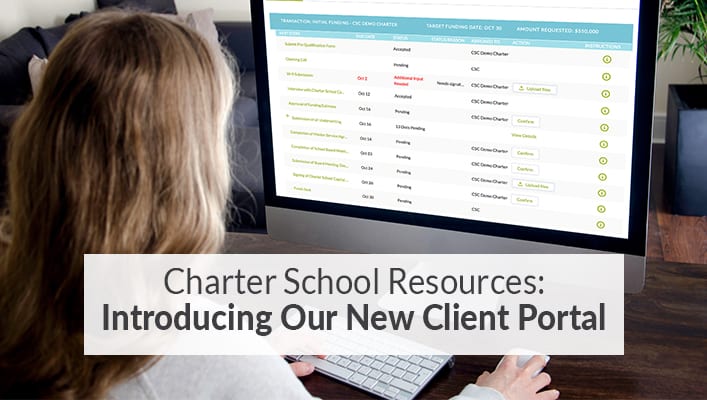
LEARN MORE