I hear from school leaders all the time that they are posting regularly, but nothing seems to happen. No inquiries from Facebook. Nobody is scheduling tours. No enrollment bump from all that effort. If that sounds familiar, here is the thing I want you to know: it is not your fault, and it is not really a posting problem. It is an expectation problem.
What Social Media Does
Social media is an awareness tool, not a lead generator. Social media gets families to notice you. Your website and your application process are what convert them. If you have been treating social media like a direct enrollment channel and feeling frustrated by the results, that mismatch is probably why. That does not mean social media does not matter. It means it matters for a reason you might not expect. When a family sees your posts consistently, they start to recognize your school. They build familiarity. By the time they visit your website, they are not starting from zero — they already have a sense of who you are. That recognition is real, and it is worth building. It just does not happen in a straight line from post to enrollment.

Where to Invest Your Time — Facebook, Instagram, TikTok?
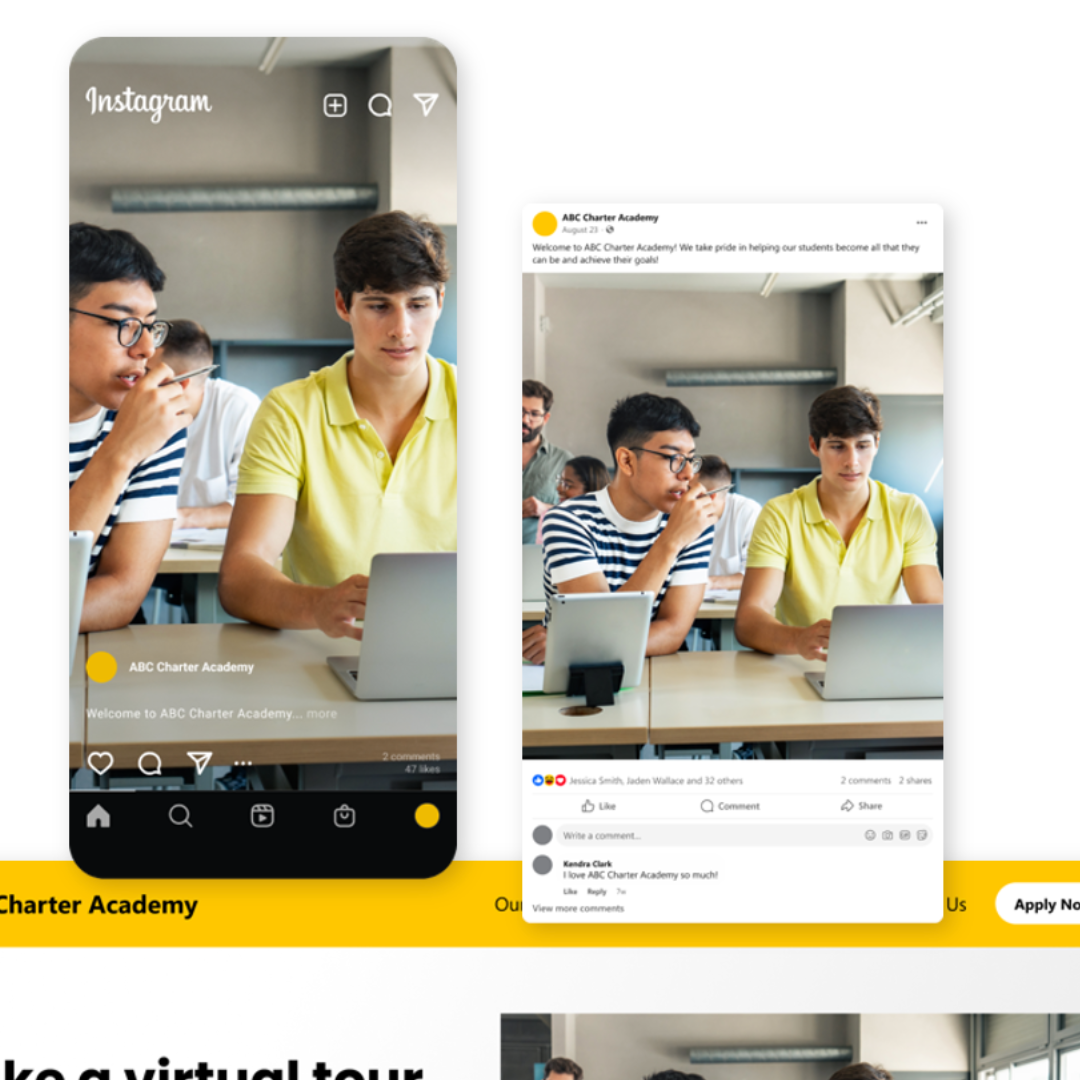
Facebook and Instagram remain your strongest foundations for awareness. Families are actively using both, and they are where you can build the kind of ongoing recognition that eventually leads to action. Paid advertising on both platforms also works—and it doesn’t have to be expensive. Boosting a post for $5–$10 a day can put your school in front of hundreds of local families who don’t yet know you exist. If the idea of paid advertising feels complicated, boosting a post is the easiest place to start. TikTok is worth exploring if your team has the capacity. It is genuinely great for showing your school’s personality — what a real day looks like, what your community feels like. But I would not let it distract you from the fundamentals. We do not see many families completing an inquiry form right after watching a TikTok. It is an awareness channel, even more so than the others. The bottom line: go where your families actually are, not where the headlines tell you to be.
Paid vs. Organic — You Need Both
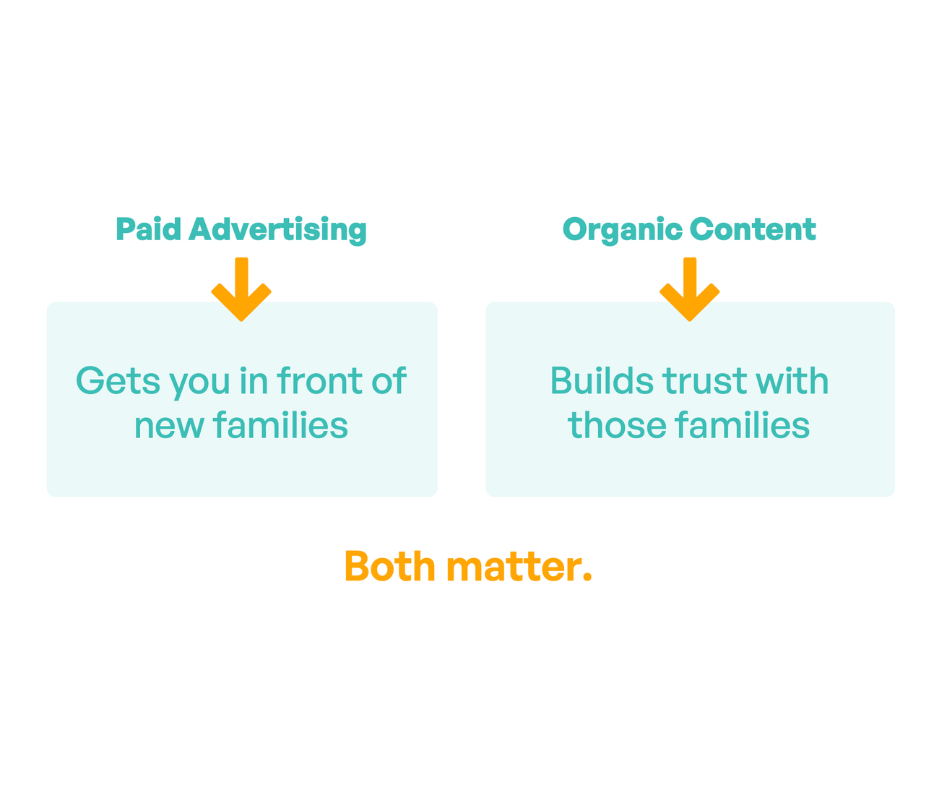
Paid advertising helps with discovery. It gets you in front of families who do not know you exist yet. Without it, your posts are mostly being seen by people who already follow you — and even then, only a fraction of them. Organic content is your credibility. When a family finds you through a paid ad and goes to check out your page, what do they see? A page with no recent posts looks like maybe your school is not active anymore. Organic content is the social proof that makes paid advertising worth clicking. You need both. Neither one works as well without the other.
What to Post
The most powerful content shows your school in action. Not stock photos. Not generic messaging. Not AI-generated anything. Think about it as hanging your shingle. You are showing families who you really are. The content that works: Kid testimonials on video. Short, unscripted, authentic. A kid talking about what they love about your school for thirty seconds will outperform almost anything else you can post. Day-in-the-life content. Follow a teacher or a kid through a real day. Show the hallways, the classrooms, the lunch table. Families want to picture their own child there, and this is what helps them do it. Virtual tours. You can shoot these on your phone. Show the spaces where learning actually happens. Family voices. Your current families are your best marketing. Let them tell your story and put it on social media so more people can hear it.
The 60/40 Rule
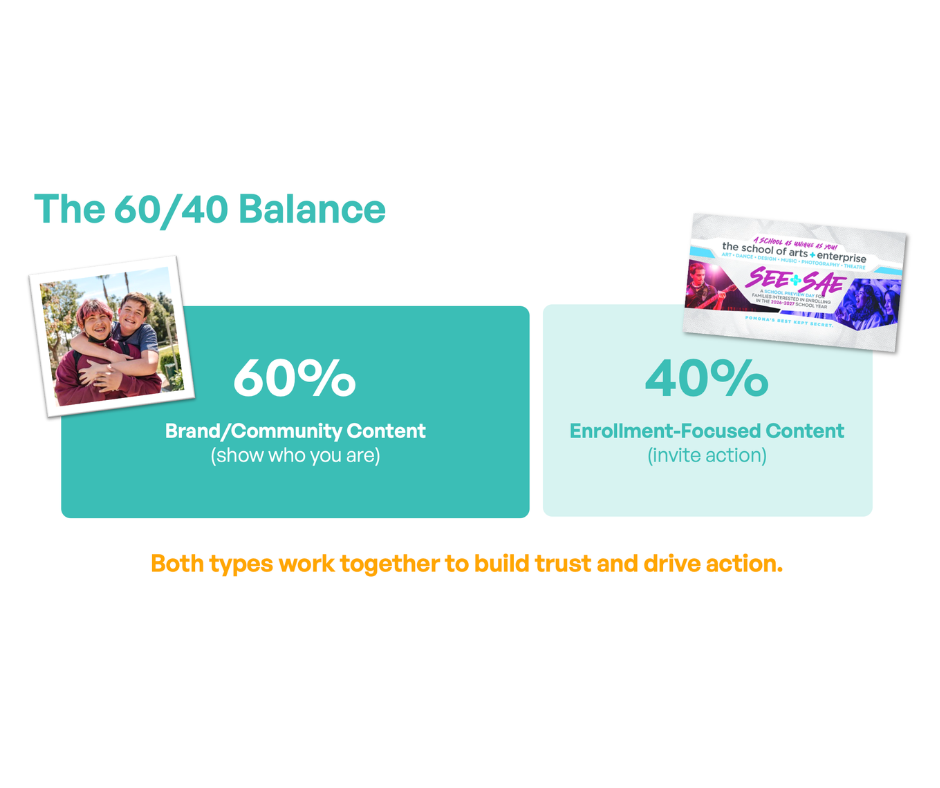
Here is a framework I keep coming back to. Sixty percent of what you post should be brand and community content — showing who you are, what your school feels like, what your kids are up to. 40% should be enrollment-focused—inviting families to take the next step. If you use social media only to broadcast announcements, you are not building the relationships that lead to enrollment. The balance between the two types of content is what builds trust over time and drives families to find you and take action.
What You Can Do This Week
- On Facebook: Post at 7–9 AM or 5–7 PM when families are most likely to be scrolling. Video outperforms everything else by at least three times.
- Boost your best post for $5–$10 to reach more local families.
- On Instagram: Use Stories for behind-the-scenes daily moments.
- Keep Reels short — thirty to sixty seconds.
- Organize your saved Stories into Highlights so prospective families can easily find tour info, programs, and testimonials. It is a tool most schools are not using well, and it makes a real difference.
- One event, multiple posts: Whatever is happening at your school can become content before, during, and after. A single open house can become an announcement, a behind-the-scenes story, a highlight reel, a family quote, and a follow-up recap. You do not need more events. You need to get more out of the ones you already have.
- Clean up your profiles. Make sure your phone number and bio are up to date, and that your profile clearly states the grades you serve.
Frequently Asked Questions: Social Media and Charter School Enrollment
Does social media actually increase charter school enrollment?
Social media does not directly generate enrollment, but it plays an important role in the process. Platforms like Facebook and Instagram build awareness and familiarity — families who see your school consistently in their feed are more likely to visit your website and take action when they are ready to enroll. The conversion happens on your website, through your inquiry form, and at your tour. Social media is what gets families to that point.
What is the best social media platform for charter school marketing?
Facebook and Instagram are the strongest platforms for most charter schools because that is where the majority of school-age families are active. Facebook works well for community building and paid advertising. Instagram is effective for visual storytelling through Reels and Stories. TikTok is worth exploring if your team has capacity, but it should not replace a consistent presence on the two core platforms.
How often should a charter school post on social media?
Consistency matters more than frequency. A school that posts two or three times per week with content that shows real students, real moments, and real community will outperform a school that posts daily with generic or stock-photo content. The goal is to build ongoing recognition with families in your area, not to maximize post volume.
What kind of content drives enrollment for charter schools?
The content that performs best for charter school enrollment shows the school in action. Short video testimonials from students, day-in-the-life content following teachers or kids through a real day, phone-shot virtual tours, and parent voices are consistently the strongest performers. Authentic, unscripted content outperforms polished stock imagery because families are trying to picture their own child at your school.
Should charter schools use paid social media advertising?
Yes. Organic content reaches primarily families who already follow your page. Paid advertising — even boosting a post for five to ten dollars a day — puts your school in front of local families who do not know you exist yet. Paid and organic work best together: paid ads drive discovery, organic content builds the credibility that makes families trust what they find when they click through.
What should a charter school post on Instagram?
On Instagram, use Stories for daily behind-the-scenes moments, Reels for broader reach — kept to thirty to sixty seconds — and organized Highlights so prospective families can easily find tour information, program details, and testimonials. Highlights in particular are underused by most schools and give families a way to explore your school on their own timeline.
How do I measure whether social media is working for my school?
Do not measure success by followers, likes, or shares. Measure it by website visits from social traffic, inquiry form submissions, tour sign-ups, and direct mentions from families who say they found you on social media. These are the signals that connect social activity to actual enrollment outcomes. Vanity metrics feel good but do not tell you whether your marketing is working.
What is the easiest way to improve charter school social media marketing?
The single most impactful, least effort move is setting up an automated response for your inquiry form. When a family reaches out, an immediate confirmation keeps them engaged and buys time for a personal follow-up. Beyond that: make sure your profile bio and phone number are current, post at least twice a week using real photos or video of your students, and boost one post per month to expand your reach to local families who do not already follow you.

Ashley MacQuarrie is VP of Marketing at Grow Schools, where she leads marketing strategy and school partnerships across the country.
Want to share?